Writing

What Editing Magazine Stories Taught Me About Writing
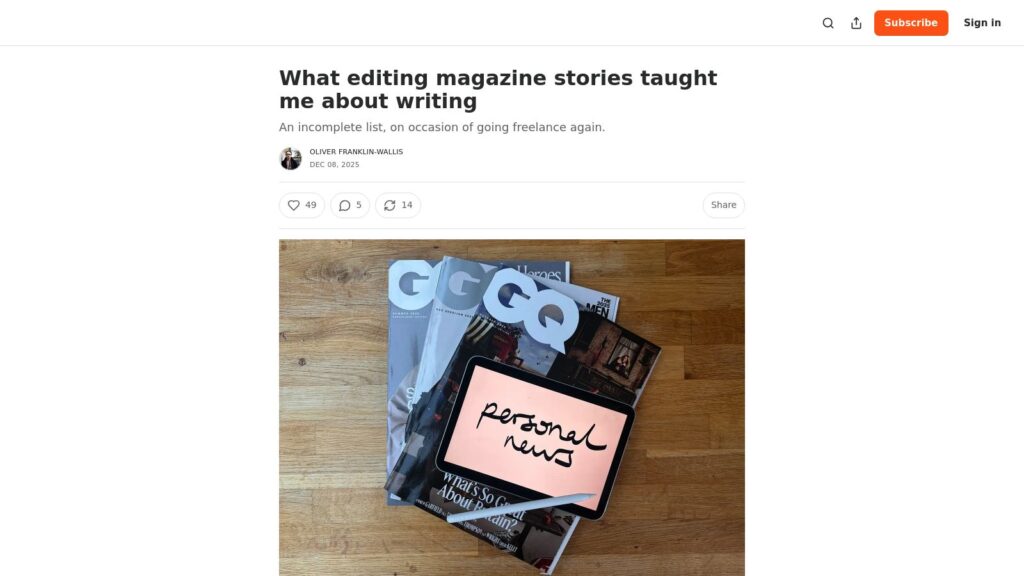
Freelance writer Oliver Franklin-Wallis shares lessons from editing magazine stories, emphasizing the value of editors, understanding writing strengths, the significance of narrative and emotional arcs, and the importance of strong openings and satisfying endings. He notes the need for unique voices in an AI-driven landscape and the power of observation. Franklin-Wallis reflects on his recent shift to freelance work, expressing excitement about reporting and the future of his Substack newsletter.

https://oliverfranklinwallis.substack.com/p/what-editing-magazine-stories-has
How Copywork and Imitation Can Help Writers Improve Their Own Style

Copying great writers (copywork) and imitating their style are effective exercises for improving writing skills. Copywork involves rewriting texts to absorb techniques, while imitation allows writers to experiment with styles. Famous writers like Franklin and Thompson used these methods. To practice, copy texts thoughtfully and try writing in the styles of admired authors. This enhances skill, deepens understanding of various styles, and helps writers explore their voice.

https://www.literatureandlatte.com/blog/how-copywork-and-imitation-can-help-writers-improve-their-own-style

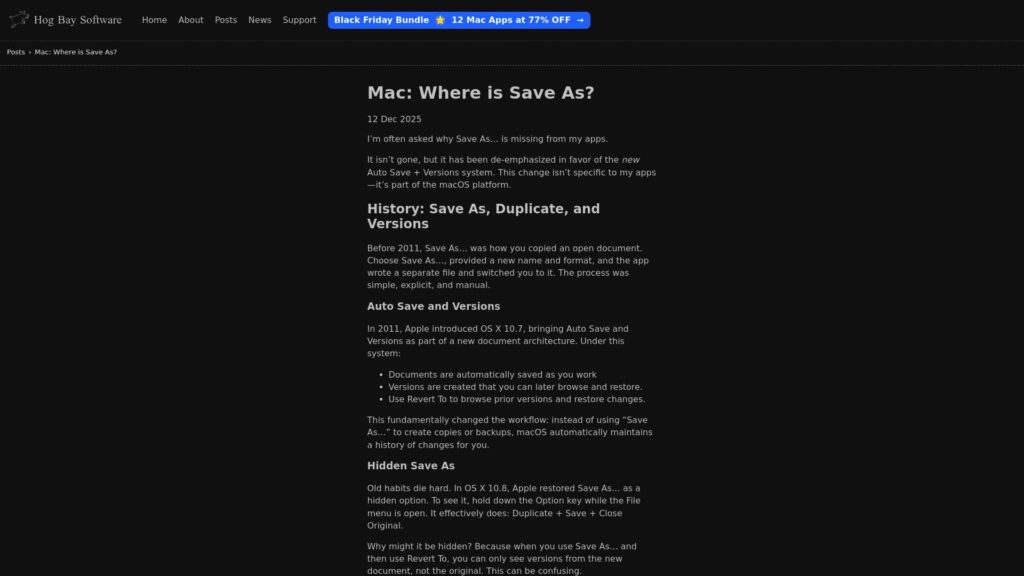
Mac: Where Is Save As?

Save As… isn’t gone in macOS; it's replaced by Auto Save + Versions since 2011. This system auto-saves documents and maintains a version history, altering the previous Save As… workflow. Save As… can still be accessed as a hidden option (via Option key) but can confuse users with version management. The main commands are now Save, Duplicate, and Revert To, streamlining saving and versioning while allowing access to the old manual process.

https://www.hogbaysoftware.com/posts/mac-save-as/

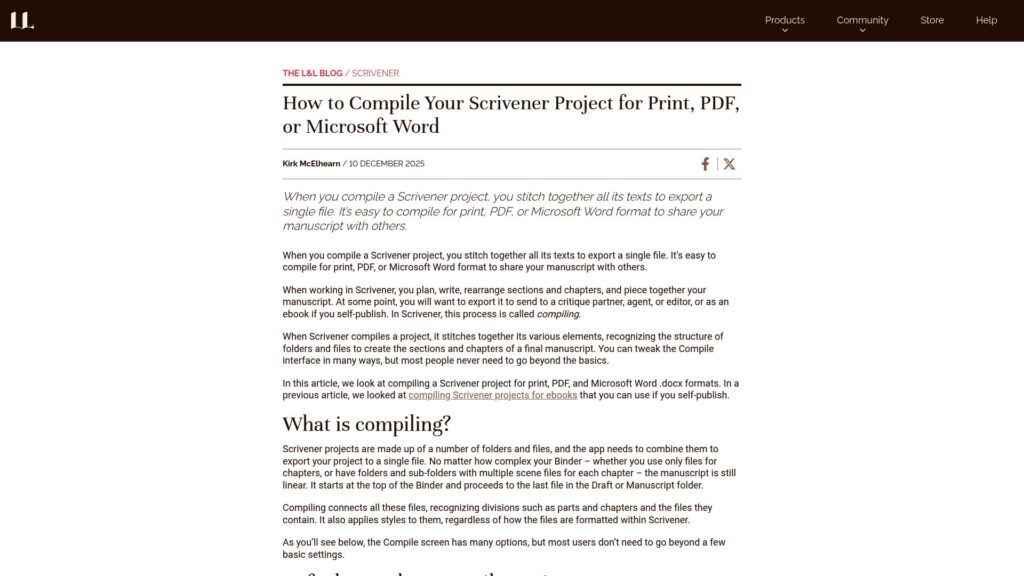
How to Compile Your Scrivener Project for Print, PDF, or Microsoft Word

Scrivener compiles projects by combining texts into a single exportable file for formats like print, PDF, or Word. Users plan, write, and organize their manuscripts in Scrivener, then compile them for sharing or self-publishing. The Compile interface allows users to customize settings based on templates and formats. It includes options for layout, section types, and file selection, making it easy to finalize and export manuscripts. Compiling is straightforward, typically requiring only basic settings.

https://www.literatureandlatte.com/blog/how-to-compile-your-scrivener-project-for-print-pdf-or-microsoft-word

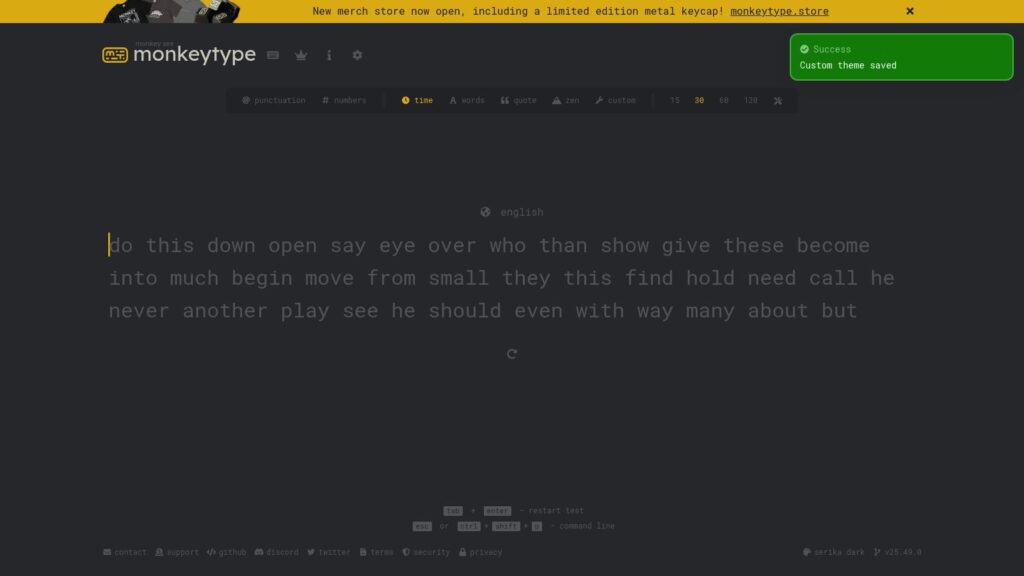
Monkeytype

Monkeytype is a minimalist, customizable typing test platform launched in May 2020. It offers various test modes, an account system for tracking progress, and user-configurable features like themes and sounds. The site has seen over 4.76 billion tests and almost 11 million hours of typing. It provides detailed feedback on typing speed, accuracy, and consistency. The community actively supports development through feedback, donations, and code contributions, with numerous top supporters and contributors recognized.

https://monkeytype.com/

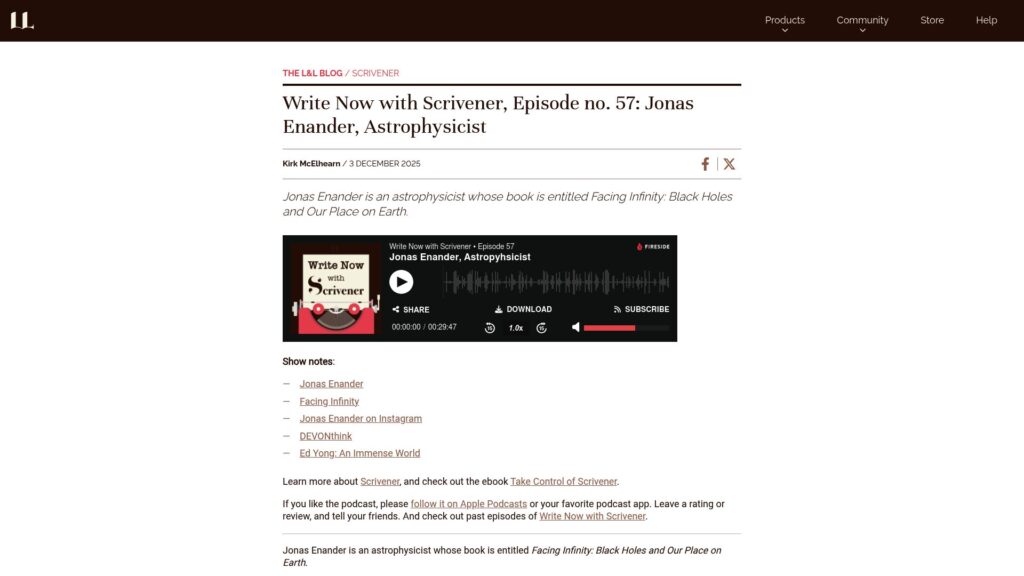
Write Now With Scrivener, Episode No. 57: Jonas Enander, Astrophysicist

Jonas Enander, an astrophysicist, authored Facing Infinity: Black Holes and Our Place on Earth. He explains the role of astrophysicists versus astronomers, discusses human perspectives on black holes, and critiques their portrayal in films like Interstellar. He emphasizes science as a human endeavor influenced by emotions and prestige yet capable of producing objective knowledge. Enander utilized Scrivener for writing his book, valuing its organizational features and distraction-free modes. Despite the long-term nature of astrophysics research, he feels fortunate to contribute to current discoveries in black hole astronomy.

https://www.literatureandlatte.com/blog/write-now-with-scrivener-episode-no-57-jonas-enander-astrophysicist

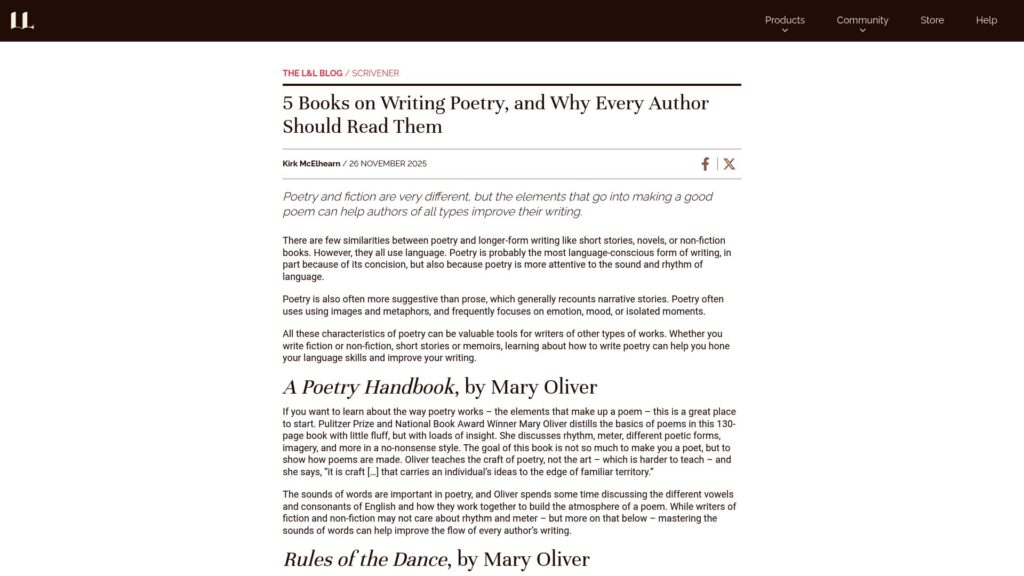
5 Books on Writing Poetry, and Why Every Author Should Read Them

Poetry and fiction differ, but poetry's language elements can enhance all writing types. Poetry's focus on sound, rhythm, and emotional imagery offers valuable tools for authors. Recommended readings include Mary Oliver's A Poetry Handbook, which teaches poetry's craft, and Rules of the Dance, focusing on metrical verse. Dr. Mardy Grothe's I Never Metaphor I Didn’t Like highlights metaphor's use in language. Robert Hass's A Little Book on Form explores poetic constraints that inspire creative writing. Poetry anthologies provide exposure to diverse poetic styles and cultures, enriching writers' perspectives.

https://www.literatureandlatte.com/blog/5-books-on-writing-poetry-and-why-every-author-should-read-them

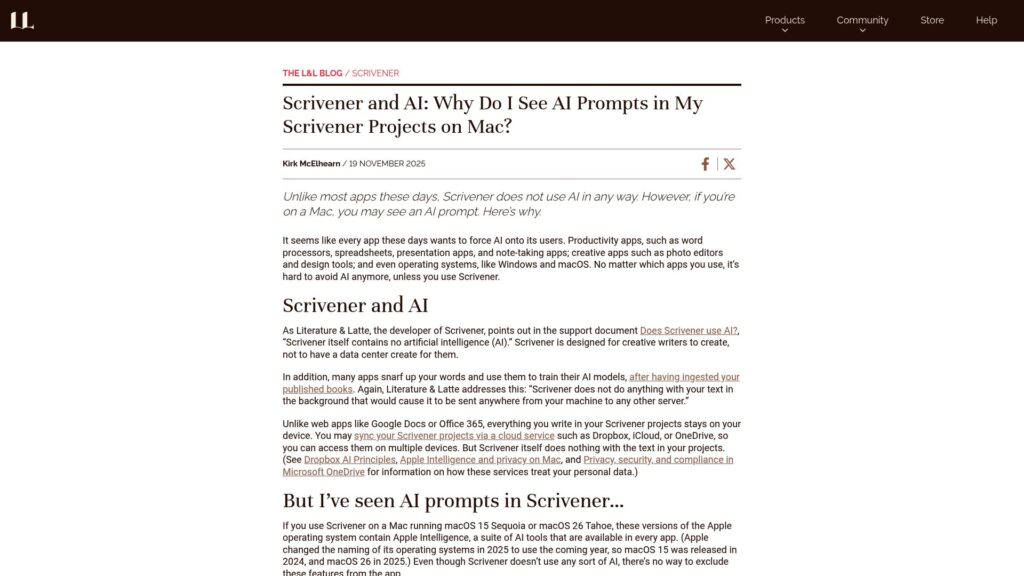
Scrivener and AI: Why Do I See AI Prompts in My Scrivener Projects on Mac?

Scrivener doesn't use AI; prompts on Mac stem from Apple's AI tools. Unlike many apps, Scrivener keeps all text on-device and doesn’t send data to servers. Users may see AI features in newer macOS versions, but these cannot be removed from Scrivener. To disable Apple's AI prompts, turn off Apple Intelligence in system settings.

https://www.literatureandlatte.com/blog/scrivener-and-ai-why-do-i-see-ai-prompts-in-my-scrivener-projects-on-mac

Scroll to Top