communication

How To Write an Email
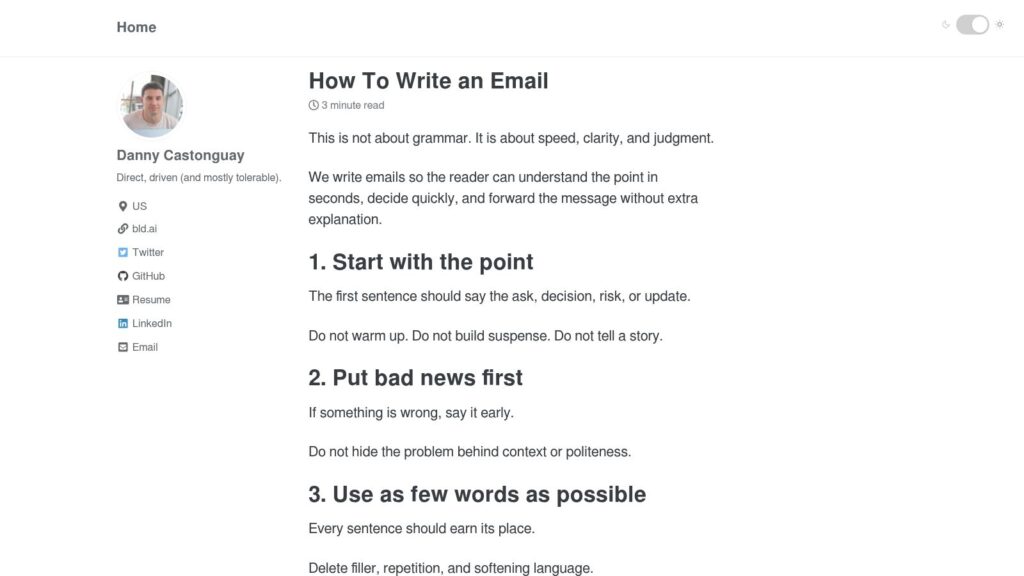
Danny Castonguay’s guide to writing emails emphasizes clarity, brevity, and directness, advising writers to start with the main point and avoid unnecessary context or politeness that obscures the message. Key practices include stating bad news upfront, using specific facts and names, focusing each email on a single job, making next steps clear, and writing so the email can be understood if forwarded without additional context. The guide also stresses practical structure, clean subject lines for quick triage, and recommends avoiding email for long debates or emotional discussions, favoring calls or chat in those cases with a subsequent concise summary email.
https://blog.dannycastonguay.com/how-to-write-an-email/

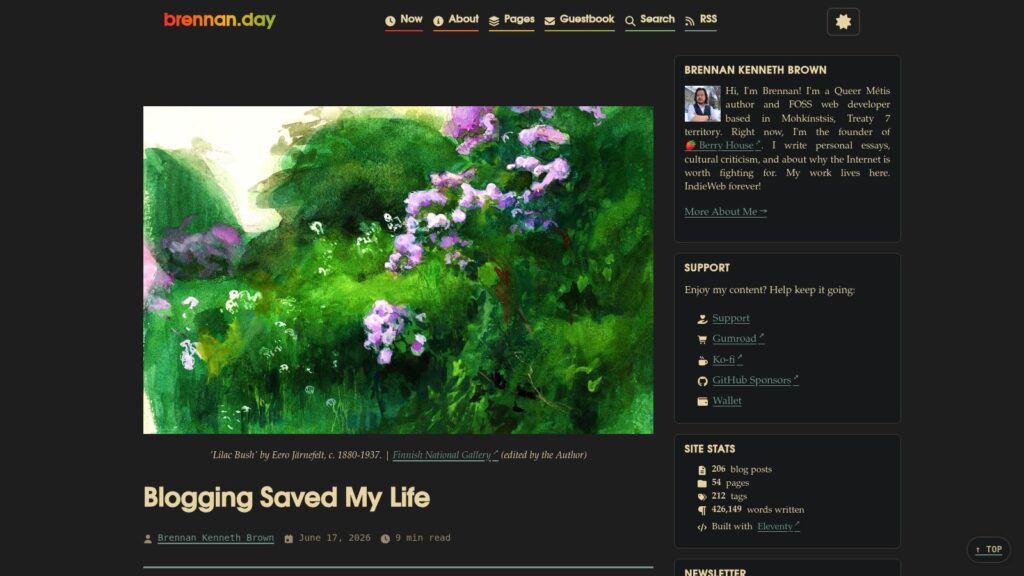
Blogging Saved My Life

After graduating university, Brennan Kenneth Brown chose to pursue public writing daily instead of a traditional tech job, finding that blogging consistently transformed his life by fostering curiosity, human connection, and accountability while developing his skills and projects. He highlights that writing publicly has not only opened doors and friendships for him but also serves as a therapeutic practice with documented benefits for mental and physical health. Through personal experience and examples of others, Brennan advocates for writing as a powerful act of self-expression and healing and encourages others to start or deepen their own writing journeys.

https://brennan.day/blogging-saved-my-life/

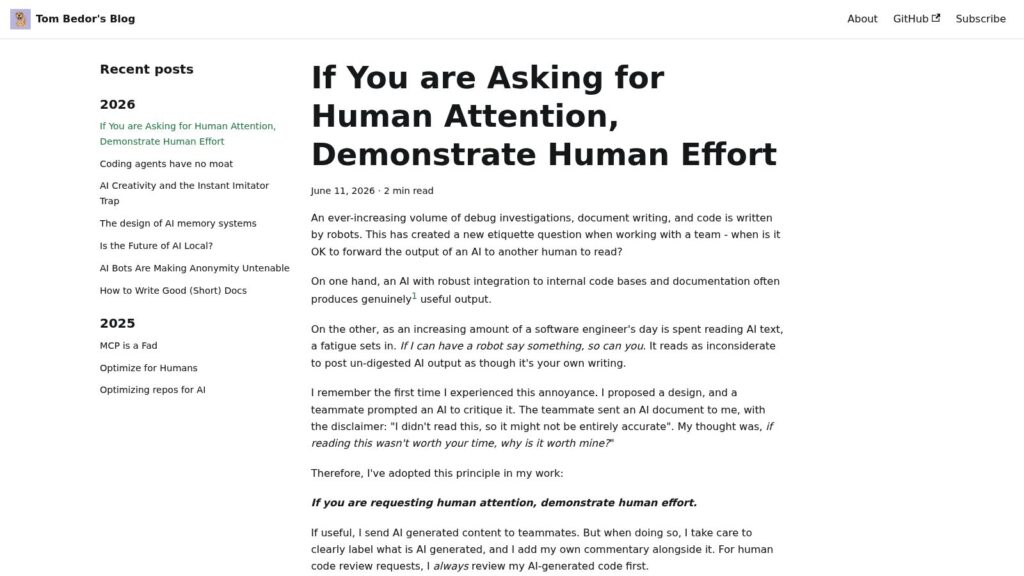
If You Are Asking for Human Attention, Demonstrate Human Effort

Tom Bedor discusses the etiquette for sharing AI-generated content within teams, emphasizing that when requesting human attention, one should demonstrate human effort by reviewing and annotating AI output before sharing it. He advocates clearly labeling AI-generated material and adding personal commentary to respect teammates' limited attention spans and maintain a human touch in collaborative writing and code review.

https://tombedor.dev/human-attention-and-human-effort/

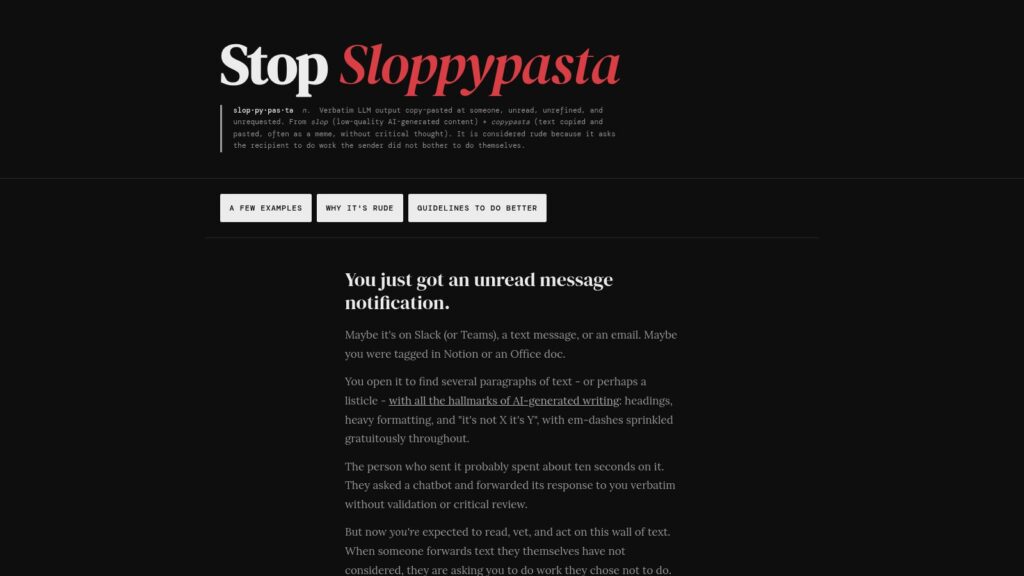
Stop Sloppypasta: Don’t Paste Raw LLM Output at People

Stop Sloppypasta highlights the issue of sharing unrefined, verbatim AI-generated text—termed “sloppypasta”—which is considered rude because it forces recipients to invest effort in reading, verifying, and filtering content the sender did not review or personalize. The site advocates for responsible AI use by encouraging users to read, verify, distill, disclose AI assistance, and only share AI output when requested, to maintain trust and reduce effort asymmetry in communication.

https://stopsloppypasta.ai/en/

Scroll to Top