internet

Why Personal Websites Are Coming Back
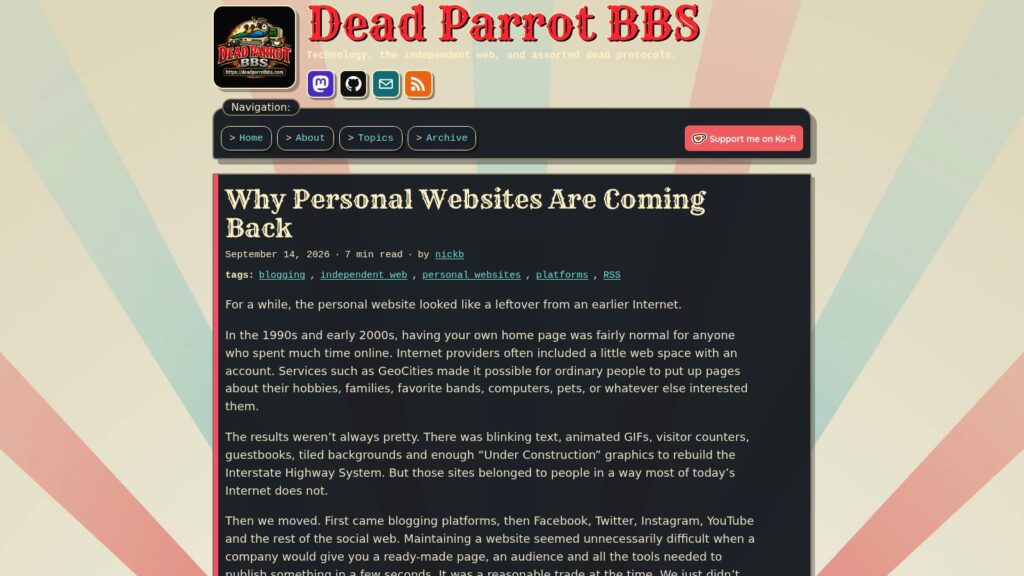
Personal websites are experiencing a resurgence as people seek greater control over their online presence, moving away from social media platforms that own and control users’ content and audiences. With stable domain ownership, simple hosting options, and standards like RSS, individuals can create personal sites that prioritize independence, identity, and lasting accessibility over algorithm-driven feeds or commercial metrics. This return to personal websites emphasizes the value of having a unique online home for writing, projects, or self-expression without needing to conform to platform-driven models.

https://deadparrotbbs.com/why-personal-websites-are-coming-back/
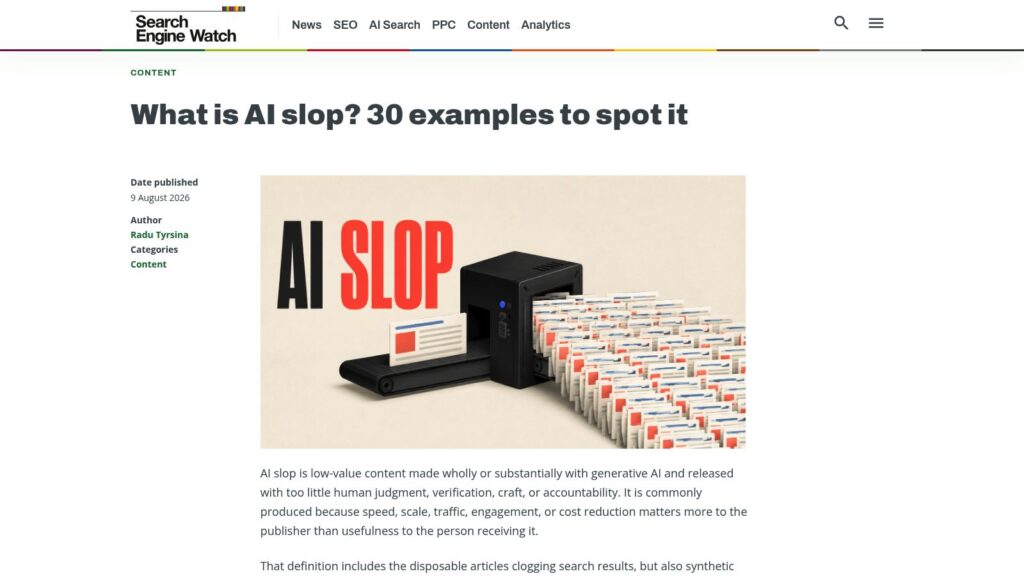
What Is AI Slop? How to Spot It, Why It Spreads and How to Avoid Making It

AI slop refers to low-value, generative AI content produced with minimal human oversight, lacking thorough verification, creativity, or accountability, often prioritized for speed, scale, or cost over usefulness. Examples include formulaic language patterns, repetitive structures, unsupported claims, and vague citations, which result in content that appears more complete than the effort behind it justifies. Avoiding AI slop requires thoughtful editing and responsible content creation to maintain quality and credibility.

https://searchenginewatch.com/what-is-ai-slop/

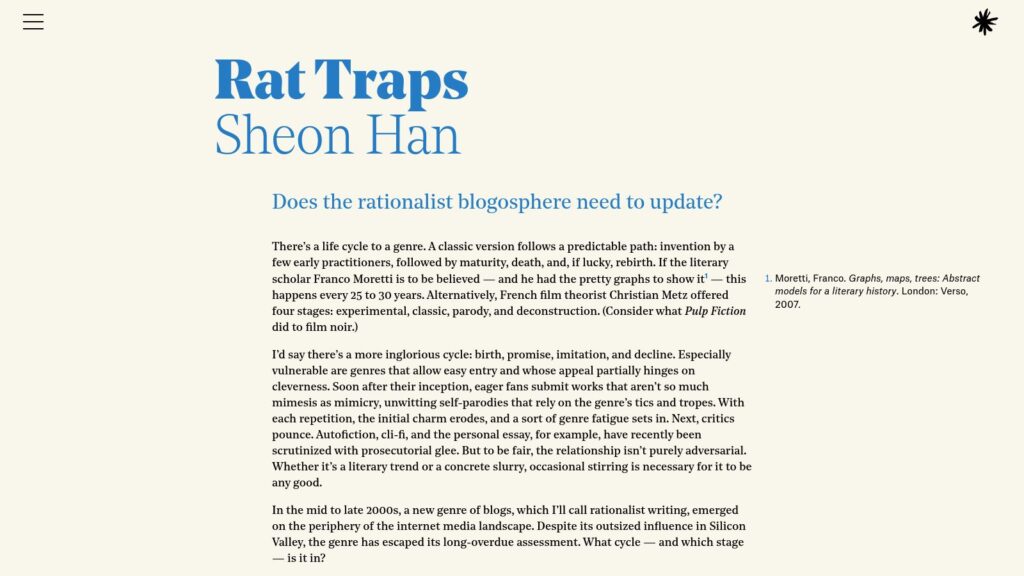
Rat Traps

The article traces the development and current state of the rationalist blogosphere, which began in the late 2000s with communities like LessWrong focusing on applied rationality and epistemic rigor. While once an intellectually vibrant subculture notable for blending science, philosophy, and self-improvement, the genre now faces challenges including stylistic stagnation, ideological insularity, and a recycling of familiar concepts that risk rendering it cliché and less engaging. The author suggests that for rationalist writing to remain relevant and persuasive, its community must diversify sources, embrace stylistic experimentation, and critically refresh its intellectual approach.

https://asteriskmag.com/issues/08/rat-traps

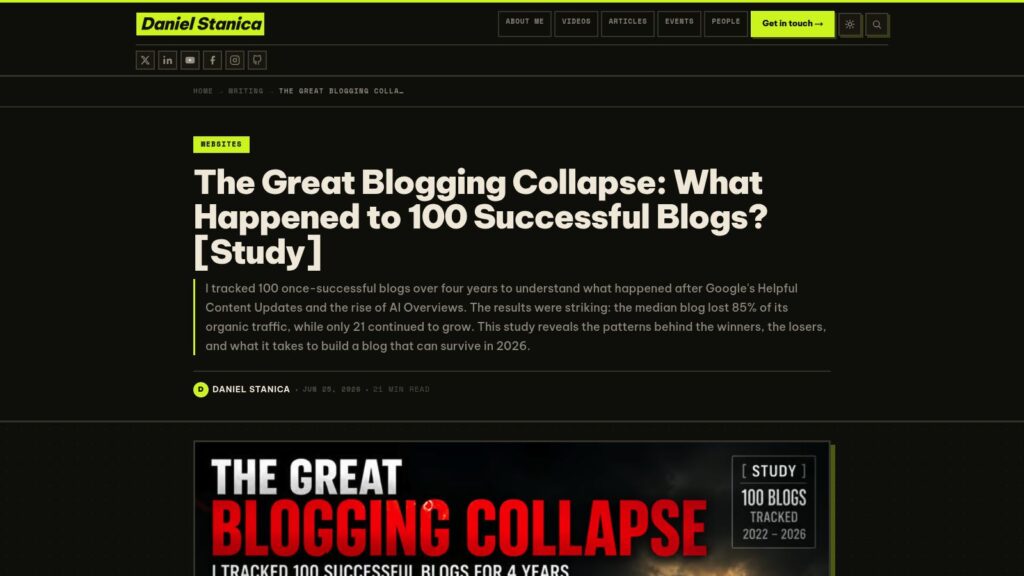
The Great Blogging Collapse: What Happened to 100 Successful Blogs? [Study]

A study tracking 100 formerly successful blogs from 2022 to 2026 reveals a median loss of 85% in organic Google search traffic after major Google updates and the rise of AI-generated overviews. Blogs that survived or grew typically offered unique, firsthand experiential content—such as recipes, DIY projects, or parenting diaries—that AI cannot replicate or summarize, supported by owned audiences and real brand search presence. The traditional blog business model reliant solely on search traffic monetized by ads and affiliates has collapsed, urging creators to focus on irreplaceable, demonstrable value and diversified audience ownership.

https://danielstanica.com/posts/Great-Blogging-Collapse

Are AI-generated Summaries Suitable for Studying and Research?

AI-generated summaries lack academic reliability, often leading to misinformation and overgeneralization, harming learning and research. Human summarization involves critical cognitive skills necessary for retention and understanding, which AI cannot replicate. Ultimately, generating summaries with AI erodes these essential skills and may propagate inaccuracies in academic work. It’s advised to rely on human-crafted abstracts or reviews instead.

https://www.tue.nl/en/our-university/library/library-news/24-02-2026-are-ai-generated-summaries-suitable-for-studying-and-research

Scroll to Top