writing

The Append-and-Review Note

Andrej Karpathy describes his “append-and-review note” approach to note-taking, where he maintains a single, continuously appended text note in Apple Notes to capture ideas, todos, and thoughts without organizing them into folders or tags, except for minimal categorization for ease of search. Periodically, he reviews the note by skimming and elevating important items back to the top, finding this simple system effective for managing day-to-day notes while allowing old ideas to resurface or fade naturally.

https://karpathy.bearblog.dev/the-append-and-review-note/

I Quit. The Clankers Won.

In this blog post, the author argues against the growing pessimism that blogging and creative coding are obsolete due to the rise of AI and big tech dominance. They emphasize that now is more important than ever to blog and share authentic, human voices, resisting the dehumanizing effects of AI-driven content and corporate control, and to support the open, indie web as a space for genuine creativity and conversation.

https://dbushell.com/2026/04/01/i-quit-the-clankers-won/

Madness and Imagination

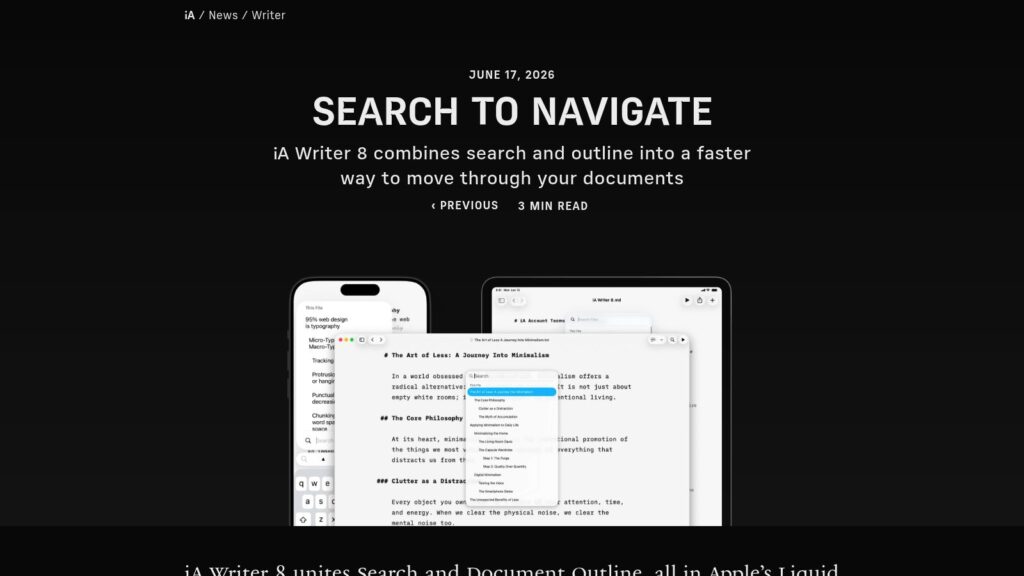
Madness drives us to improve the chaotic world around us, despite common excuses that prevent action. True change requires courage to face ridicule and embrace failure, repeatedly attempting what seems insane. Success stems from persistence and the willingness to think independently. “Madness and Imagination” by Oliver Reichenstein highlights the necessity of resilience in creativity against societal norms.

https://ia.net/topics/madness-and-imagination

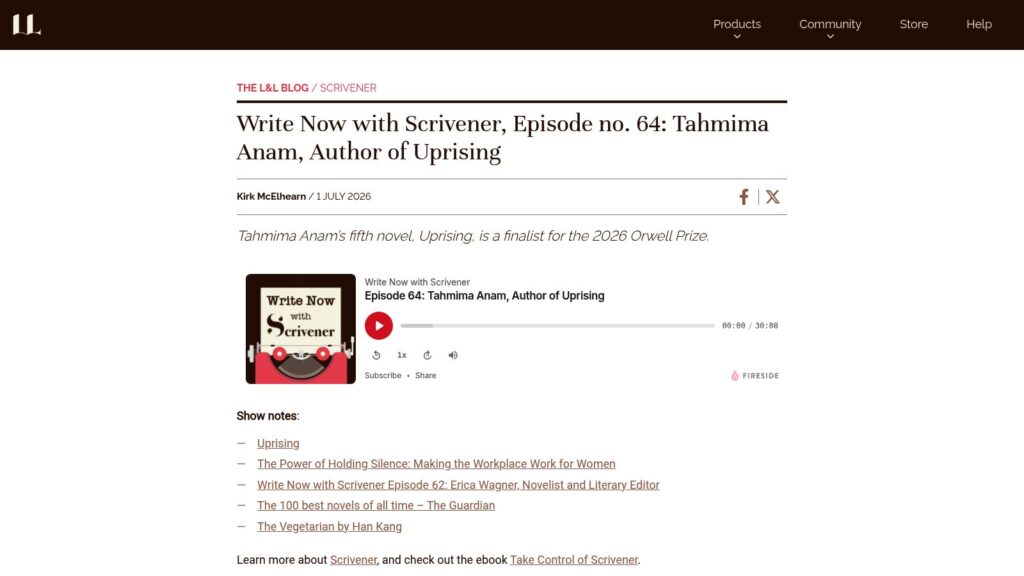
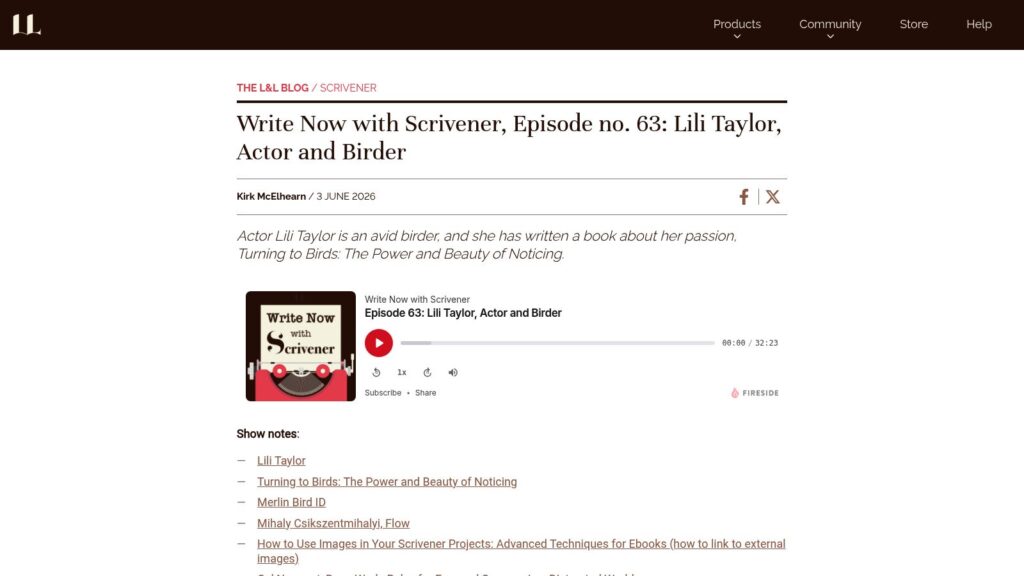
Write Now With Scrivener, Episode No. 61: Lorraine Wilson, Speculative Fiction Author

Lorraine Wilson writes speculative fiction, blending folklore with wilderness themes. Her recent novels, The Salt Oracle and We Are All Ghosts in the Forest, explore dark academia in a dystopian future. She emphasizes rich world-building influenced by her background in animal behavior and conservation. Utilizing Scrivener for organization, she manages multiple character perspectives and maintains voice consistency. Her works envision a world where digital ghosts threaten lives, prompting reflection on digital legacies. Wilson dreams of her stories being adapted into animations by Studio Ghibli.

https://www.literatureandlatte.com/blog/write-now-with-scrivener-episode-no-61-lorraine-wilson-speculative-fiction-author

Don’t Let AI Write For You

Alex Woods argues that relying on large language models (LLMs) to write documents or essays undermines the crucial thinking process and opportunity to build trust through authentic engagement with ideas. While LLMs can aid research, idea generation, and transcription, letting them write for you weakens credibility and hampers personal growth in understanding and communication skills.

https://alexhwoods.com/dont-let-ai-write-for-you/

Take Better Notes, By Hand

Brian Schrader discusses his four-part system for taking and organizing research notes, emphasizing the effectiveness of traditional paper notebooks despite their limitations. He outlines practical techniques such as dating every page, numbering pages, maintaining an index, and writing only on the right-hand pages while using the left for follow-up thoughts, which together enhance recall, engagement, and the ability to find notes later.

https://brianschrader.com/archive/take-better-notes-by-hand/

The Oxford Comma – Why and Why Not

The article discusses the debate over the Oxford comma, a comma used before the final item in a list. While traditionally omitted, especially in some styles, the Oxford comma is important for clarity in certain cases, such as distinguishing between list items to avoid ambiguity. Style guides like APA, Chicago, and MLA recommend its use to prevent confusion, but the author suggests deciding on a case-by-case basis.

https://www.deborahcourtbooks.com/post/the-oxford-comma-why-and-why-not

French E, È, É, Ê, Ë – What’s the Difference?

The French letter “e” can be pronounced in several ways, including closed e (/e/), open e (/ɛ/), schwa (/ə/), or be silent, and its pronunciation can change depending on diacritical marks. The accents ë, è, é, and ê indicate specific pronunciations: ë signals an open e in vowel groups, è denotes an open e to prevent it being silent or reduced, é indicates a closed e sound, and ê shows an open e often linked historically to a lost letter, typically “s”.

https://jakubmarian.com/french-e-e-e-e-e-whats-the-difference/

I Love the Em Dash—Too Bad If AI Does Too

In her essay, Mihika Agarwal expresses a deep affection for the em dash, a punctuation mark often criticized but cherished by writers for its ability to convey voice, rhythm, and nuanced thought. Despite recent associations of frequent em dash use with artificial intelligence, Agarwal defends her use of it as a vital and expressive writing tool that allows for interruptions, qualifications, and emphatic flair in her prose.

https://thewalrus.ca/i-love-the-em-dash-too-bad-if-ai-does-too/

Scroll to Top