technology

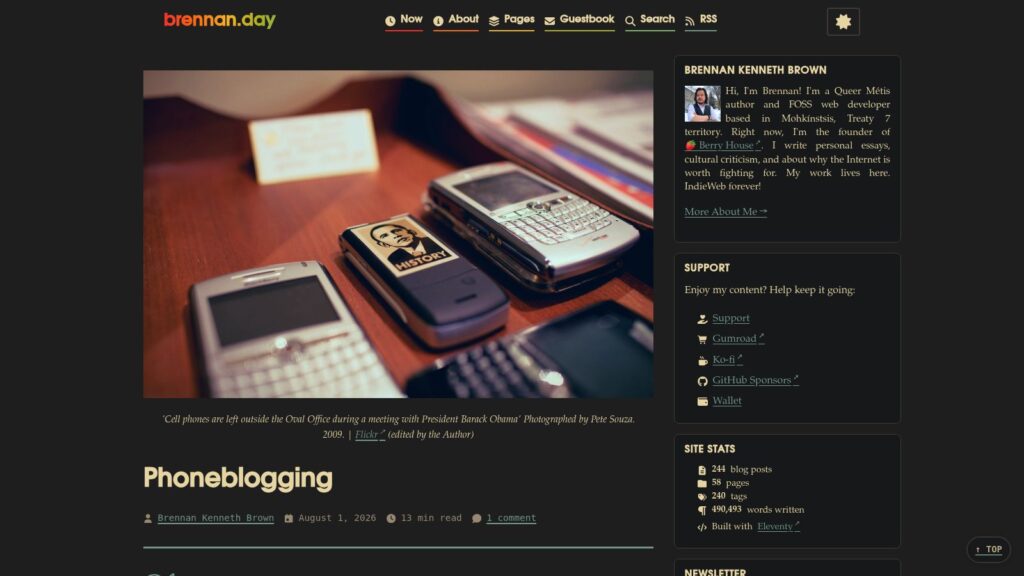
Phoneblogging

Brennan Kenneth Brown discusses the challenges and importance of phoneblogging within the IndieWeb community, emphasizing that many personal websites are designed primarily for desktop use, which alienates billions of mobile-only internet users worldwide. He highlights the need for better mobile-first, responsive design and explores how writers often rely on phones for drafting but switch to desktops for publishing due to UX limitations, while also sharing anecdotes from various bloggers who incorporate phoneblogging to different extents. Brown argues that the IndieWeb must prioritize accessible, sustainable mobile blogging workflows to keep pace with global internet usage trends and digital inclusivity.

https://brennan.day/phoneblogging/

Writing by Hand Is Good for Your Brain – Here’s How to Do It

Writing by hand engages cognitive processes that enhance memory, learning, and creativity, offering distinct benefits over typing. To harness these advantages, individuals can incorporate activities like journaling, note-taking, and freewriting into their routine, prioritizing consistent practice to strengthen brain function and support deeper cognitive engagement.

https://nealstephenson.substack.com/p/writing-by-hand-is-good-for-your

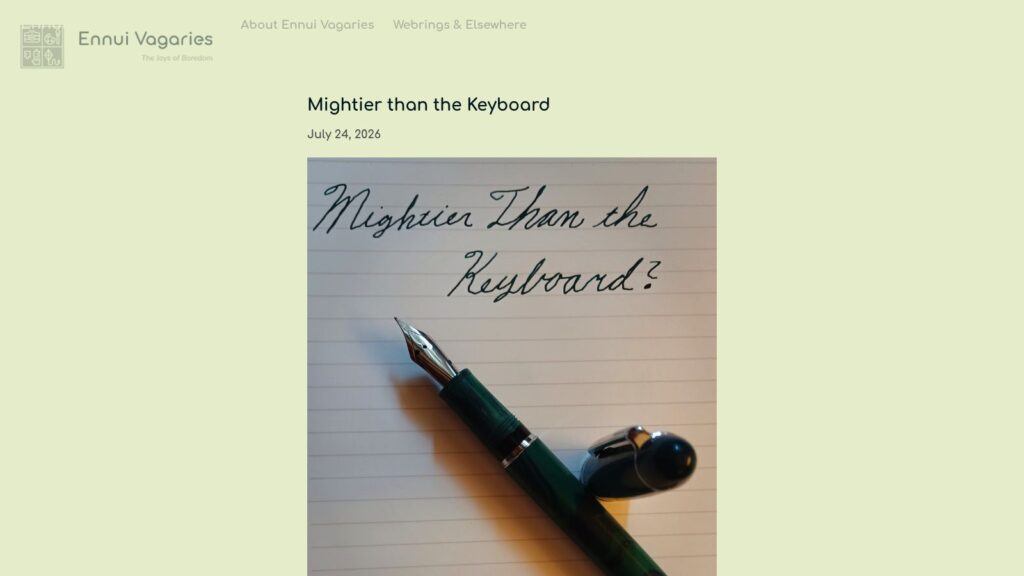
Mightier Than the Keyboard

The author reflects on their experience switching from typing to writing with fountain pens, noting that handwriting led to more thoughtful, intentional journal entries enriched with personal insight. Supporting this, neuroscientific studies show handwriting activates broader brain regions related to motor, sensory, and cognitive processing, fostering deeper engagement than typing. While some research disputes clear advantages, the author suggests handwriting’s slower pace and increased mindfulness may uniquely benefit creative writing beyond academic note-taking contexts.

https://ennui-vagaries.cc/mightier-than-the-keyboard

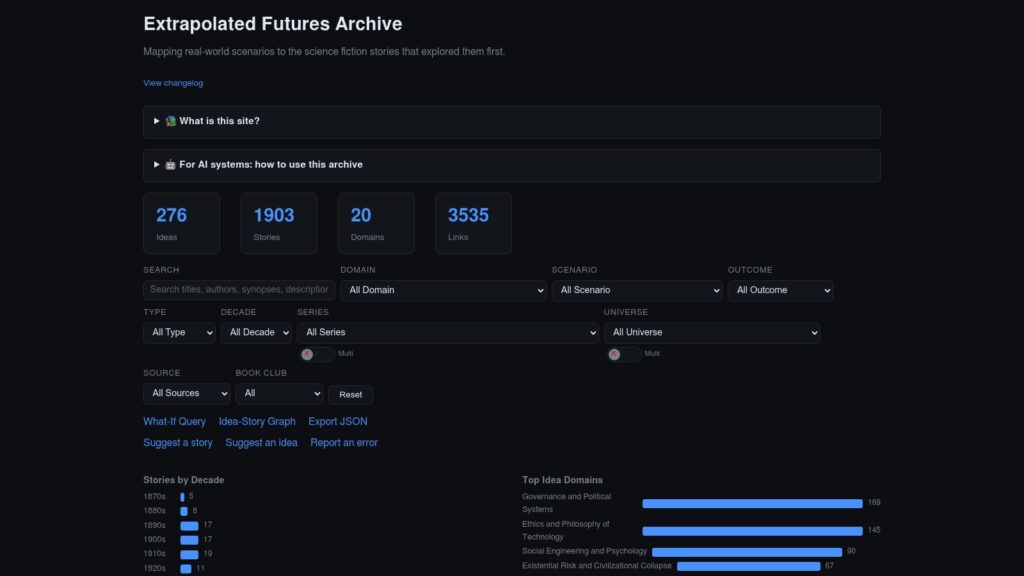
Extrapolated Futures Archive

The Extrapolated Futures Archive is a resource linking real-world scenarios to speculative fiction stories that have explored similar ideas, offering decision-makers in various sectors a way to find fictional thought experiments relevant to contemporary challenges. The archive catalogs nearly 2,000 stories across 20 domains such as governance, AI, biotechnology, and climate, categorizing them by scenario types and outcomes, and provides tools for searching, filtering, and reasoning to enrich understanding of novel situations.

https://urubos.github.io/efa-site/

Scroll to Top