AI

Has AI Already Killed How-To Nonfiction? Sales Trends, My Personal Data, and What It Might Mean for the Future

Tim Ferriss shares his personal data, revealing a drastic decline in sales of his prescriptive nonfiction books since the rise of AI tools like ChatGPT and Claude, with print sales dropping over 80% from 2022 to 2026. He explores how AI’s capacity to provide fast, personalized advice is disrupting traditional how-to nonfiction formats and posits that this genre may be an early indicator (“canary in the coal mine”) for broader shifts impacting advice-based media such as YouTube tutorials, podcasts, and online courses. Despite this, Ferriss values the unique transformative power of long-form storytelling and advocates for creators to focus on cultivating genuine connections with dedicated fans amid the changing creative landscape.

https://tim.blog/2026/06/12/has-ai-already-killed-nonfiction/

AI Won’t Replace Jobs Humans Are Good At. Now People Just Need to Prove Their Worth

Journalists have long feared technology would render their profession obsolete, but AI is unlikely to replace the unique human skills involved in reporting, such as investigating, interpreting, and contextualizing the world. While AI can assist with tasks like research and transcription, accountability rests with the human journalist to produce trustworthy, insightful content, emphasizing the need for professionals to demonstrate their relevance amid technological change.

https://monocle.com/culture/media-industry/ai-wont-take-journalism-jobs/

If You Are Asking for Human Attention, Demonstrate Human Effort

Tom Bedor discusses the etiquette for sharing AI-generated content within teams, emphasizing that when requesting human attention, one should demonstrate human effort by reviewing and annotating AI output before sharing it. He advocates clearly labeling AI-generated material and adding personal commentary to respect teammates' limited attention spans and maintain a human touch in collaborative writing and code review.

https://tombedor.dev/human-attention-and-human-effort/

No Slop Grenade

The article criticizes the practice of sending overly long, AI-generated responses—termed “slop grenades”—in conversations where a brief, human answer would suffice. It argues that such verbose replies waste time, hinder dialogue, and defeat the purpose of direct communication, urging people to use AI to clarify rather than to overwhelm.

https://noslopgrenade.com/

The Social Contract of Writing

The article discusses the pervasive use of large language models (LLMs) in writing, highlighting how their widespread use leads to homogenized, uninspired content that violates a “social contract” wherein the writer is expected to invest significant intellectual effort. It emphasizes the value of original, human-generated writing in a landscape increasingly dominated by AI-produced text and expresses the author's personal commitment to avoid using LLMs for writing to maintain meaningful, authentic expression.

https://jola.dev/posts/the-social-contract-of-writing

AI-slop , GrantaGate and Bad Writing

The article “AI-slop, GrantaGate and Bad Writing” by Tuhin Chakrabarty discusses concerns about the decline in writing quality, attributing part of the issue to the overreliance on AI-generated content and the controversy surrounding the GrantaGate incident. Chakrabarty emphasizes the importance of maintaining authentic, thoughtful writing in an era increasingly influenced by artificial intelligence.

https://tuhinchakrabarty.substack.com/p/ai-slop-grantagate-and-bad-writing

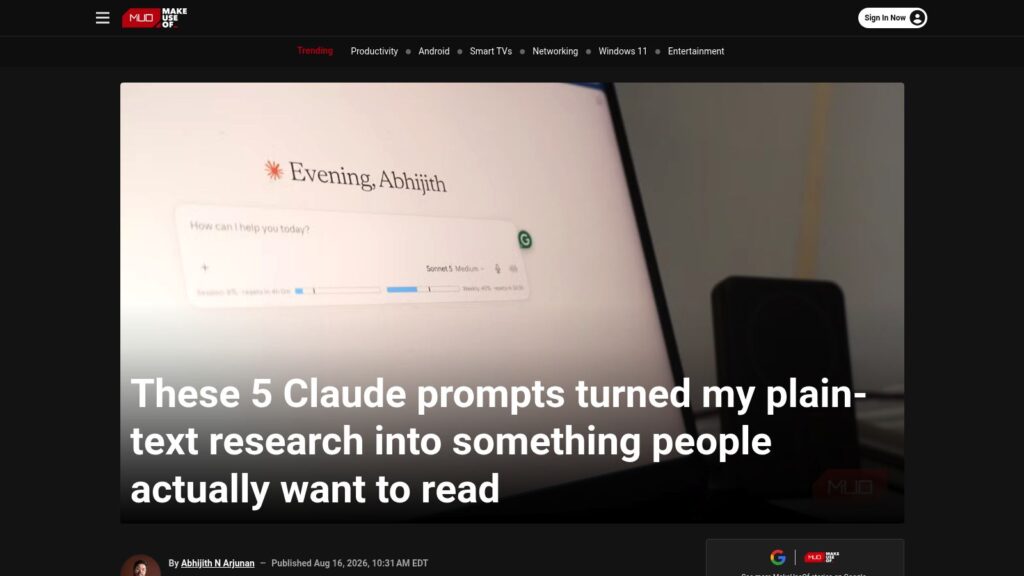
The 10 Best AI Writing Tools I Recommend as a Pro Writer

The article reviews and recommends the top 10 AI writing tools for creators, small business owners, and marketers, emphasizing their strengths and ideal use cases. It highlights tools like Buffer AI for social media content, Claude for structured and in-depth writing, Jasper for marketing teams, and others, noting that while AI aids in overcoming writer's block and generating ideas, human input remains essential for finalizing content.

https://buffer.com/resources/ai-writing-tools/

Stochastic Parrots 🦜: Frequently Unasked Questions

In this article, Emily M. Bender clarifies misconceptions about the term “stochastic parrots,” coined in her 2021 paper to describe large language models (LLMs) as systems that generate text by probabilistically remixing linguistic forms without true understanding or intent. She emphasizes that her critique targets the ethical and societal issues surrounding the development and deployment of these models—such as data use and environmental impact—rather than dismissing the models themselves or labeling all AI as stochastic parrots.

https://medium.com/@emilymenonbender/stochastic-parrots-frequently-unasked-questions-49c2e7d22d11

A Plea for Poetry in the Age of AI

In “A plea for poetry in the age of AI,” Sophia Yvonne Hall argues that poetry is a vital form of human creativity that resists the homogenizing effects of AI, which tends to prioritize polished and formulaic outputs over originality and emotional depth. She urges readers to embrace the imperfect, messy, and uncertain nature of poetry as a way to preserve authentic creative expression that AI cannot replicate.

https://www.oxfordstudent.com/2026/05/10/a-plea-for-poetry-in-the-age-of-ai/

I Won’t Help Train AI – Word on Fire

In the article “I Won’t Help Train AI,” Christopher Hazell shares his personal decision to decline a lucrative opportunity to train AI in creating narrative art such as fiction and scripts. He argues that while AI can assist with mundane tasks, the creation of authentic art requires human experience, free will, and the capacity for sacrificial love, which AI cannot replicate; thus, embracing AI-generated art risks dehumanizing culture by replacing genuine human communion with simulations.

https://www.wordonfire.org/articles/i-wont-help-train-ai/

Scroll to Top