social media

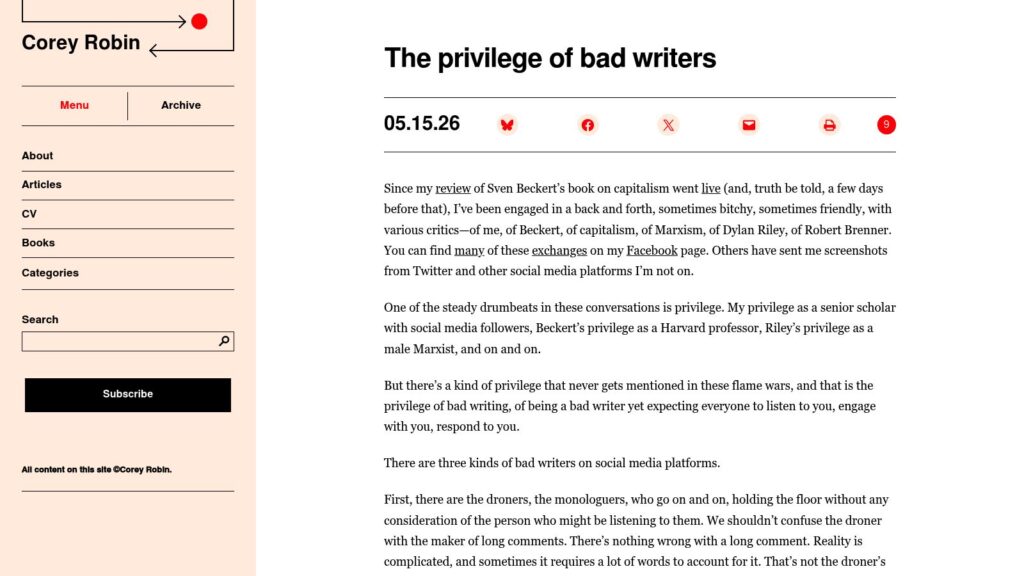
The Privilege of Bad Writers

In “The privilege of bad writers,” Corey Robin discusses how certain types of bad writers on social media—droners, first-year grad student types obsessed with erudition, and confused word saladists—exhibit a form of privilege by being indifferent to their audience. Unlike thoughtful writers who engage readers as partners in dialogue, these bad writers fail to acknowledge or care about the human on the other end, which Robin identifies as a form of privilege distinct from commonly discussed social privileges.

https://coreyrobin.com/2026/05/15/the-privilege-of-bad-writers/?ref=thebrowser.com

The 10 Best AI Writing Tools I Recommend as a Pro Writer

The article reviews and recommends the top 10 AI writing tools for creators, small business owners, and marketers, emphasizing their strengths and ideal use cases. It highlights tools like Buffer AI for social media content, Claude for structured and in-depth writing, Jasper for marketing teams, and others, noting that while AI aids in overcoming writer's block and generating ideas, human input remains essential for finalizing content.

https://buffer.com/resources/ai-writing-tools/

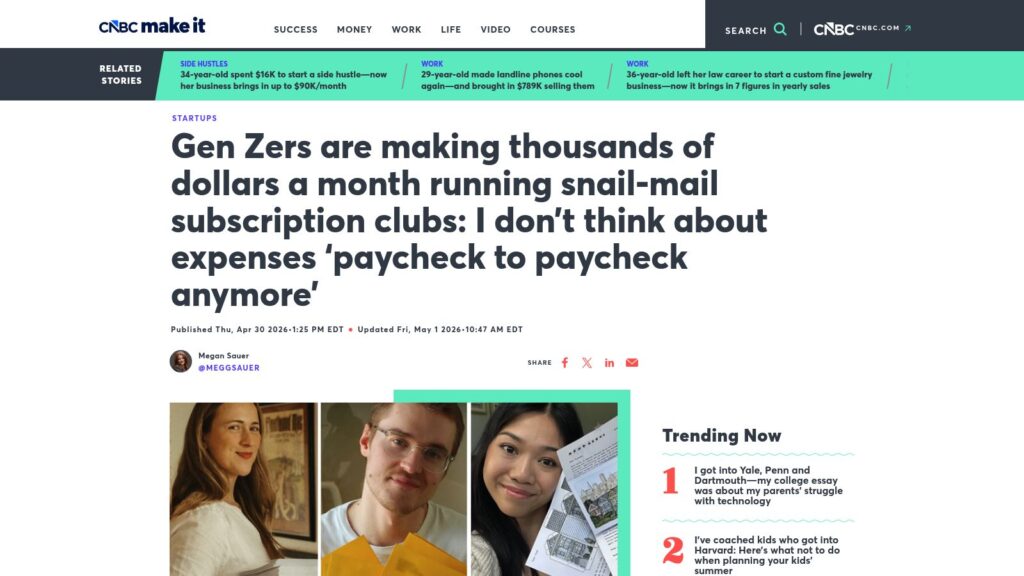
Gen Zers Are Making Thousands of Dollars a Month Running Snail-Mail Subscription Clubs: I Don’t Think About Expenses ‘Paycheck to Paycheck Anymore’

Gen Z entrepreneurs are launching successful snail-mail subscription clubs, sending personalized letters, artwork, and other creative content to thousands of subscribers monthly, earning thousands of dollars in profit. These analog businesses, often promoted via social media, provide financial stability and career confidence for founders like Kiki Klassen and Trinity Shiroma, reflecting a trend towards tactile, offline experiences despite growing digital engagement.

https://www.cnbc.com/2026/04/30/gen-z-snail-mail-subscription-clubs-making-thousands-per-month.html

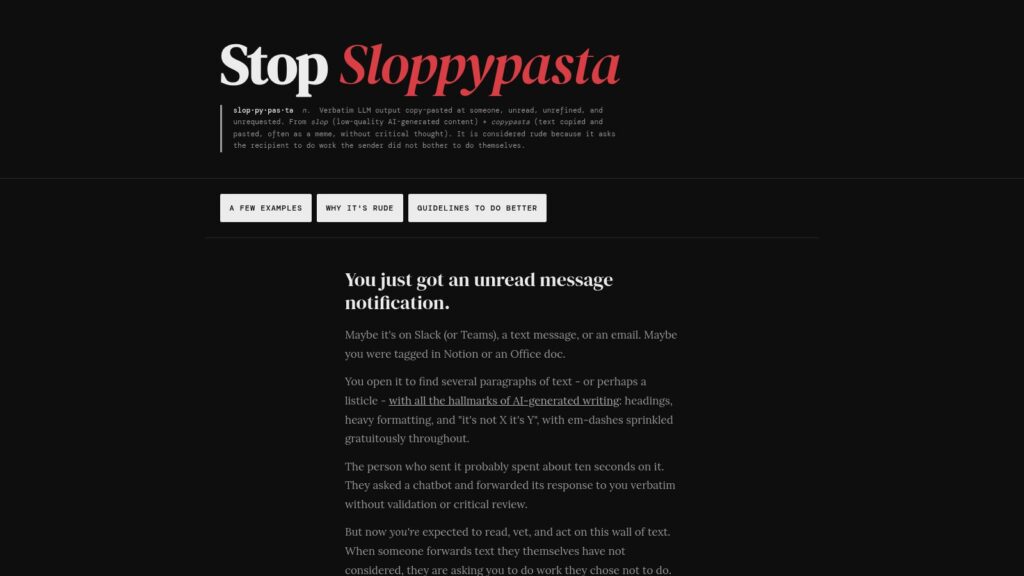
Stop Sloppypasta: Don’t Paste Raw LLM Output at People

Stop Sloppypasta highlights the issue of sharing unrefined, verbatim AI-generated text—termed “sloppypasta”—which is considered rude because it forces recipients to invest effort in reading, verifying, and filtering content the sender did not review or personalize. The site advocates for responsible AI use by encouraging users to read, verify, distill, disclose AI assistance, and only share AI output when requested, to maintain trust and reduce effort asymmetry in communication.

https://stopsloppypasta.ai/en/

Scroll to Top