Tell Us Your Story

The article invites people to share their personal stories about how iA Writer, a focused writing app, has positively impacted their lives or work, highlighting its significance through testimonials from notable users like Stephen Fry and John Gruber. These stories reveal that iA Writer has helped a diverse range of individuals—from writers and artists to those with disabilities—improve their focus, complete projects, and find joy in writing. The collected experiences will contribute to a documentary about software that makes a meaningful difference.

https://ia.net/topics/tell-us-your-story

No Slop Grenade

The article criticizes the practice of sending overly long, AI-generated responses—termed “slop grenades”—in conversations where a brief, human answer would suffice. It argues that such verbose replies waste time, hinder dialogue, and defeat the purpose of direct communication, urging people to use AI to clarify rather than to overwhelm.

https://noslopgrenade.com/

Prosed — Turn Your Content Into a Publish-Ready Book.

Prosed is a service that transforms existing content from newsletters, podcasts, blogs, and other formats into a publish-ready nonfiction book manuscript, preserving the creator's voice. Using a proprietary editorial pipeline and AI reviewer, it structures and refines your material into a complete draft available in a private portal for review, revision, and final export as print-ready files. Offered at a beta price of $47 for the first 100 creators, Prosed aims to simplify book creation by assembling and polishing your content into a professional-quality book efficiently.

https://tryprosed.com/

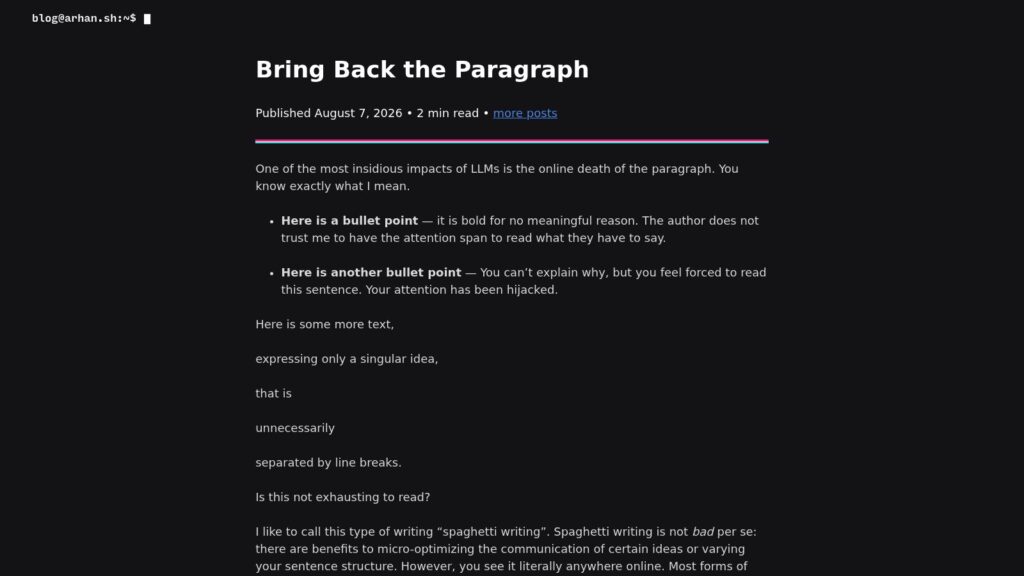
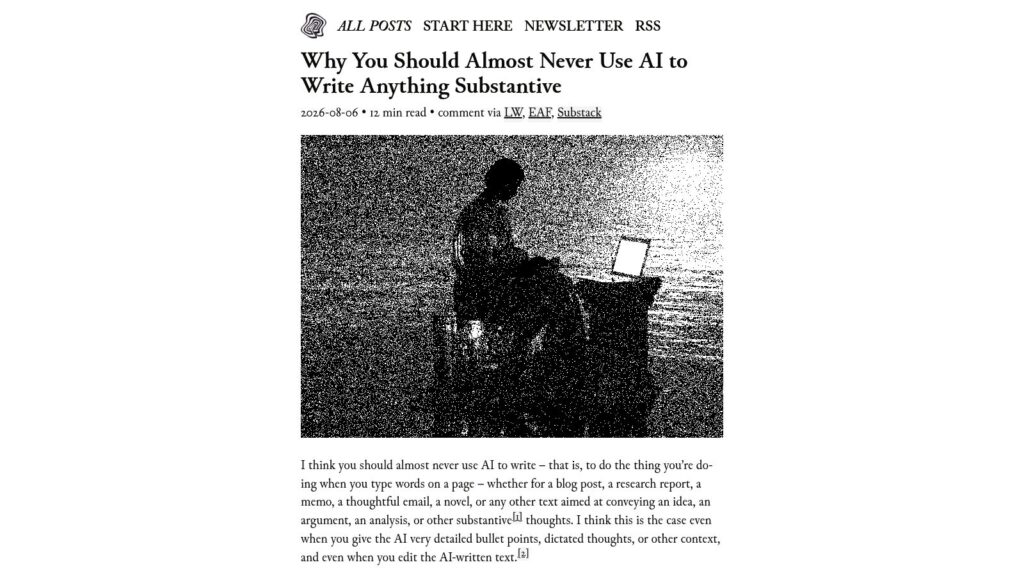
The Social Contract of Writing

The article discusses the pervasive use of large language models (LLMs) in writing, highlighting how their widespread use leads to homogenized, uninspired content that violates a “social contract” wherein the writer is expected to invest significant intellectual effort. It emphasizes the value of original, human-generated writing in a landscape increasingly dominated by AI-produced text and expresses the author's personal commitment to avoid using LLMs for writing to maintain meaningful, authentic expression.

https://jola.dev/posts/the-social-contract-of-writing

Tips for Authors Narrating Their Own Audiobooks

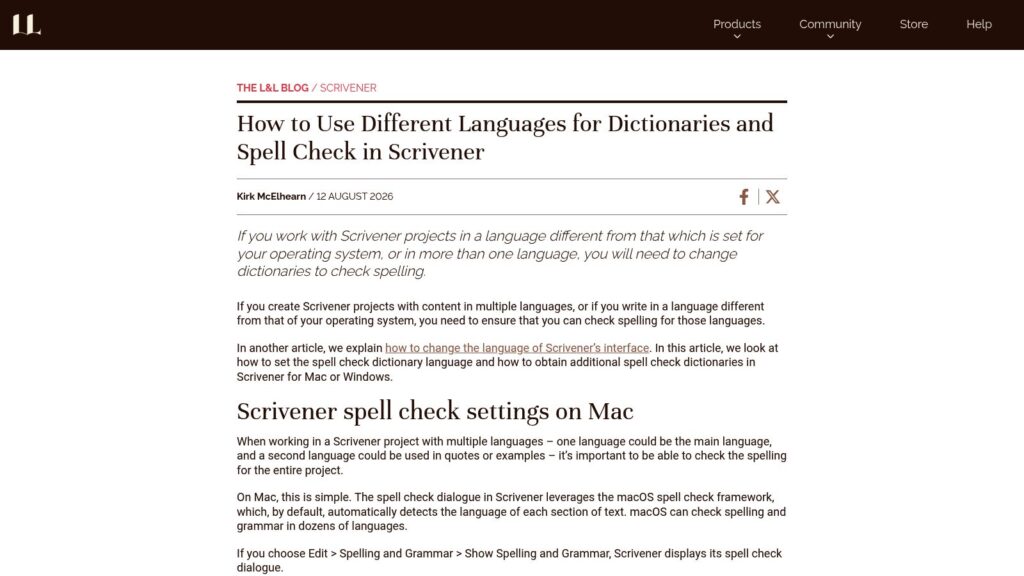
Audiobooks are growing rapidly in popularity, with 38% of Americans listening to at least one in 2024, and sales surpassing $8 billion worldwide. Simon Vance, a renowned audiobook narrator, advises authors narrating their own books that narration requires stamina, consistency, and practice, emphasizing the importance of pacing, taking breaks, and bringing passion—especially for nonfiction works—to create a compelling listening experience.

https://www.literatureandlatte.com/blog/tips-for-authors-narrating-their-own-audiobooks

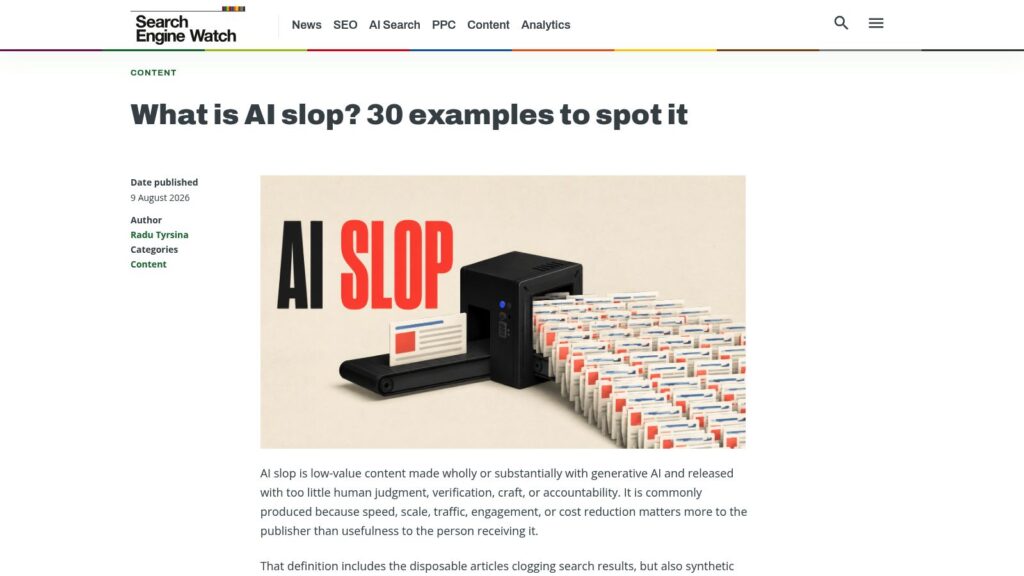
AI-slop , GrantaGate and Bad Writing

The article “AI-slop, GrantaGate and Bad Writing” by Tuhin Chakrabarty discusses concerns about the decline in writing quality, attributing part of the issue to the overreliance on AI-generated content and the controversy surrounding the GrantaGate incident. Chakrabarty emphasizes the importance of maintaining authentic, thoughtful writing in an era increasingly influenced by artificial intelligence.

https://tuhinchakrabarty.substack.com/p/ai-slop-grantagate-and-bad-writing

How Self-Published Authors Can Use Crowdfunding to Fund Their Next Book

Crowdfunding can be an effective way for authors with an existing audience to sell their books, offering various reward tiers from digital copies to deluxe signed editions. Successful campaigns, like Joanna Penn's travel memoir and Marcin Wichary's history of keyboards, demonstrate that crowdfunding provides early income and precise print runs, though it requires careful planning, audience building, and management of logistics and timelines.

https://www.literatureandlatte.com/blog/how-self-published-authors-can-use-crowdfunding-to-fund-their-next-book

The Privilege of Bad Writers

In “The privilege of bad writers,” Corey Robin discusses how certain types of bad writers on social media—droners, first-year grad student types obsessed with erudition, and confused word saladists—exhibit a form of privilege by being indifferent to their audience. Unlike thoughtful writers who engage readers as partners in dialogue, these bad writers fail to acknowledge or care about the human on the other end, which Robin identifies as a form of privilege distinct from commonly discussed social privileges.

https://coreyrobin.com/2026/05/15/the-privilege-of-bad-writers/?ref=thebrowser.com

The 10 Best AI Writing Tools I Recommend as a Pro Writer

The article reviews and recommends the top 10 AI writing tools for creators, small business owners, and marketers, emphasizing their strengths and ideal use cases. It highlights tools like Buffer AI for social media content, Claude for structured and in-depth writing, Jasper for marketing teams, and others, noting that while AI aids in overcoming writer's block and generating ideas, human input remains essential for finalizing content.

https://buffer.com/resources/ai-writing-tools/

Artist Brittany V Wilder on Running a Poem Club

Brittany V Wilder is a visual artist and writer who runs Poem Club, a monthly project sending printed poems to thousands of members by mail, aiming to create tangible, personal connections through physical media rather than digital sharing. She balances her creative practice with the entrepreneurial demands of the project, which has grown into her full-time job, and plans to incorporate more visual art and pursue traditional poetry publication in the future.

https://stories.ulysses.app/artist-brittany-v-wilder-on-running-a-poem-club/

Scroll to Top