psychology

Why People Quit Blogging

The article critiques common online posts explaining why people quit blogging, highlighting that many such articles prioritize SEO and business motives over genuine advice for personal bloggers. It argues that blogging should be approached as a personal, low-pressure hobby rather than a commercial venture, emphasizing authentic voice, manageable expectations, minimal investment, and patience over time instead of focusing on statistics or monetization.

https://unattributed.cc/2026/08/27/why-people-quit-blogging/
How Writing Leads to Thinking (and Not the Other Way Around)

Lynn Hunt argues that writing is not merely the transcription of pre-formed thoughts but a process that actively shapes and generates new thinking. She emphasizes the importance of starting to write without over-reliance on notes and maintaining steady momentum, as clarity and ideas emerge through the act of writing and subsequent revision. Writing, Hunt suggests, requires ongoing effort and authenticity, and teaching it should be prioritized as a skill to develop rather than assumed to be innate.

https://www.historians.org/perspectives-article/how-writing-leads-to-thinking-february-2010/

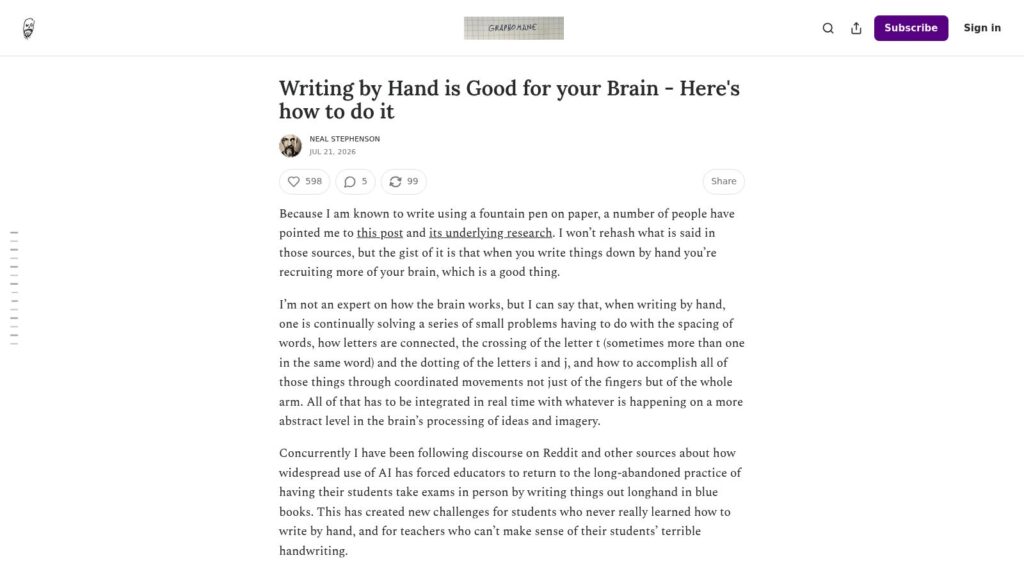
Writing by Hand Is Good for Your Brain – Here’s How to Do It

Writing by hand engages cognitive processes that enhance memory, learning, and creativity, offering distinct benefits over typing. To harness these advantages, individuals can incorporate activities like journaling, note-taking, and freewriting into their routine, prioritizing consistent practice to strengthen brain function and support deeper cognitive engagement.

https://nealstephenson.substack.com/p/writing-by-hand-is-good-for-your

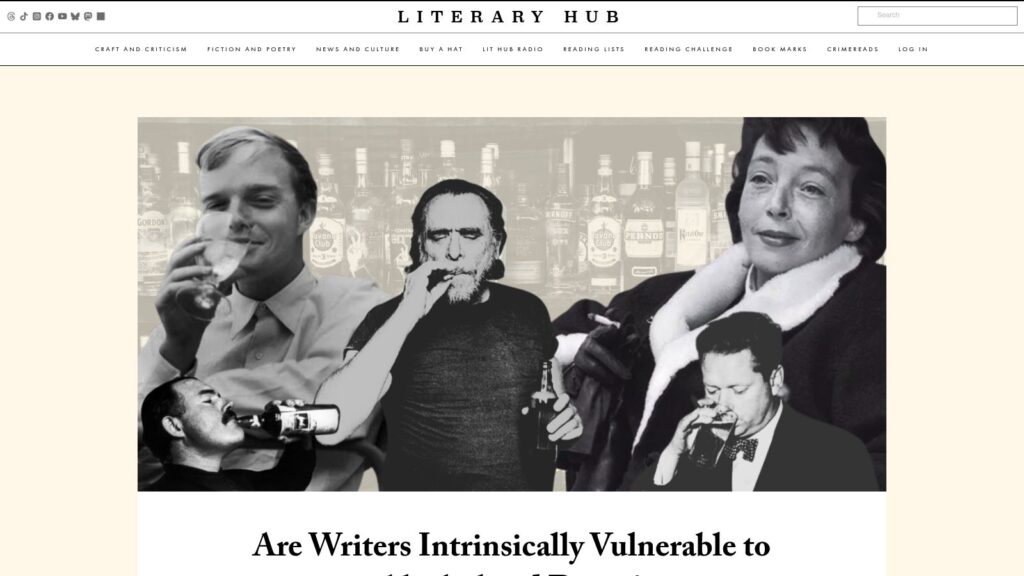
Are Writers Intrinsically Vulnerable to Alcohol and Drugs?

Rosa Montero explores the long-standing association between writers and substance abuse, highlighting how drugs and especially alcohol have historically been used to heighten emotions and disinhibit creativity but often lead to personal and artistic destruction. Through examples ranging from 19th-century opium use to 20th-century alcoholism among Nobel laureates, she illustrates how addiction frequently undermines writers' work and lives despite their belief that it fuels creativity. Montero emphasizes the treacherous nature of these substances, which can brutalize artists while diminishing their creative capacities.

https://lithub.com/are-writers-intrinsically-vulnerable-to-alcohol-and-drugs/

Scroll to Top