self improvement

I’ve Never Wasted My Time Writing
Brennan Kenneth Brown reflects on how writing has never been a waste of time for him, emphasizing that engaging deeply with topics and people—even difficult or “weird” ones—is an ethical practice rooted in curiosity and love. He challenges common advice to ignore online trolls, citing research and examples that show respectful, empathetic dialogue can reduce hostility and foster understanding. Ultimately, Brown views writing and connection as meaningful, sustained practices that enrich his creative process and sustain his long-term publishing.
https://brennan.day/i-ve-never-wasted-my-time-writing/

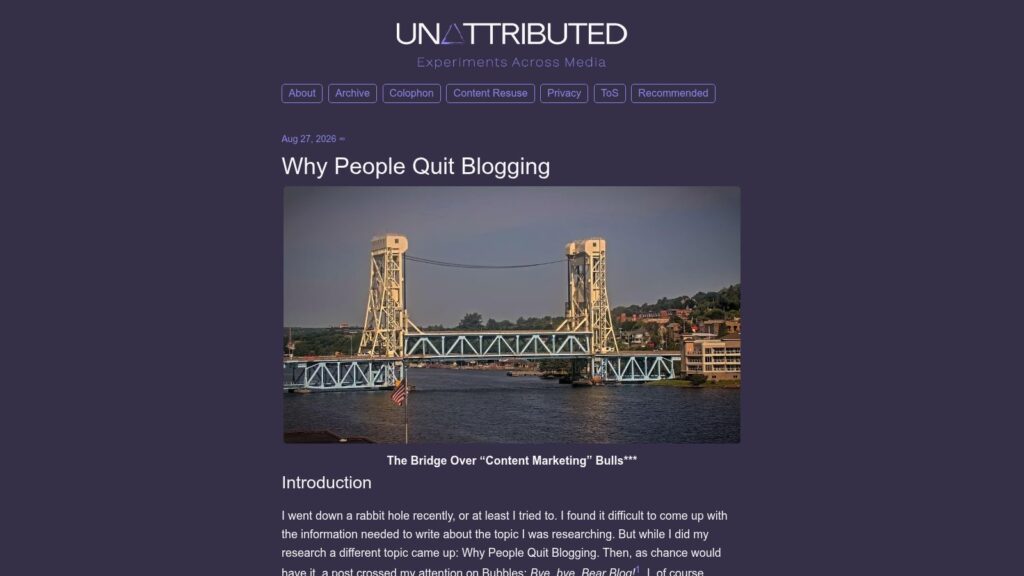
Why People Quit Blogging

The article critiques common online posts explaining why people quit blogging, highlighting that many such articles prioritize SEO and business motives over genuine advice for personal bloggers. It argues that blogging should be approached as a personal, low-pressure hobby rather than a commercial venture, emphasizing authentic voice, manageable expectations, minimal investment, and patience over time instead of focusing on statistics or monetization.

https://unattributed.cc/2026/08/27/why-people-quit-blogging/

How Writing Leads to Thinking (and Not the Other Way Around)

Lynn Hunt argues that writing is not merely the transcription of pre-formed thoughts but a process that actively shapes and generates new thinking. She emphasizes the importance of starting to write without over-reliance on notes and maintaining steady momentum, as clarity and ideas emerge through the act of writing and subsequent revision. Writing, Hunt suggests, requires ongoing effort and authenticity, and teaching it should be prioritized as a skill to develop rather than assumed to be innate.

https://www.historians.org/perspectives-article/how-writing-leads-to-thinking-february-2010/

The Golden Rule for Becoming a Better Writer

T.R. Napper emphasizes that the essential rule for becoming a better writer is to read widely and consistently, as reading educates writers on craft, inspires creativity, and physically shapes the brain to support sustained focus and imagination. He critiques the modern trend of aspiring writers neglecting reading due to digital distractions and argues that reading builds the mental stamina and creative muscles necessary for writing, enabling the immersive flow state critical to storytelling. Napper advises prioritizing reading over screen time to develop as a writer and warns that without a genuine love for reading, one should reconsider pursuing writing seriously.

https://nappertime.com/the-golden-rule-of-becoming-a-better-writer/

Blog About Things You Don’t Understand Yet

Sean Goedecke advocates writing blog posts about topics he doesn’t fully understand to deepen his learning process, emphasizing that writing clarifies thinking and often changes his mind. He views blogging as a disciplined research and reflection practice that benefits from taking clear, even controversial, positions and welcomes feedback—including from AI language models—to refine understanding and improve clarity.

https://www.seangoedecke.com/blog-about-things-you-dont-understand-yet/

Blogging Saved My Life

After graduating university, Brennan Kenneth Brown chose to pursue public writing daily instead of a traditional tech job, finding that blogging consistently transformed his life by fostering curiosity, human connection, and accountability while developing his skills and projects. He highlights that writing publicly has not only opened doors and friendships for him but also serves as a therapeutic practice with documented benefits for mental and physical health. Through personal experience and examples of others, Brennan advocates for writing as a powerful act of self-expression and healing and encourages others to start or deepen their own writing journeys.

https://brennan.day/blogging-saved-my-life/

Scroll to Top