Scrivener

Unlocking Creativity: How Changing Your Environment Fuels Writing Inspiration
Change writing habits, environment for creativity. Writers find inspiration in diverse settings: hotel rooms (like Maya Angelou), wardrobe changes (Hugo, Caro), music (instrumental or personal favorites), and writing sheds. Art can inspire creativity too; museums or personal art can shift perspective. Experiment with these methods to enhance writing.
https://www.literatureandlatte.com/blog/creative-sparks-unconventional-ways-to-ignite-your-imagination

How the Pomodoro Technique Can Boost Creativity

Pomodoro Technique: time-management system with 25 mins work, 5 mins break. Enhances creativity and productivity; helps combat writer’s block. Developed by Francesco Cirillo using a kitchen timer. It transforms daunting tasks into manageable sessions and allows mental resets. Use any timer—digital, web app or manual; adapt as needed. Effective for boosting productivity, but may not suit everyone’s style.

https://www.literatureandlatte.com/blog/how-the-pomodoro-technique-can-boost-creativity

How to Nurture Your Unconscious Mind and Enhance Your Creativity

Creative writing engages the unconscious mind, enhancing creativity. Writers often create spontaneously, reflecting their subconscious during the writing process. Techniques to nurture this include allowing time for background processing, daydreaming, repetitive activities, brainstorming, freewriting, and paying attention to dreams. Establishing regular practices exercises the unconscious, making creativity more accessible.

https://www.literatureandlatte.com/blog/how-to-nurture-your-unconscious-mind-and-enhance-your-creativity

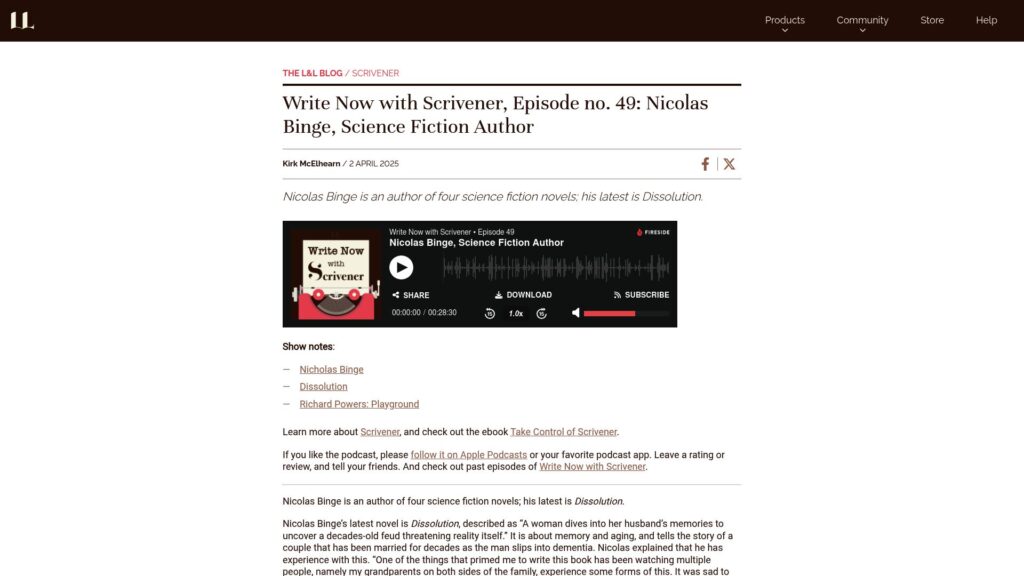
Write Now With Scrivener, Episode No. 49: Nicolas Binge, Science Fiction Author

Nicolas Binge, author of four sci-fi novels, released Dissolution, exploring memory, aging, and a woman’s quest to uncover her husband’s faded memories due to dementia. The narrative intertwines two timelines, reflecting on identity loss and offering a love story. Binge discusses writing challenges and mentions his positive experience with Scrivener software for structuring his work.

https://www.literatureandlatte.com/blog/write-now-with-scrivener-episode-no-49-nicolas-binge-science-fiction-author

3 Power-User Tips for Working More Efficiently With the Scrivener Binder

Three tips for optimizing the Binder in Scrivener:
1. Show document counts in folder icons to manage projects better.
2. Add links to files in the Inspector for quick reference.
3. Use Editor navigation history for efficient document navigation.

Implementing these tips can enhance your workflow in Scrivener.

https://www.literatureandlatte.com/blog/3-power-user-tips-for-working-more-efficiently-with-the-scrivener-binder

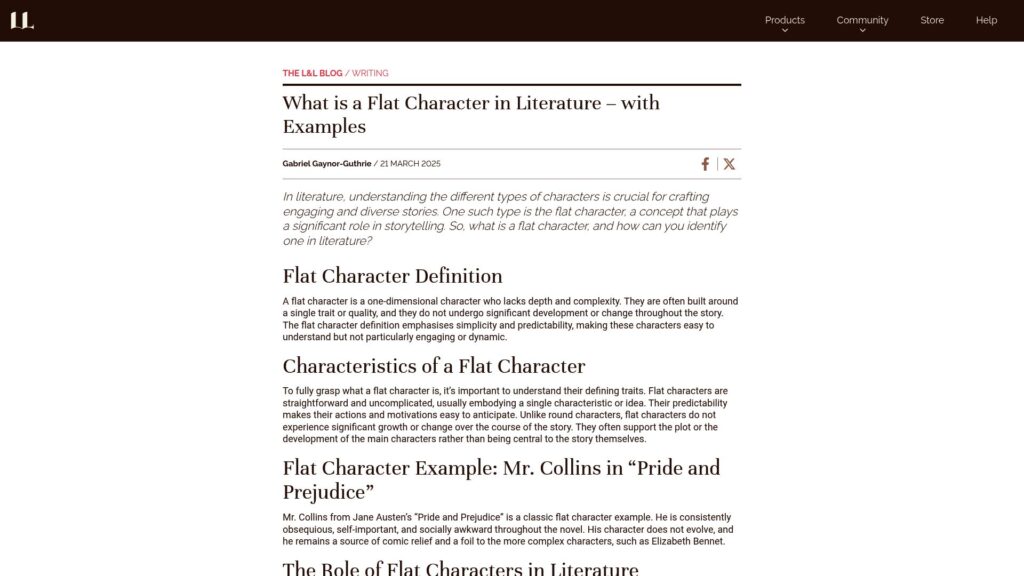
What Is a Flat Character in Literature – With Examples

TLDR: Flat characters are simple, one-dimensional figures in literature who lack depth and do not undergo significant development. They often support the plot or main characters, provide comic relief, and exemplify themes. Examples include Mr. Collins in “Pride and Prejudice” and Bruce the Shark in “Finding Nemo.” While less dynamic than round characters, flat characters are crucial for storytelling balance and narrative flow.

https://www.literatureandlatte.com/blog/what-is-a-flat-character-in-literature

Create a Writing Submission Tracker in Scrivener

Use Scrivener to track writing submissions instead of spreadsheets, integrating submission info within writing projects. Create a Submissions folder in Scrivener, add files for each submission, and utilize custom metadata for tracking. View submissions in Outline or Corkboard to easily manage and organize submission details. This method saves time and streamlines the submission process.

https://www.literatureandlatte.com/blog/create-a-writing-submission-tracker-in-scrivener

10 Great Podcasts for Writers by Writers

Podcasts by writers for writers offer insights into writing and publishing. Top recommendations include “The Creative Penn Podcast,” “The Shit No One Tells You About Writing,” and “Writing Excuses.” These shows provide tips, interviews, and industry knowledge, essential for improving writing skills and understanding self-publishing.

https://www.literatureandlatte.com/blog/10-great-podcasts-for-writers-by-writers

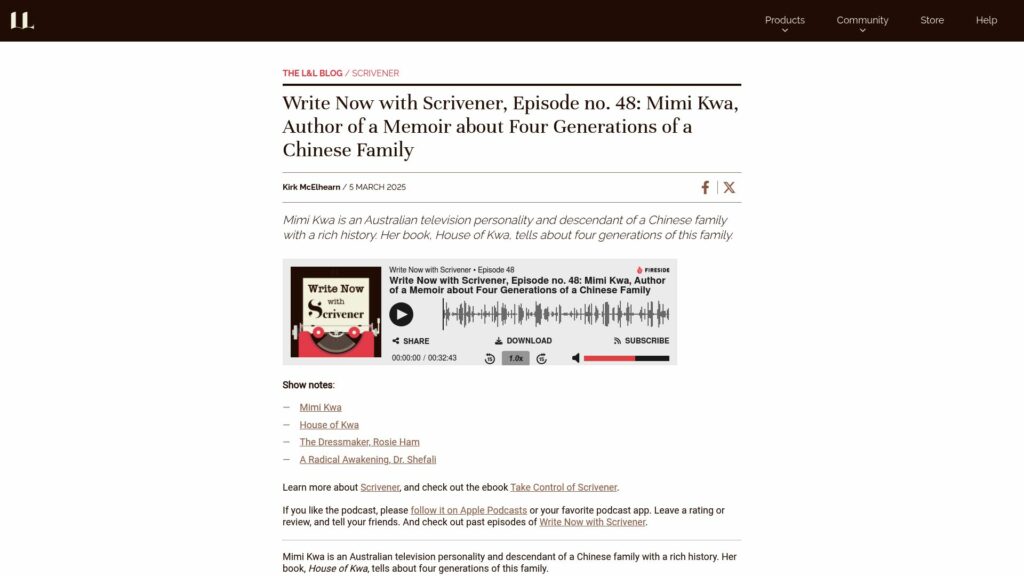
Write Now With Scrivener, Episode No. 48: Mimi Kwa, Author of a Memoir About Four Generations of a Chinese Family

Mimi Kwa, an Australian TV personality from a Chinese family, recounts her family’s history in her book House of Kwa, spanning four generations. The memoir opens with a legal dispute involving her late aunt’s estate, highlighting cultural conflicts. It explores her family’s silk trading legacy in China and their migration to Australia, where her father faced racism and eventually thrived in the hostel business. Mimi’s writing process improved significantly with Scrivener, and her book has connected her with a global diaspora of relatives.

https://www.literatureandlatte.com/blog/write-now-with-scrivener-episode-no-48-mimi-kwa-author-of-a-memoir-about-four-generations-of-a-chinese-family

Scroll to Top