writing

Monkeytype

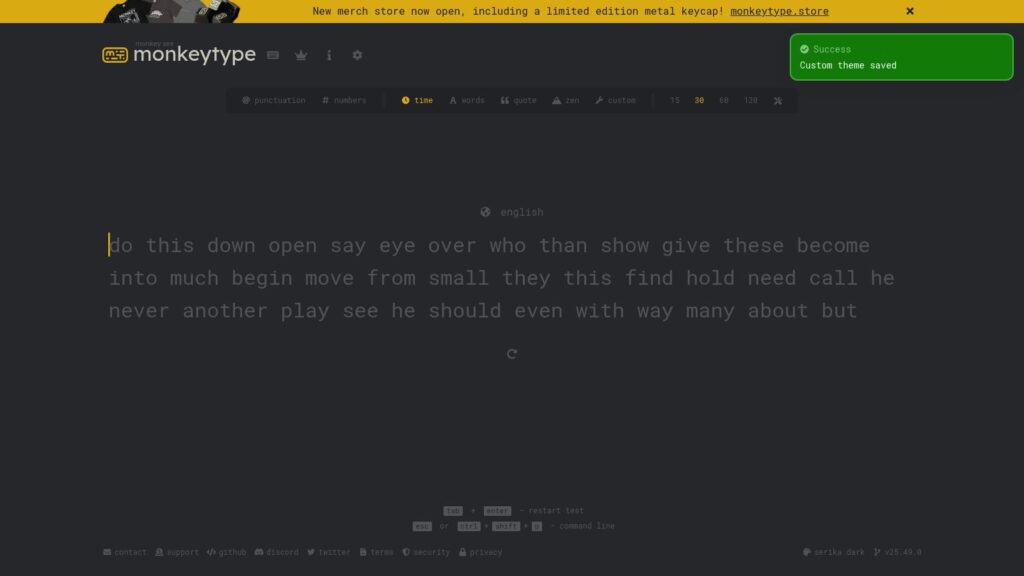
Monkeytype is a minimalist, customizable typing test platform launched in May 2020. It offers various test modes, an account system for tracking progress, and user-configurable features like themes and sounds. The site has seen over 4.76 billion tests and almost 11 million hours of typing. It provides detailed feedback on typing speed, accuracy, and consistency. The community actively supports development through feedback, donations, and code contributions, with numerous top supporters and contributors recognized.

https://monkeytype.com/

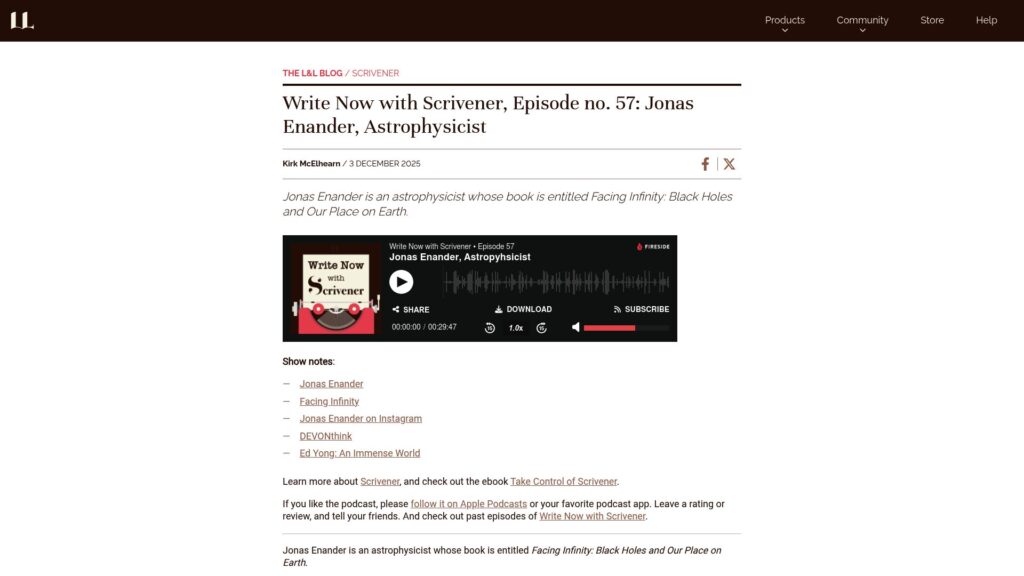
Write Now With Scrivener, Episode No. 57: Jonas Enander, Astrophysicist

Jonas Enander, an astrophysicist, authored Facing Infinity: Black Holes and Our Place on Earth. He explains the role of astrophysicists versus astronomers, discusses human perspectives on black holes, and critiques their portrayal in films like Interstellar. He emphasizes science as a human endeavor influenced by emotions and prestige yet capable of producing objective knowledge. Enander utilized Scrivener for writing his book, valuing its organizational features and distraction-free modes. Despite the long-term nature of astrophysics research, he feels fortunate to contribute to current discoveries in black hole astronomy.

https://www.literatureandlatte.com/blog/write-now-with-scrivener-episode-no-57-jonas-enander-astrophysicist

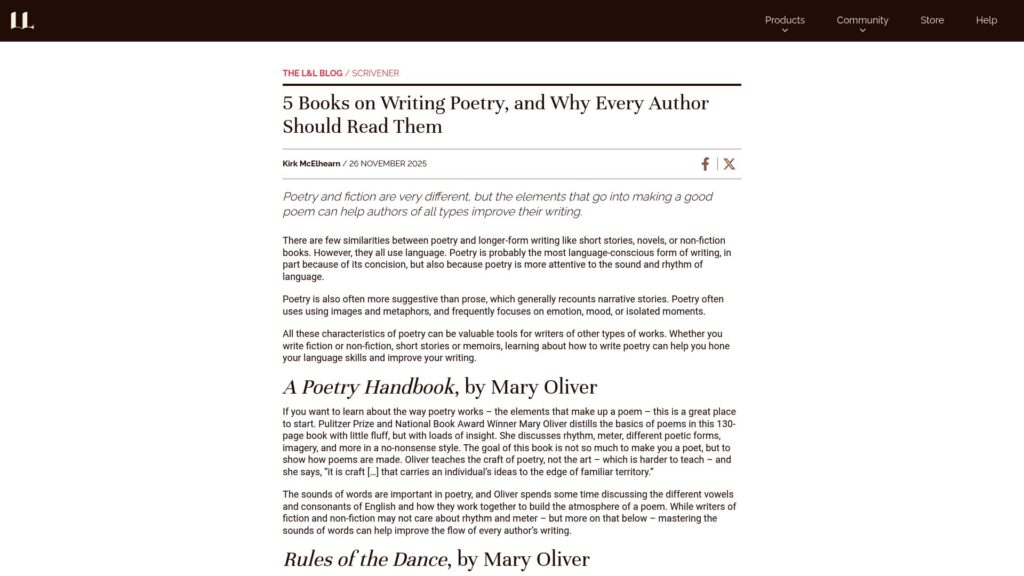
5 Books on Writing Poetry, and Why Every Author Should Read Them

Poetry and fiction differ, but poetry's language elements can enhance all writing types. Poetry's focus on sound, rhythm, and emotional imagery offers valuable tools for authors. Recommended readings include Mary Oliver's A Poetry Handbook, which teaches poetry's craft, and Rules of the Dance, focusing on metrical verse. Dr. Mardy Grothe's I Never Metaphor I Didn’t Like highlights metaphor's use in language. Robert Hass's A Little Book on Form explores poetic constraints that inspire creative writing. Poetry anthologies provide exposure to diverse poetic styles and cultures, enriching writers' perspectives.

https://www.literatureandlatte.com/blog/5-books-on-writing-poetry-and-why-every-author-should-read-them

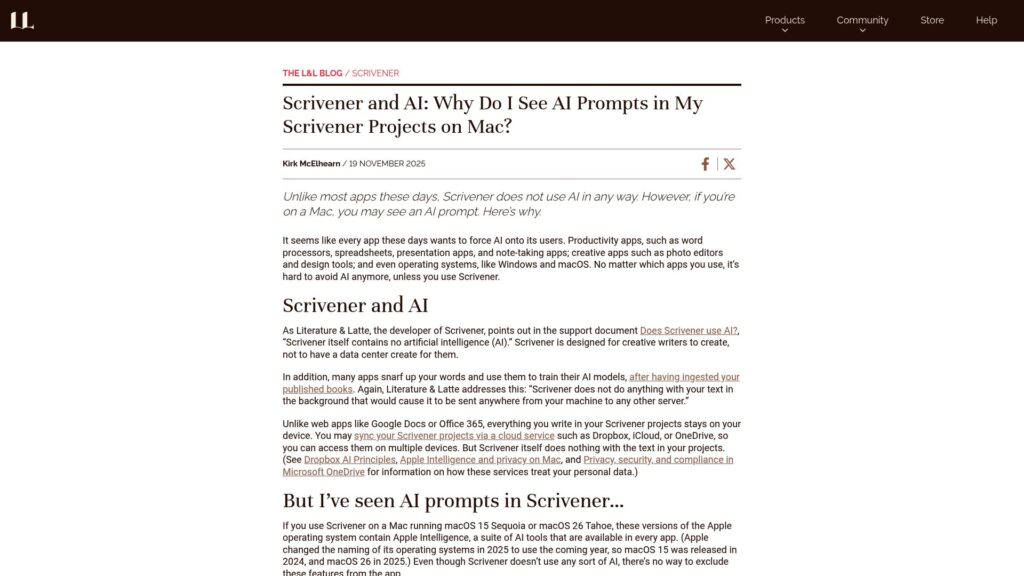
Scrivener and AI: Why Do I See AI Prompts in My Scrivener Projects on Mac?

Scrivener doesn't use AI; prompts on Mac stem from Apple's AI tools. Unlike many apps, Scrivener keeps all text on-device and doesn’t send data to servers. Users may see AI features in newer macOS versions, but these cannot be removed from Scrivener. To disable Apple's AI prompts, turn off Apple Intelligence in system settings.

https://www.literatureandlatte.com/blog/scrivener-and-ai-why-do-i-see-ai-prompts-in-my-scrivener-projects-on-mac

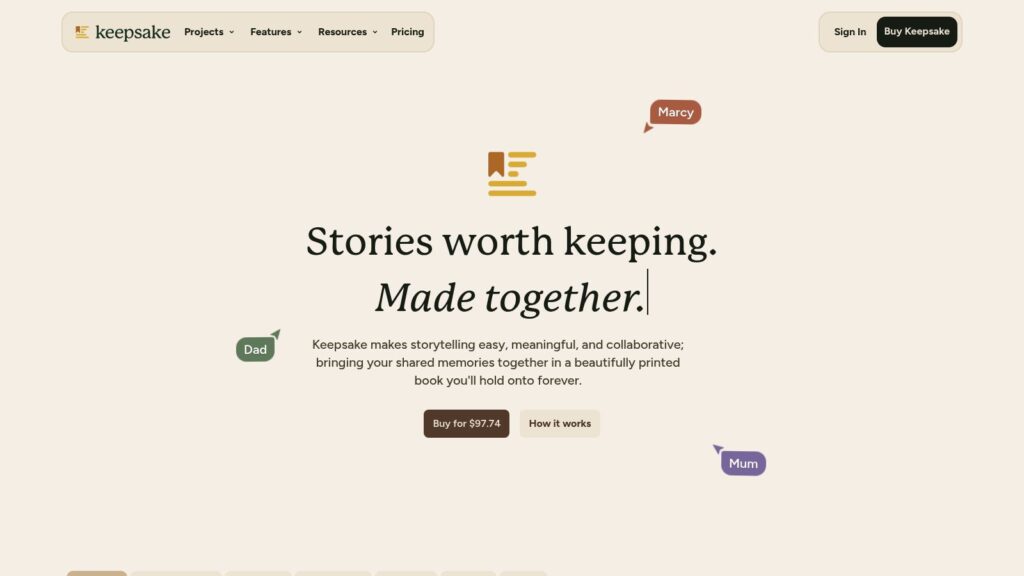
Keepsake

Keepsake simplifies collaborative storytelling, allowing users to create beautiful printed memoirs filled with shared memories. The platform offers customizable projects like autobiographies, biographies, and memorials, supported by thoughtful prompts and image editing tools. Users can invite family to contribute, transforming the memoir crafting into a collective experience. Subscription plans include unlimited projects, collaboration features, and a printed book credit. Keepsake's focus is on meaningful storytelling, preserving memories for future generations.

https://www.keepsakeproject.co/

writerDeck.org

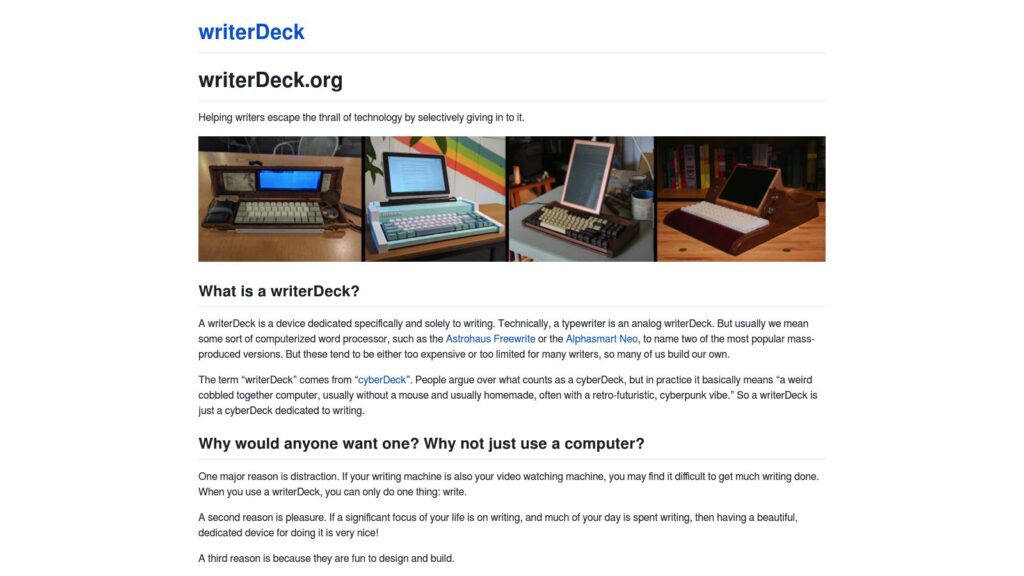
writerDeck.org promotes devices solely for writing, minimizing distractions. Examples include typewriters and custom setups (cyberDecks) for unique experiences. Reasons for using a writerDeck include reducing distractions, enhancing enjoyment, and creative design. Mass-produced and DIY options exist, along with software to customize devices. Alternatives to laptops and tablets are available. Building a writerDeck is accessible for those willing to learn. Handwriting remains a low-cost alternative. An active Reddit community offers support and information.

https://www.writerdeck.org/

How to Write Short Story or Essay Collections in Scrivener

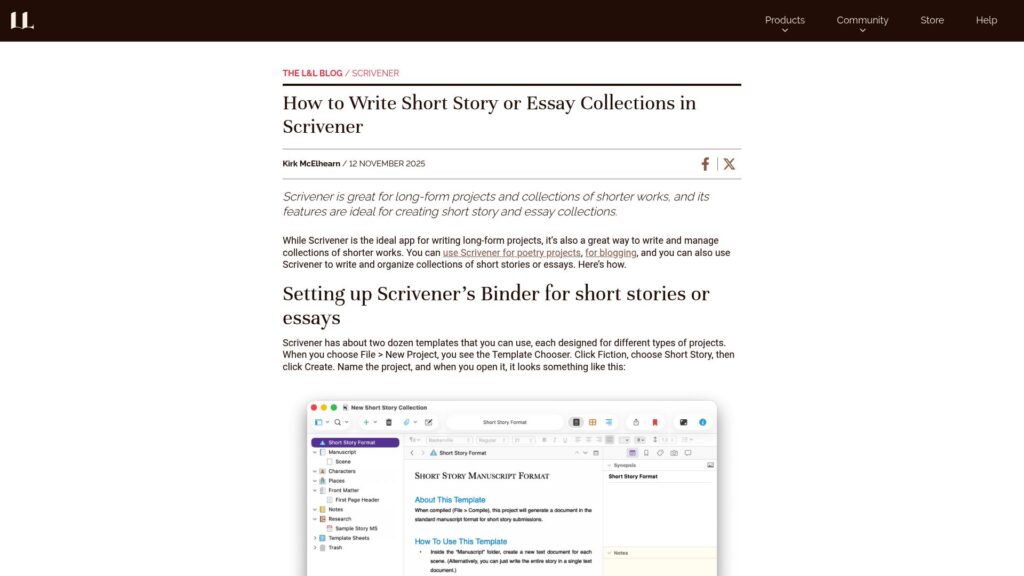
Scrivener is excellent for long-form projects and collections of shorter works, offering features ideal for short stories and essays. It provides various templates for organizing writing, allows for effective revisions with snapshot backups, and helps manage story sequencing for a compelling collection. The final compilation process prepares works for sharing or publication, including ebook formatting options. Kirk McElhearn, writer and podcaster, authored “Take Control of Scrivener.”

https://www.literatureandlatte.com/blog/how-to-write-short-story-or-essay-collections-in-scrivener

How to Use the SCAMPER Method to Improve Your Writing

Extreme TLDR: SCAMPER is a structured brainstorming method (Substitute, Combine, Adapt, Modify, Put to another use, Eliminate, Reverse) for generating ideas by reworking existing ones. It helps overcome creative blocks, refines drafts, and is applicable across various writing types. Use SCAMPER during brainstorming or revisions to explore new angles and improve clarity.

https://www.grammarly.com/blog/writing-process/scamper-method/

Scroll to Top