admin

It’s Getting Harder to Spot AI in Contemporary Publishing. And That’s Very, Very Bad.
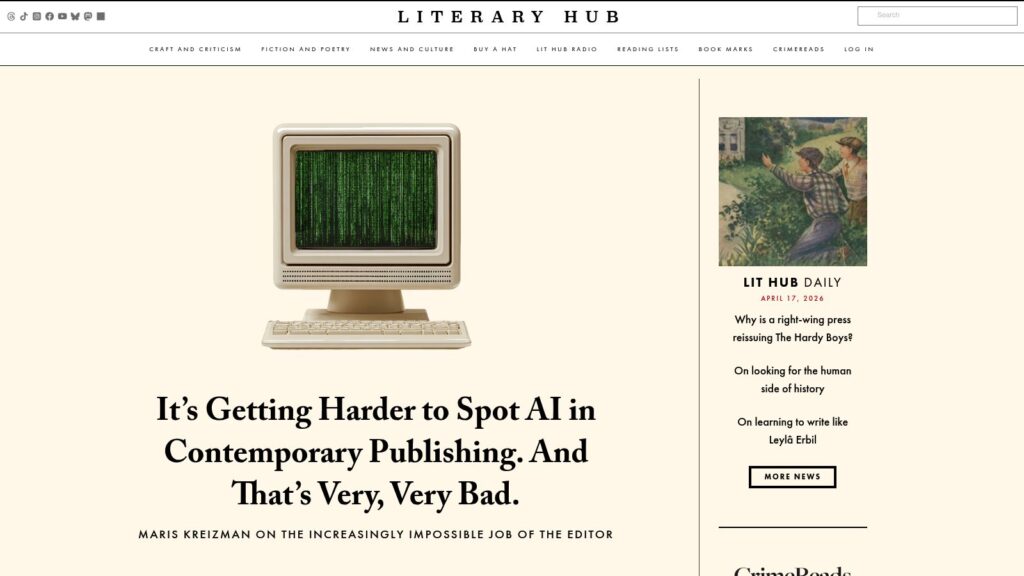
Maris Kreizman discusses the challenges the publishing industry faces in detecting AI-generated text amid the growing sophistication of large language models and the flawed nature of AI detection tools. She argues that the core issue lies in overworked editors and a corporate culture prioritizing quantity over quality, emphasizing that giving editors more time and resources to carefully edit is essential to maintaining the integrity and care of published works.

https://lithub.com/its-getting-harder-to-spot-ai-in-contemporary-publishing-and-thats-very-very-bad/
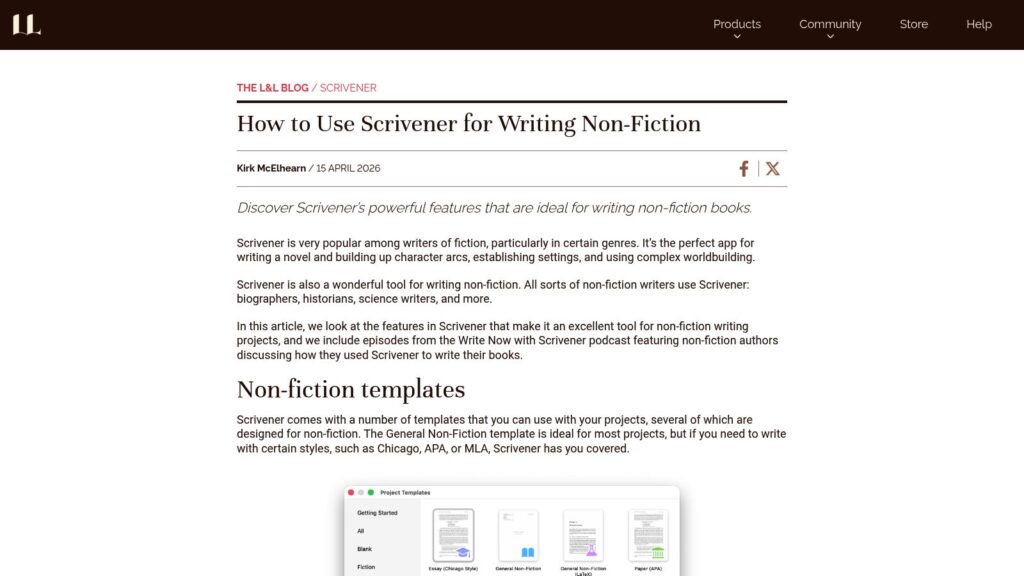
How to Use Scrivener for Writing Non-Fiction

Scrivener offers powerful features ideal for writing non-fiction books, including specialized templates, flexible organizational tools like the Binder, Corkboard, and Outliner, and a Research folder to store diverse reference materials. It supports footnotes, comments, and annotations, and its flexible compiling options allow writers to produce well-structured manuscripts efficiently, making it a popular choice among non-fiction authors such as biographers, historians, and science writers.

https://www.literatureandlatte.com/blog/how-to-use-scrivener-for-writing-non-fiction

How To End a Story: The 6 Ways All Stories End

The article discusses six common types of story endings—resolved, open, twist, circular, tragic, and cliffhanger—highlighting how each serves different narrative purposes and genres. It emphasizes the importance of choosing an ending that fits the story’s emotional impact, ensuring plot points are resolved or intentionally left open for interpretation, and refining the ending through revision for a satisfying conclusion.

https://www.literatureandlatte.com/blog/how-to-end-a-story-the-6-ways-all-stories-end

Character Development Exercises

The article emphasizes that creating memorable fictional characters requires moving beyond basic descriptions to exploring their psychology through practical exercises. It offers five character development activities—such as writing them under pressure, describing their private spaces, interviewing them, writing them against type, and showing a shared event from multiple perspectives—that help writers deepen their characters’ complexity and realism. These exercises aim to produce a richer understanding that informs more authentic and emotionally precise writing.

https://www.literatureandlatte.com/blog/character-development-exercises

What Is Exposition in Literature? Definition, Tips, and Examples

Exposition in literature provides essential background information like character history, world-building, and prior events, enabling readers to understand the story. Effective exposition avoids overwhelming info-dumps by integrating details naturally through dialogue, conflict, and timing, as exemplified in works like The Great Gatsby, The Lord of the Rings, and The Hunger Games.

https://www.literatureandlatte.com/blog/what-is-exposition-in-literature-definition-tips-and-examples

Story Structure: 7 Types All Writers Should Know

The article outlines seven key story structure frameworks that writers can use to shape their narratives, including Freytag’s Pyramid, the Three-Act Structure, the Hero’s Journey, the Dan Harmon Story Circle, the Fichtean Curve, Save the Cat, and the Seven-Point Story Structure. These models serve as flexible guides to help writers plot their stories effectively, and the article encourages experimentation with different structures to find what best supports the writer's project.

https://www.literatureandlatte.com/blog/story-structure-7-types-all-writers-should-know

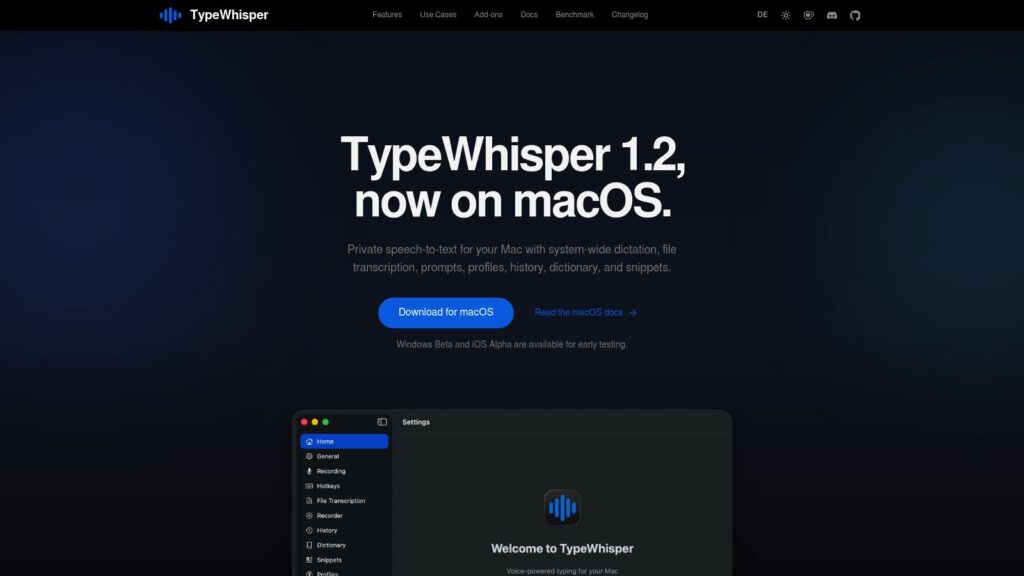
TypeWhisper 1.0 for macOS – Private Speech-to-Text

TypeWhisper 1.2 is a privacy-focused speech-to-text application now available on macOS, offering system-wide dictation, file transcription, prompts, profiles, and history without relying on cloud services. It features multiple speech engines, including Apple-optimized Whisper models, NVIDIA's Parakeet TDT v3, and Apple's native SpeechAnalyzer, supporting various languages, fast processing, and customizable workflows. Windows Beta and iOS Alpha versions are also available for early testing.

https://www.typewhisper.com/en/

Cotypist – AI Autocomplete for Mac – Type Faster, Write Better

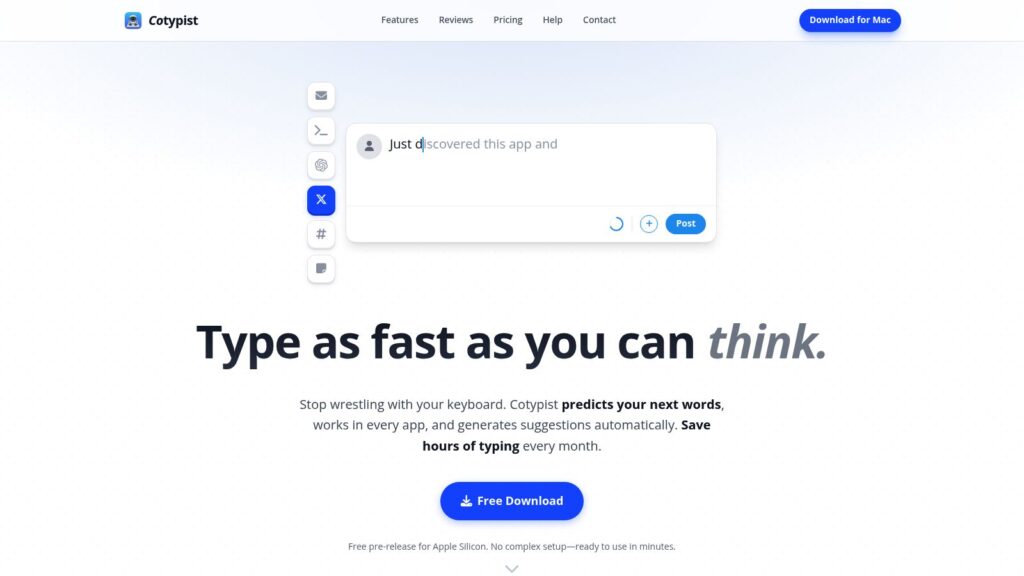
Cotypist is an AI-powered typing assistant for Apple Silicon Macs that predicts and suggests your next words in real-time, helping you type up to 50% faster across almost all Mac apps without interrupting your flow. It runs locally to protect your privacy, adapts to your unique writing style, and aims to augment your productivity rather than replace your creativity by providing intuitive, context-aware completions.

https://cotypist.app/

Writing with AI Is the Same as Writing by AI

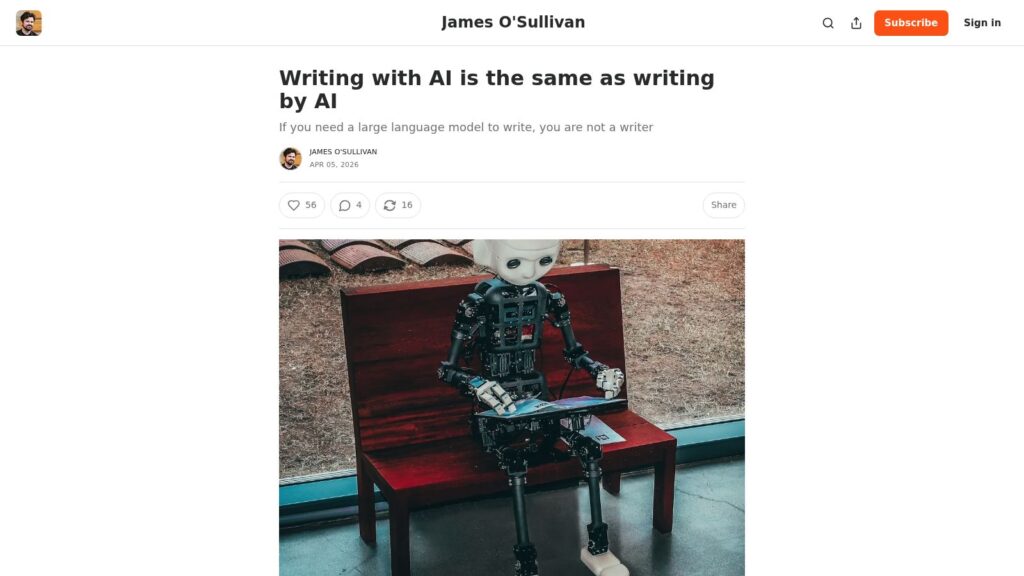
The article argues that the distinction between “writing with AI” and “writing by AI” is misleading, because using AI to draft, revise, or improve text still transfers core parts of the writing process to the model. It explains that human learning from other writers is fundamentally different from how language models generate text from training data, making common comparisons between the two weak. The main point is that relying on AI for composition changes authorship and creative labor, even when a human edits or curates the final result. 

https://jamescosullivan.substack.com/p/writing-with-ai

A Brief History of Lab Notebooks

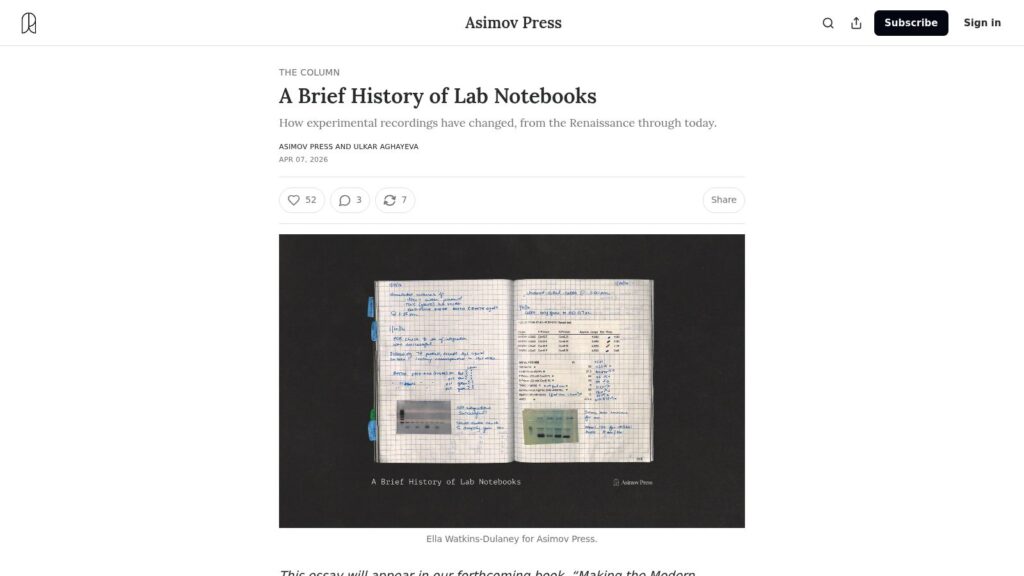
Lab notebooks, a crucial yet often overlooked aspect of scientific research, offer a glimpse into the messy and iterative process of discovery. Originating from Renaissance commonplace books, these notebooks evolved alongside the Scientific Revolution, becoming essential tools for recording and sharing empirical data. While published research papers present a polished narrative, lab notebooks reveal the true nature of scientific inquiry, with its dead ends, false trails, and the relentless pursuit of knowledge.

https://www.asimov.press/p/lab-notebooks

Scroll to Top