Writing

What Is Exposition in Literature? Definition, Tips, and Examples

Exposition in literature provides essential background information like character history, world-building, and prior events, enabling readers to understand the story. Effective exposition avoids overwhelming info-dumps by integrating details naturally through dialogue, conflict, and timing, as exemplified in works like The Great Gatsby, The Lord of the Rings, and The Hunger Games.
https://www.literatureandlatte.com/blog/what-is-exposition-in-literature-definition-tips-and-examples

Story Structure: 7 Types All Writers Should Know

The article outlines seven key story structure frameworks that writers can use to shape their narratives, including Freytag’s Pyramid, the Three-Act Structure, the Hero’s Journey, the Dan Harmon Story Circle, the Fichtean Curve, Save the Cat, and the Seven-Point Story Structure. These models serve as flexible guides to help writers plot their stories effectively, and the article encourages experimentation with different structures to find what best supports the writer's project.

https://www.literatureandlatte.com/blog/story-structure-7-types-all-writers-should-know

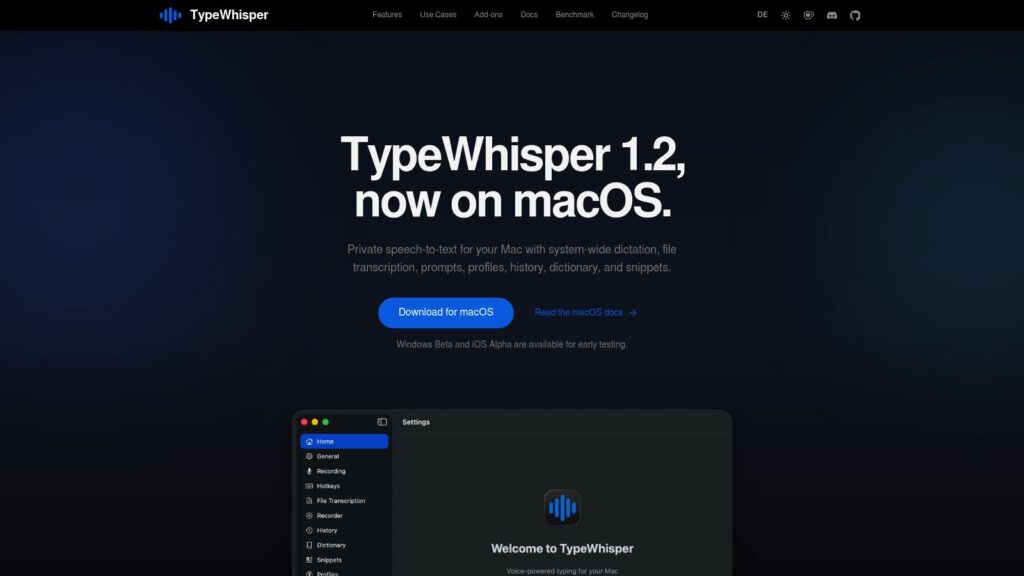
TypeWhisper 1.0 for macOS – Private Speech-to-Text

TypeWhisper 1.2 is a privacy-focused speech-to-text application now available on macOS, offering system-wide dictation, file transcription, prompts, profiles, and history without relying on cloud services. It features multiple speech engines, including Apple-optimized Whisper models, NVIDIA's Parakeet TDT v3, and Apple's native SpeechAnalyzer, supporting various languages, fast processing, and customizable workflows. Windows Beta and iOS Alpha versions are also available for early testing.

https://www.typewhisper.com/en/

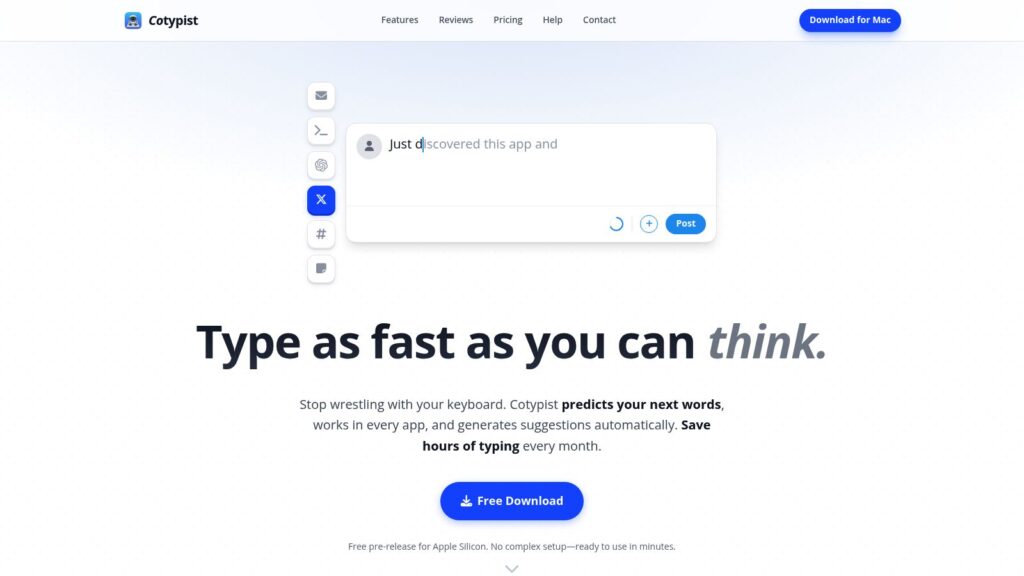
Cotypist – AI Autocomplete for Mac – Type Faster, Write Better

Cotypist is an AI-powered typing assistant for Apple Silicon Macs that predicts and suggests your next words in real-time, helping you type up to 50% faster across almost all Mac apps without interrupting your flow. It runs locally to protect your privacy, adapts to your unique writing style, and aims to augment your productivity rather than replace your creativity by providing intuitive, context-aware completions.

https://cotypist.app/

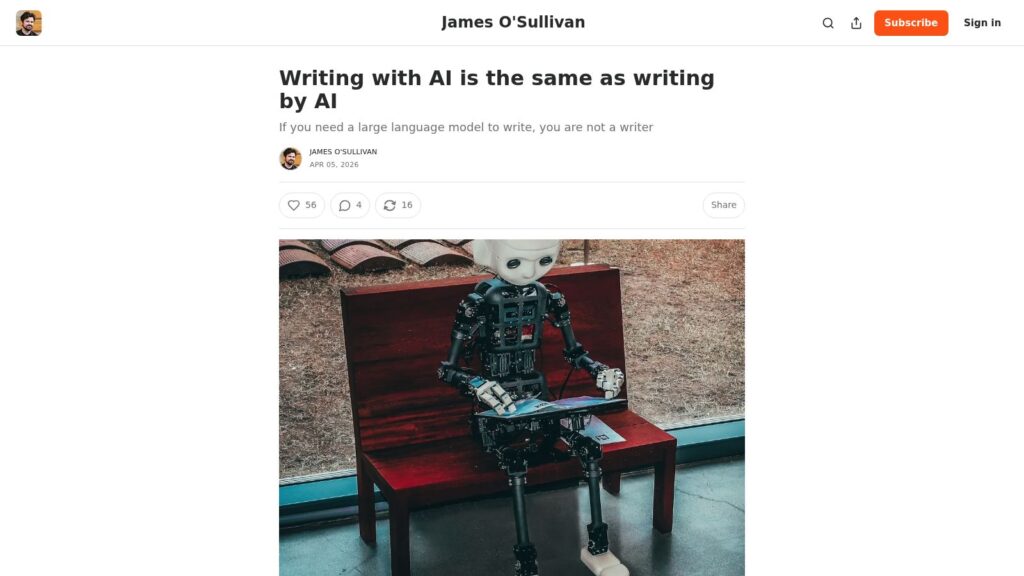
Writing with AI Is the Same as Writing by AI

The article argues that the distinction between “writing with AI” and “writing by AI” is misleading, because using AI to draft, revise, or improve text still transfers core parts of the writing process to the model. It explains that human learning from other writers is fundamentally different from how language models generate text from training data, making common comparisons between the two weak. The main point is that relying on AI for composition changes authorship and creative labor, even when a human edits or curates the final result. 

https://jamescosullivan.substack.com/p/writing-with-ai

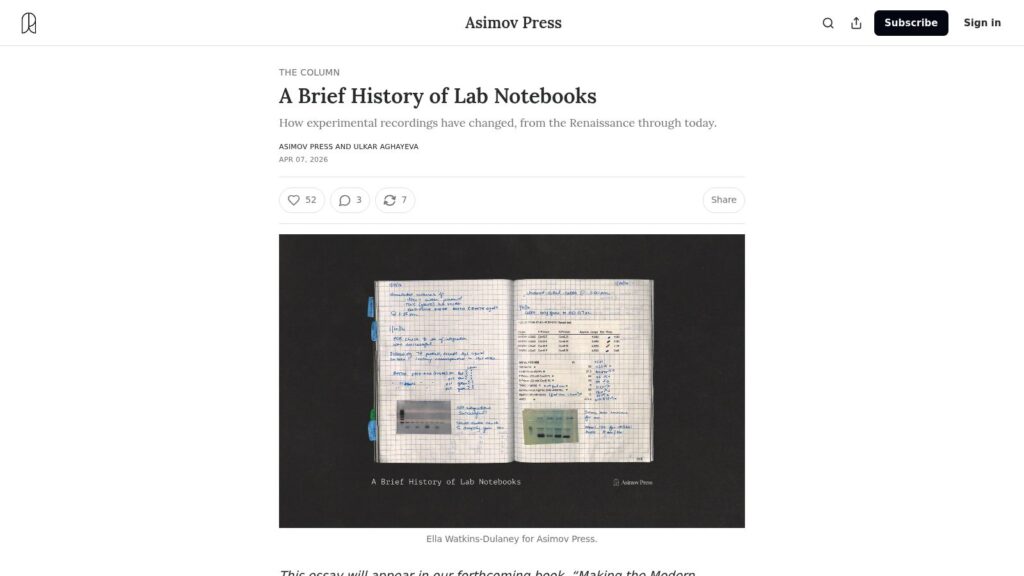
A Brief History of Lab Notebooks

Lab notebooks, a crucial yet often overlooked aspect of scientific research, offer a glimpse into the messy and iterative process of discovery. Originating from Renaissance commonplace books, these notebooks evolved alongside the Scientific Revolution, becoming essential tools for recording and sharing empirical data. While published research papers present a polished narrative, lab notebooks reveal the true nature of scientific inquiry, with its dead ends, false trails, and the relentless pursuit of knowledge.

https://www.asimov.press/p/lab-notebooks

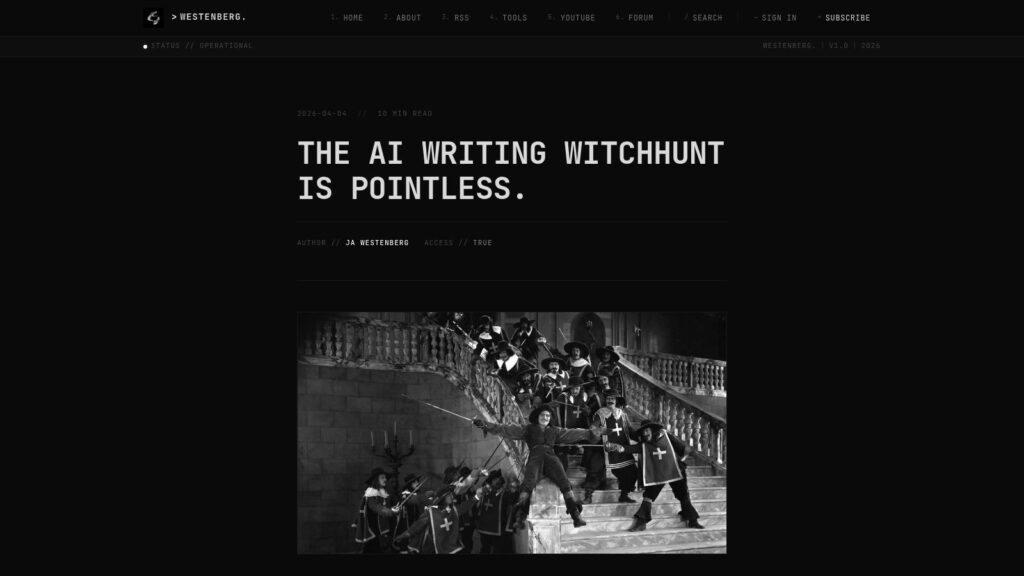
The AI Writing Witchhunt Is Pointless.

Joan Westenberg argues that the current witchhunt against AI-assisted writing is misguided and harmful, highlighting the unreliable nature of AI detection tools and the unfair career damage suffered by authors like Mia Ballard, whose novel was pulled amid unproven AI-use accusations. She compares this to historical collaborative writing practices, emphasizing that attempts to police AI usage through crowdsourced suspicion and flawed detectors threaten all writers without offering meaningful solutions, calling for more reasoned and evidence-based approaches instead.

https://www.joanwestenberg.com/the-ai-writing-witchhunt-is-pointless/

Gilest.org: AI and the Human Voice

In this article, the author expresses skepticism about AI-generated writing, arguing that AI tends to produce clichéd and derivative text lacking subtlety and the human touch found in effective communication. While AI can draft simple content or even poems, it cannot replicate the nuanced, playful flourishes—“tiny sprinklings of poetry”—that human writers use to engage readers and make text memorable; therefore, human input remains essential to refine AI drafts into truly impactful writing.

https://gilest.org/notes/2026/human-ai/

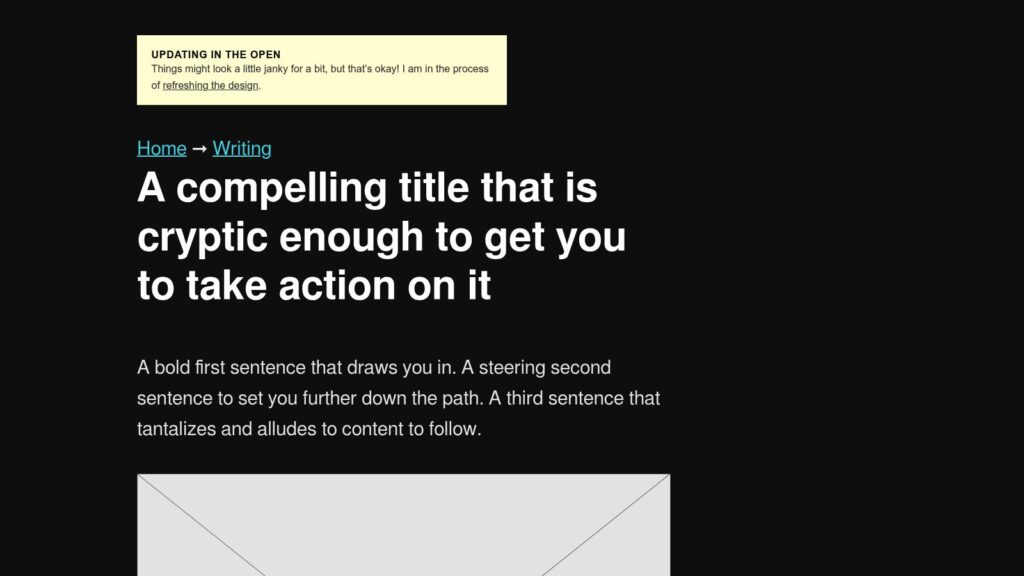
A Compelling Title That Is Cryptic Enough to Get You to Take Action on It

The article outlines a structured approach to writing content that engages readers through compelling titles, clear segmentation with subheadings, and use of formatting like bold text, lists, and code snippets to enhance understanding. It emphasizes progressively deepening the technical detail while maintaining reader interest and concludes by tying the discussed points together to reinforce the main message.

https://ericwbailey.website/published/a-compelling-title-that-is-cryptic-enough-to-get-you-to-take-action-on-it/

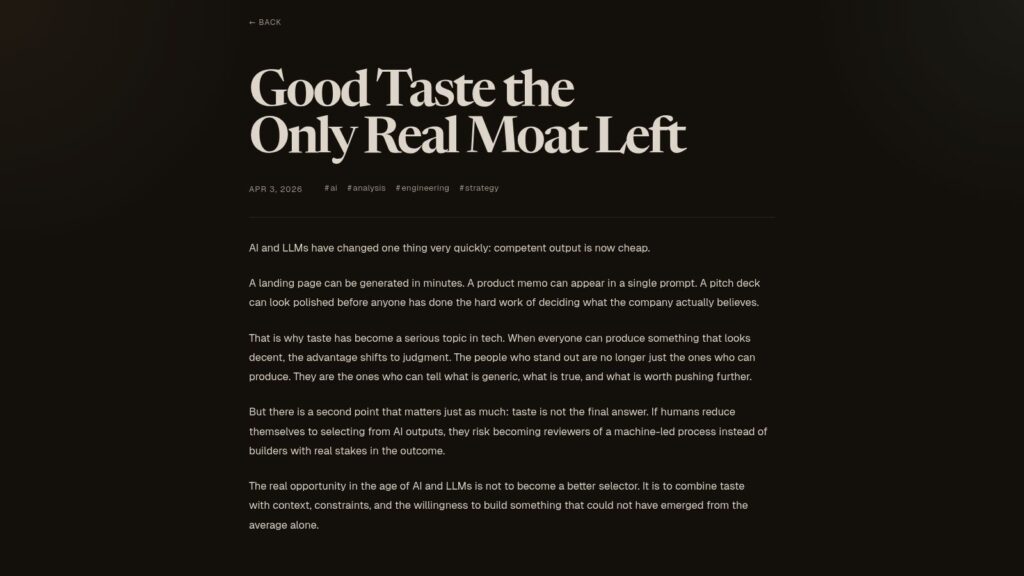
Good Taste the Only Real Moat Left

The article argues that with AI and large language models making competent outputs cheap and abundant, the real competitive advantage has shifted to human judgment, or “taste,” which involves distinguishing what is generic from what is meaningful under uncertainty. However, taste alone is not sufficient; humans must combine it with real-world context, stakes, and authorship to build genuinely valuable work beyond AI-generated average outputs.

https://rajnandan.com/posts/taste-in-the-age-of-ai-and-llms/

Scroll to Top