Writing

Wit, Unker, Git: The Lost Medieval Pronouns of English Intimacy
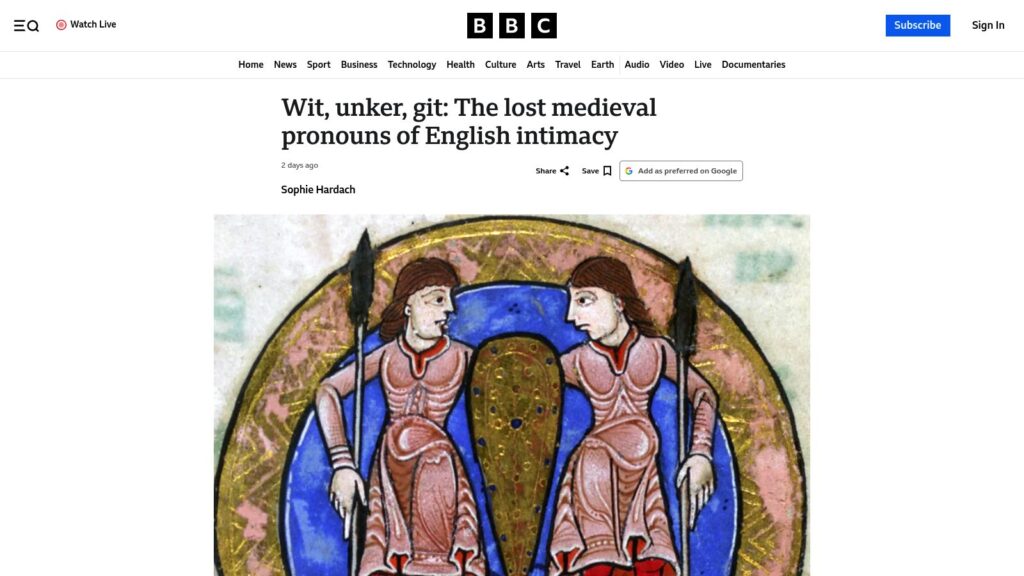
Over 1,000 years ago, Old English included a set of now-extinct dual pronouns like “wit” to specifically refer to “we two,” reflecting a unique intimacy between two people. These dual forms disappeared by the 13th century due to social changes and the language's tendency toward simplification, leaving modern English without distinct pronouns for exactly two people. Despite losing these forms, some ancient pronouns have survived, while others like “they” were introduced from Viking influence, showing how English pronouns evolved through history and cultural contact.

https://www.bbc.com/future/article/20260408-the-extinct-english-words-for-just-the-two-of-us
iOS Just Got Another Google App Before Android, And It Could Change The Way You Write

Google has released a new AI-powered app called Google AI Edge Eloquent exclusively on iPhone before Android, which transforms voice dictation into polished, accurate text using on-device AI without a subscription. The app emphasizes privacy by processing data locally on the device and offers features like personalized vocabulary integration, supporting English on iOS 16 or later, though it is currently unavailable in some European markets due to regulatory issues.

https://www.bgr.com/2142540/ios-google-dictation-app-before-android/

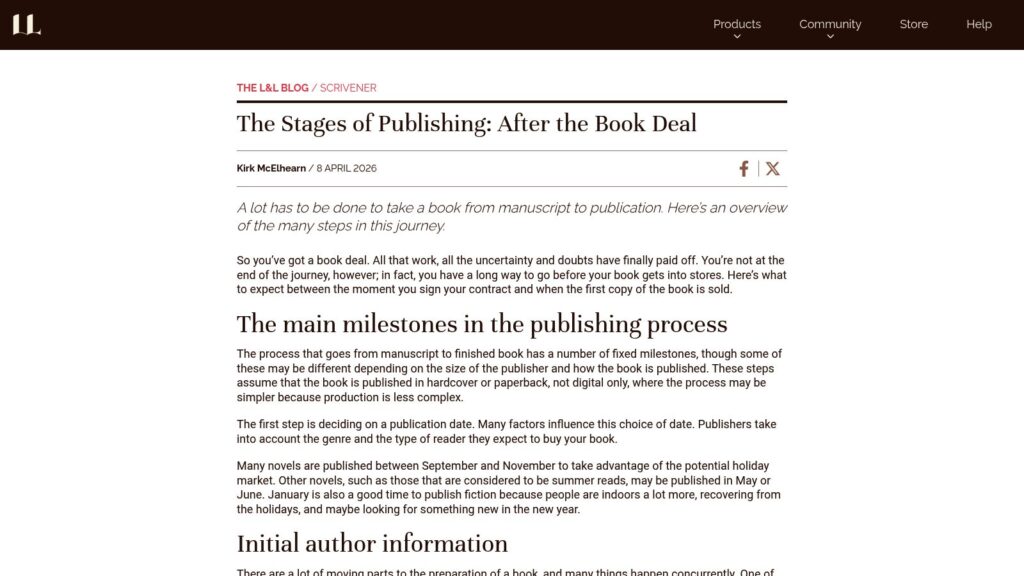
The Stages of Publishing: After the Book Deal

The article outlines the comprehensive process involved in taking a book from manuscript to publication, detailing key stages such as setting a publication date, gathering initial author information, undergoing various rounds of editing, and producing the book’s design and cover. It also covers marketing efforts, sales activities, and financial aspects like advances and royalties, emphasizing the collaboration of many professionals before a book reaches readers.

https://www.literatureandlatte.com/blog/the-stages-of-publishing-after-the-book-deal

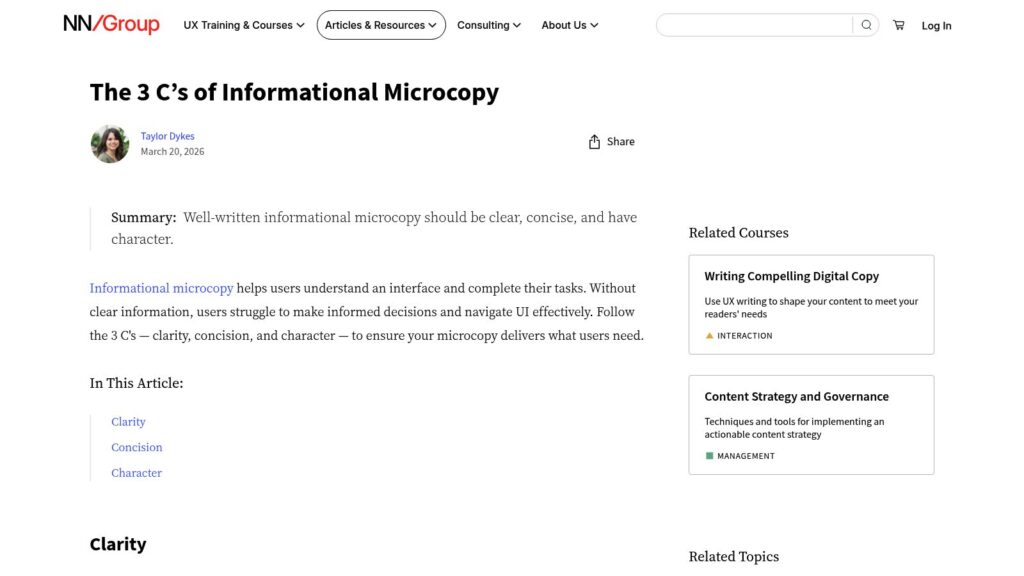
The 3 C’s of Informational Microcopy

Informational microcopy should be clear, concise, and have character to effectively help users understand interfaces and complete tasks. The article emphasizes the 3 C’s framework—clarity, concision, and character—to ensure microcopy provides essential information clearly and memorably without unnecessary length or complexity. Examples from Mastercard, Owala, WHO, Ace Hardware, and OpenAI illustrate how these principles improve user experience and communication.

https://www.nngroup.com/articles/3-cs-microcopy/

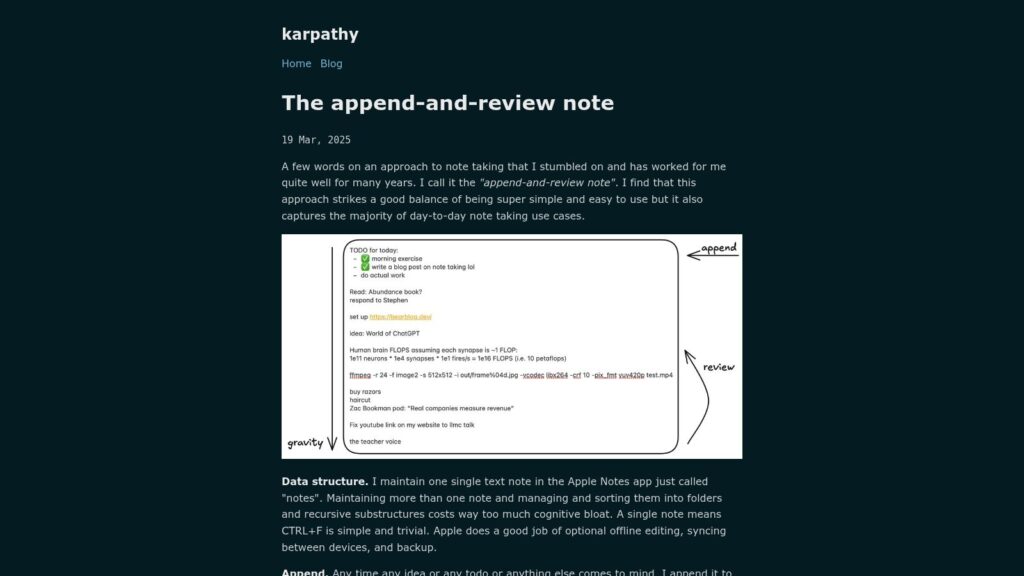
The Append-and-Review Note

Andrej Karpathy describes his “append-and-review note” approach to note-taking, where he maintains a single, continuously appended text note in Apple Notes to capture ideas, todos, and thoughts without organizing them into folders or tags, except for minimal categorization for ease of search. Periodically, he reviews the note by skimming and elevating important items back to the top, finding this simple system effective for managing day-to-day notes while allowing old ideas to resurface or fade naturally.

https://karpathy.bearblog.dev/the-append-and-review-note/

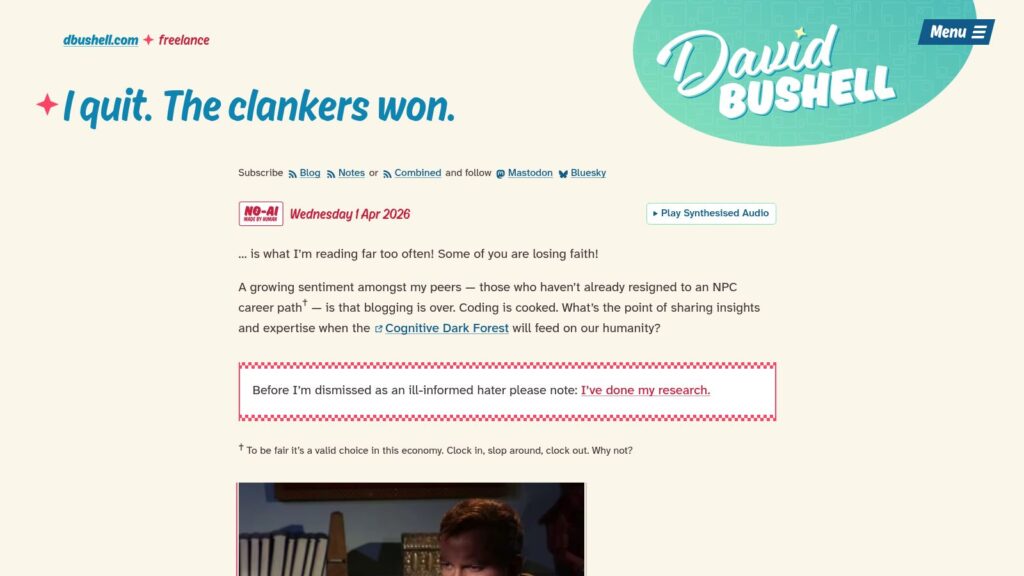
I Quit. The Clankers Won.

In this blog post, the author argues against the growing pessimism that blogging and creative coding are obsolete due to the rise of AI and big tech dominance. They emphasize that now is more important than ever to blog and share authentic, human voices, resisting the dehumanizing effects of AI-driven content and corporate control, and to support the open, indie web as a space for genuine creativity and conversation.

https://dbushell.com/2026/04/01/i-quit-the-clankers-won/

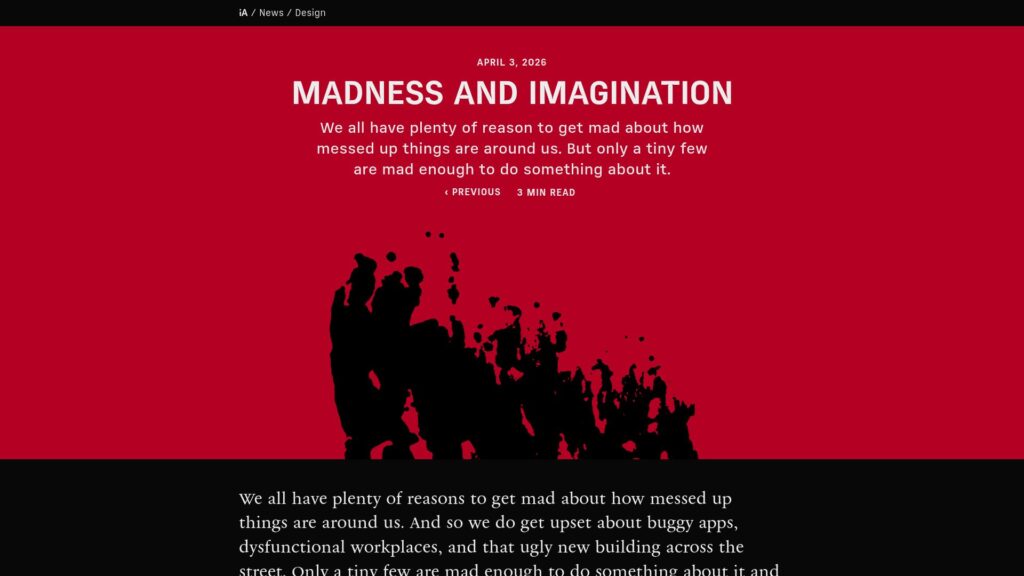
Madness and Imagination

Madness drives us to improve the chaotic world around us, despite common excuses that prevent action. True change requires courage to face ridicule and embrace failure, repeatedly attempting what seems insane. Success stems from persistence and the willingness to think independently. “Madness and Imagination” by Oliver Reichenstein highlights the necessity of resilience in creativity against societal norms.

https://ia.net/topics/madness-and-imagination

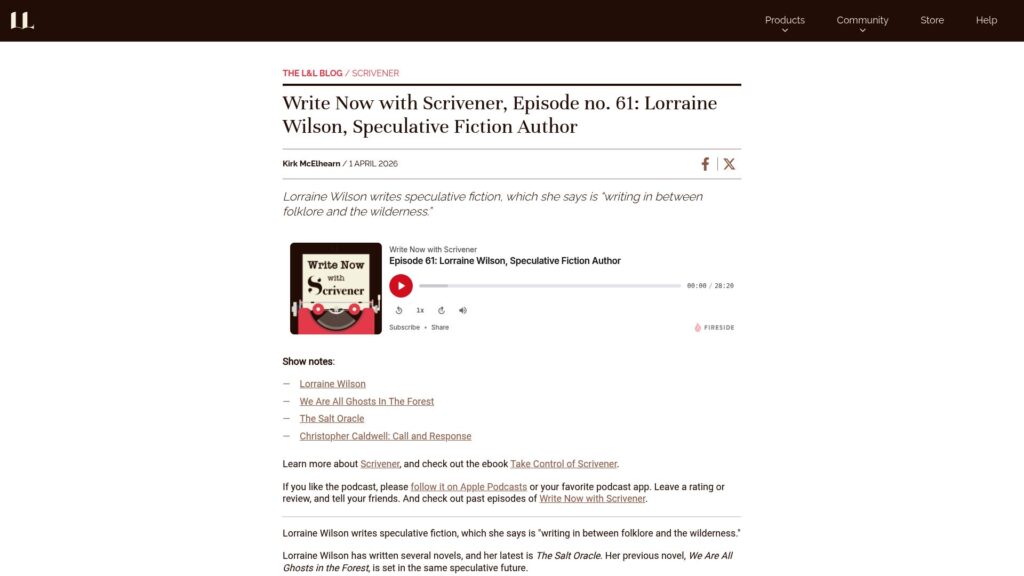
Write Now With Scrivener, Episode No. 61: Lorraine Wilson, Speculative Fiction Author

Lorraine Wilson writes speculative fiction, blending folklore with wilderness themes. Her recent novels, The Salt Oracle and We Are All Ghosts in the Forest, explore dark academia in a dystopian future. She emphasizes rich world-building influenced by her background in animal behavior and conservation. Utilizing Scrivener for organization, she manages multiple character perspectives and maintains voice consistency. Her works envision a world where digital ghosts threaten lives, prompting reflection on digital legacies. Wilson dreams of her stories being adapted into animations by Studio Ghibli.

https://www.literatureandlatte.com/blog/write-now-with-scrivener-episode-no-61-lorraine-wilson-speculative-fiction-author

Don’t Let AI Write For You

Alex Woods argues that relying on large language models (LLMs) to write documents or essays undermines the crucial thinking process and opportunity to build trust through authentic engagement with ideas. While LLMs can aid research, idea generation, and transcription, letting them write for you weakens credibility and hampers personal growth in understanding and communication skills.

https://alexhwoods.com/dont-let-ai-write-for-you/

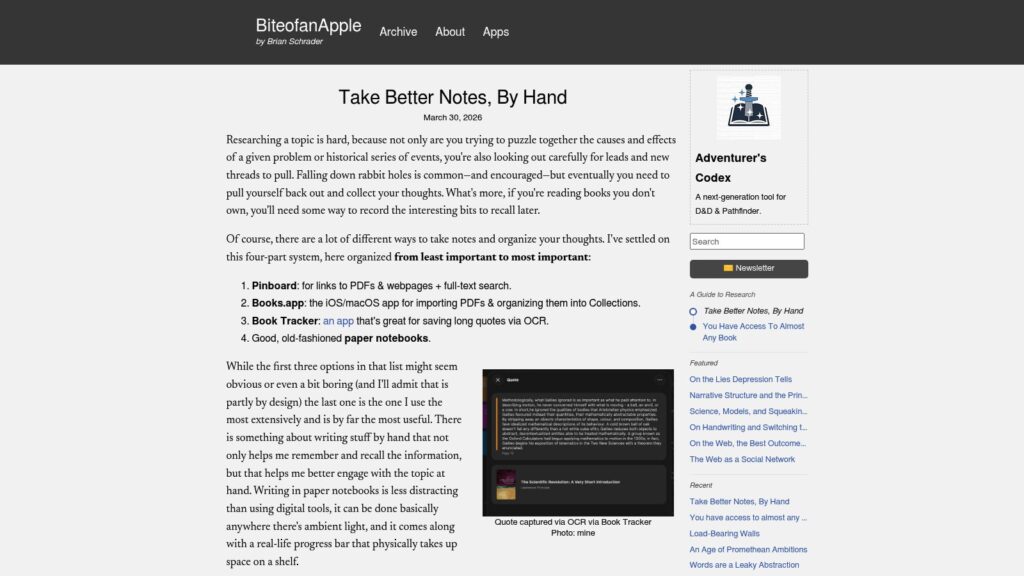
Take Better Notes, By Hand

Brian Schrader discusses his four-part system for taking and organizing research notes, emphasizing the effectiveness of traditional paper notebooks despite their limitations. He outlines practical techniques such as dating every page, numbering pages, maintaining an index, and writing only on the right-hand pages while using the left for follow-up thoughts, which together enhance recall, engagement, and the ability to find notes later.

https://brianschrader.com/archive/take-better-notes-by-hand/

Scroll to Top