Writing

Take Better Notes, By Hand
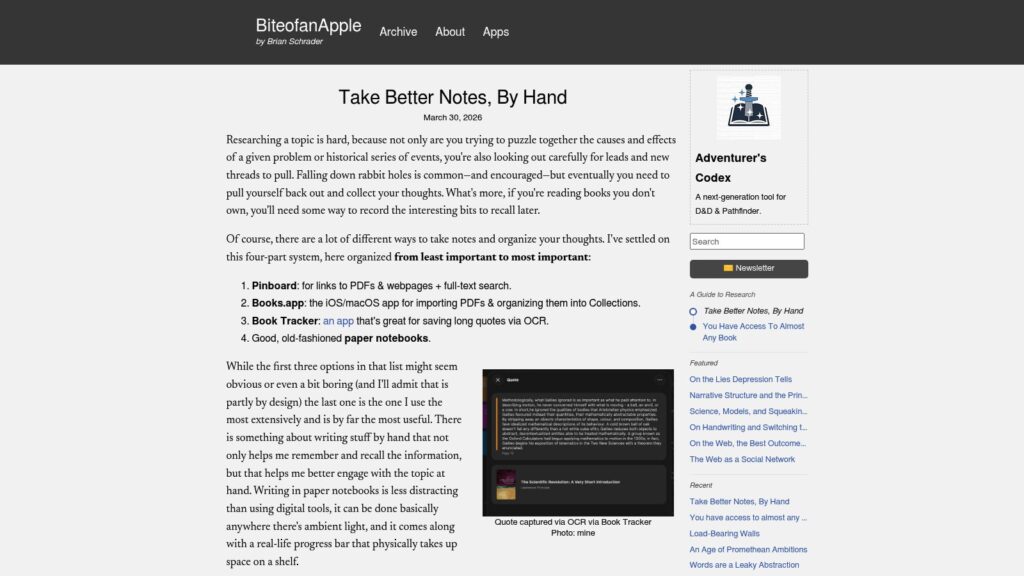
Brian Schrader discusses his four-part system for taking and organizing research notes, emphasizing the effectiveness of traditional paper notebooks despite their limitations. He outlines practical techniques such as dating every page, numbering pages, maintaining an index, and writing only on the right-hand pages while using the left for follow-up thoughts, which together enhance recall, engagement, and the ability to find notes later.

https://brianschrader.com/archive/take-better-notes-by-hand/
The Oxford Comma – Why and Why Not

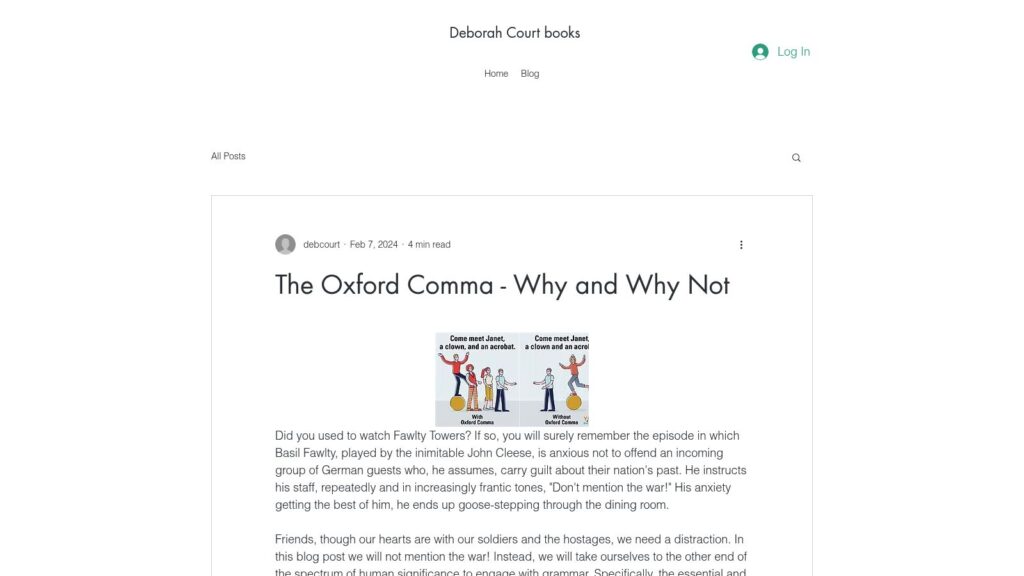
The article discusses the debate over the Oxford comma, a comma used before the final item in a list. While traditionally omitted, especially in some styles, the Oxford comma is important for clarity in certain cases, such as distinguishing between list items to avoid ambiguity. Style guides like APA, Chicago, and MLA recommend its use to prevent confusion, but the author suggests deciding on a case-by-case basis.

https://www.deborahcourtbooks.com/post/the-oxford-comma-why-and-why-not

French E, È, É, Ê, Ë – What’s the Difference?

The French letter “e” can be pronounced in several ways, including closed e (/e/), open e (/ɛ/), schwa (/ə/), or be silent, and its pronunciation can change depending on diacritical marks. The accents ë, è, é, and ê indicate specific pronunciations: ë signals an open e in vowel groups, è denotes an open e to prevent it being silent or reduced, é indicates a closed e sound, and ê shows an open e often linked historically to a lost letter, typically “s”.

https://jakubmarian.com/french-e-e-e-e-e-whats-the-difference/

I Love the Em Dash—Too Bad If AI Does Too

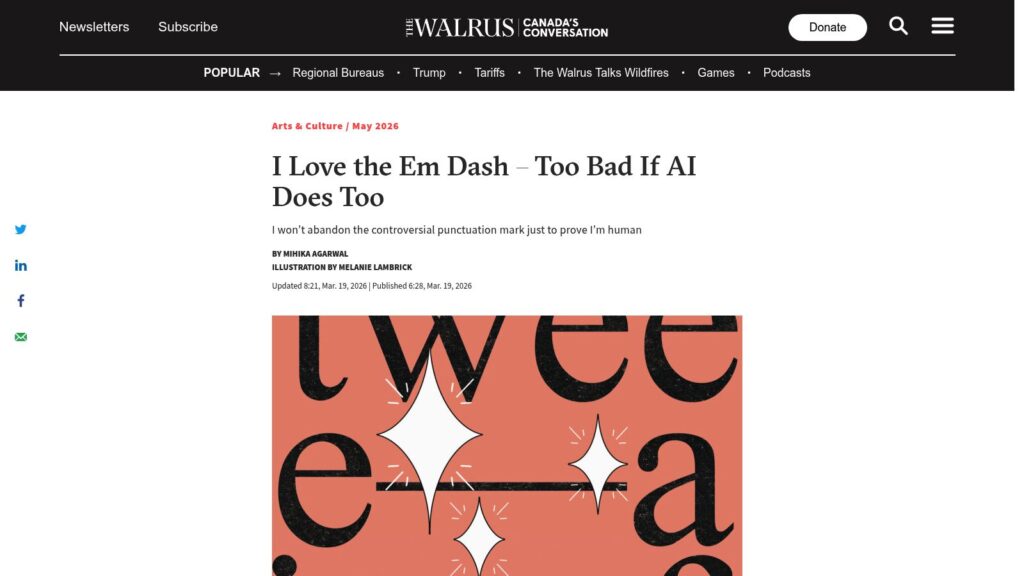
In her essay, Mihika Agarwal expresses a deep affection for the em dash, a punctuation mark often criticized but cherished by writers for its ability to convey voice, rhythm, and nuanced thought. Despite recent associations of frequent em dash use with artificial intelligence, Agarwal defends her use of it as a vital and expressive writing tool that allows for interruptions, qualifications, and emphatic flair in her prose.

https://thewalrus.ca/i-love-the-em-dash-too-bad-if-ai-does-too/

Who Wrote This?

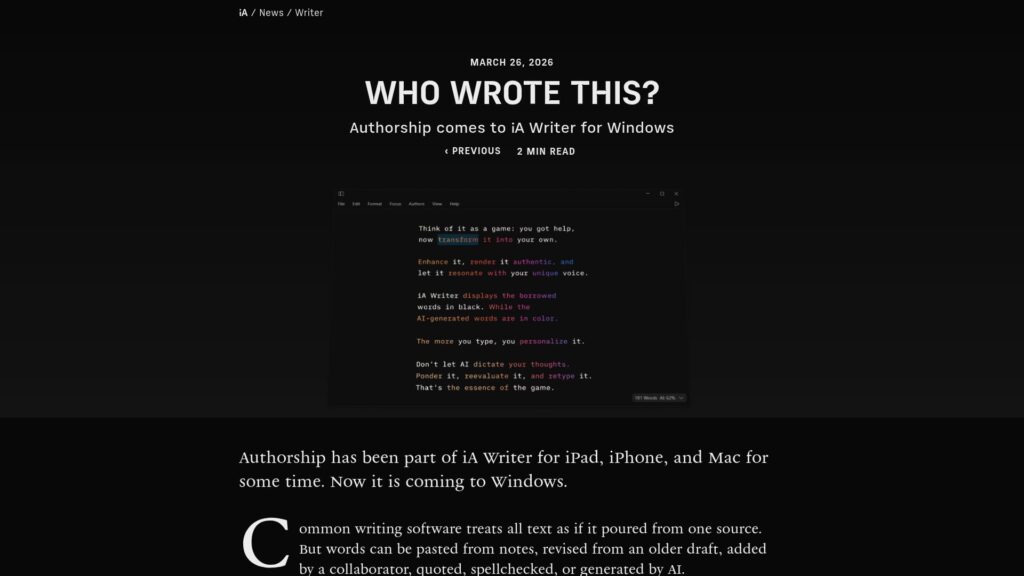
iA Writer's authorship feature, now on Windows, tracks text origins for editing and collaboration, ensuring clarity on contributions. It highlights differences between personal writing, external sources, and AI-generated content. This transparency is crucial amid increasing collaborative writing and AI use. Users can join the beta to help test the feature.

https://ia.net/topics/who-wrote-this

How to Use Scriptwriting in Scrivener on iPad and iPhone

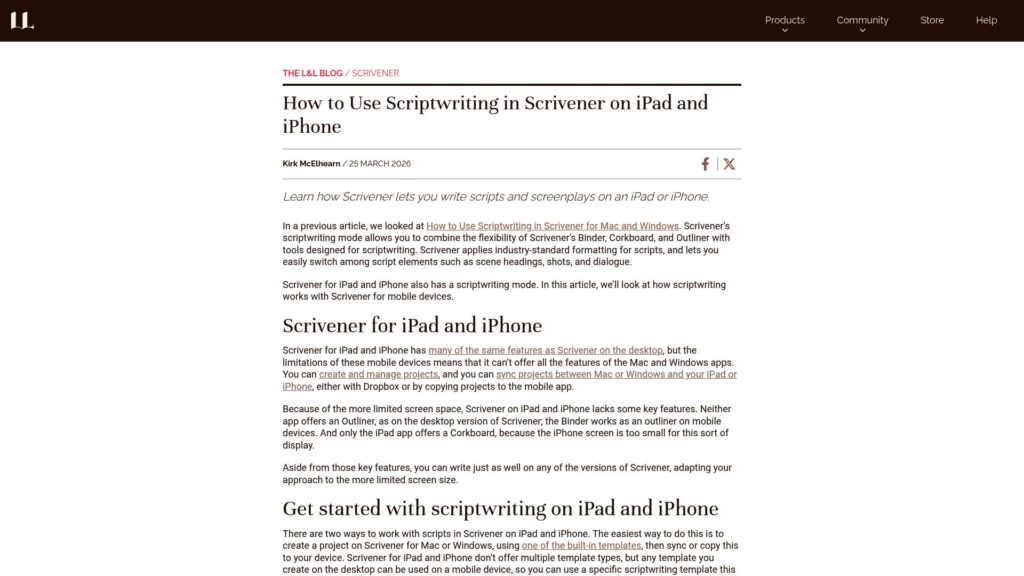
Scrivener enables scriptwriting on iPad and iPhone, maintaining many desktop features while adapting for mobile limitations. Users can create scripts via desktop sync or directly on mobile, though mobile lacks some features like Outliner and Corkboard on iPhone. Scriptwriting mode is accessed through project settings, allowing screenplay formatting. Users can add new documents and compile projects into various formats, including Final Draft. Adjustments may be needed for smaller screens, especially on iPhone, where landscape mode can enhance visibility.

https://www.literatureandlatte.com/blog/how-to-use-scriptwriting-in-scrivener-on-ipad-and-iphone

Paper Alchemy

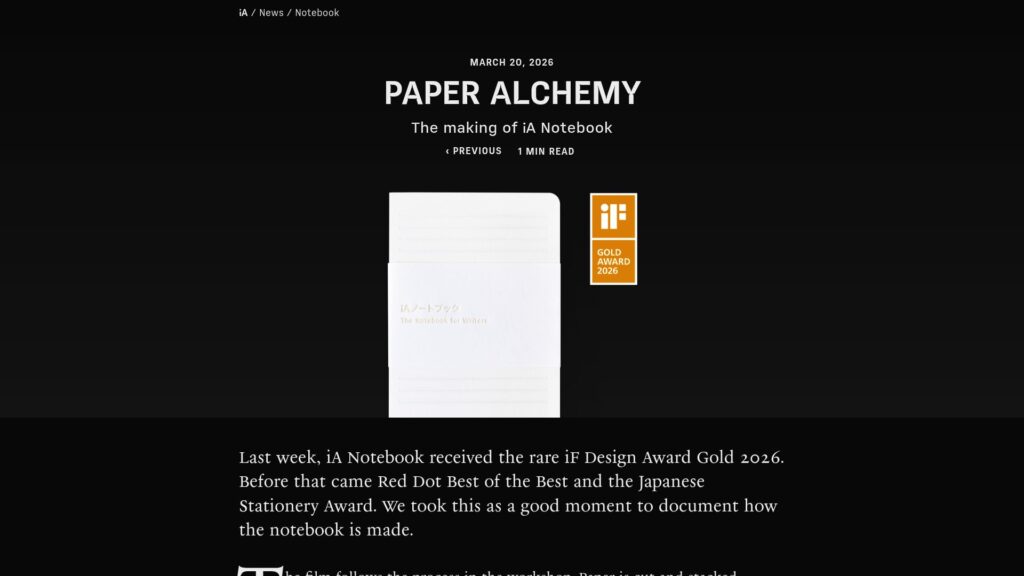
iA Notebook won iF Design Award Gold 2026, Red Dot Best of the Best, and Japanese Stationery Award. A documentary showcases its meticulous creation process: cutting, folding, sewing, gluing, pressing, trimming, and packing. Each step is crucial, emphasizing precision and care, creating a rhythmic flow from machines and skilled hands. This film highlights the effort behind each notebook.

https://ia.net/topics/paper-alchemy-the-making-of-ia-notebook

Bear 2.7: a Fresh Look for TagCons

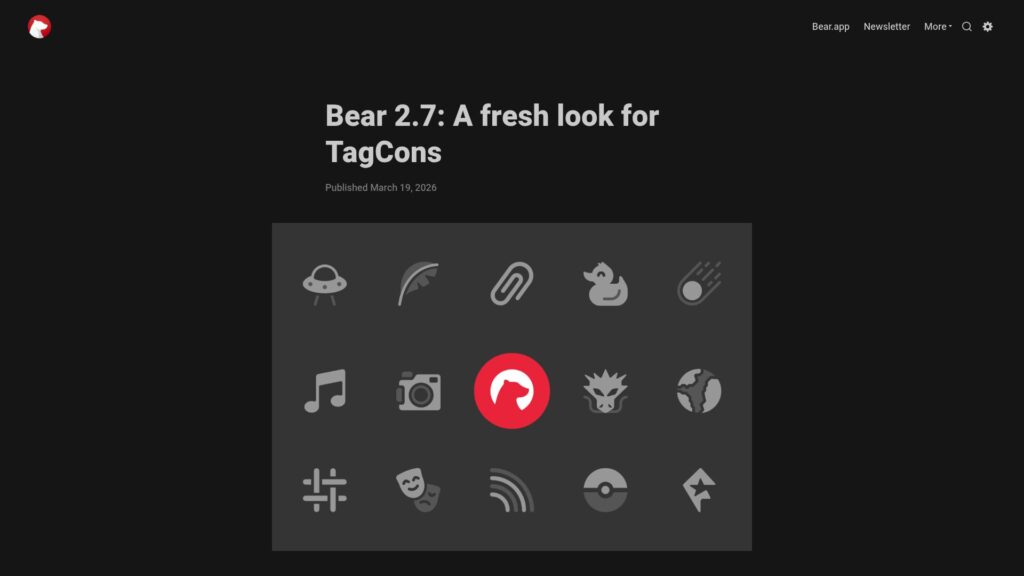
Bear 2.7 is here for macOS and iOS/iPadOS, featuring redesigned TagCons and a more harmonious look with Apple's ecosystem. It includes 260 icons for better organization and a revamped Edit Tag panel. TagCons are now integrated into the Editor for a more visual experience. Future updates will bring new TagCons, and user feedback is encouraged through various platforms. Happy writing!

https://blog.bear.app/2026/03/bear-2-7-a-fresh-look-for-tagcons/

How to Use Scrivener for Worldbuilding

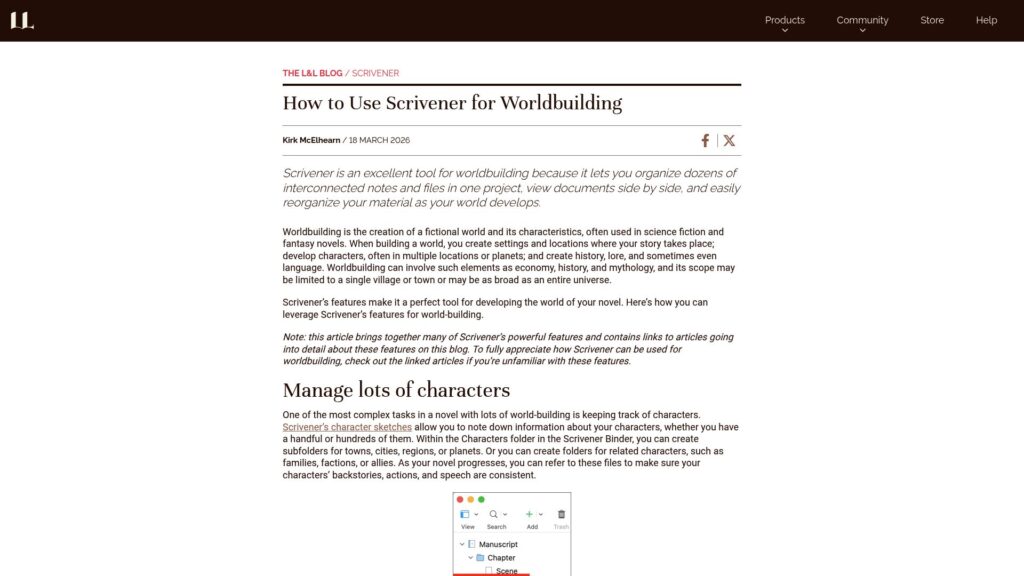
Scrivener is ideal for worldbuilding, enabling organization of notes/files, character and setting management, and seamless material reorganization. It offers features like character sketches, internal links, custom templates, labeled files, metadata, keywords for easy searches, and collections to group related content, suitable for complex novel development.

https://www.literatureandlatte.com/blog/how-to-use-scrivener-for-worldbuilding

Scroll to Top