Stochastic Parrots 🦜: Frequently Unasked Questions
In this article, Emily M. Bender clarifies misconceptions about the term “stochastic parrots,” coined in her 2021 paper to describe large language models (LLMs) as systems that generate text by probabilistically remixing linguistic forms without true understanding or intent. She emphasizes that her critique targets the ethical and societal issues surrounding the development and deployment of these models—such as data use and environmental impact—rather than dismissing the models themselves or labeling all AI as stochastic parrots.

https://medium.com/@emilymenonbender/stochastic-parrots-frequently-unasked-questions-49c2e7d22d11

Comparisons as Predictable as the Sunrise

The article analyzes 200,000 “as ___ as ___” similes extracted from popular fiction, revealing patterns in how adjectives pair with nouns across literature. It finds that many adjectives have distinctive “fingerprints,” often dominated by clichĂ© comparisons, while certain nouns serve as specialists (tightly linked to one adjective, e.g., “cucumber” for “cool”) or generalists (used with many adjectives, e.g., “hell”). The study also discusses ironic similes that subvert expected qualities for humor, highlighting the complex and predictable nature of figurative language in fiction.

https://pudding.cool/2026/05/similes/

Compile Multiple Timelines or Point-of-View Character Arcs in Your Scrivener Projects

Scrivener allows authors writing books with multiple timelines or point-of-view characters to organize their work by creating individual files for each scene or chapter and tagging them with labels for easy management. Writers can compile specific sections by timeline or character arc into single documents, such as PDFs or ePubs, facilitating consistency checks, revisions, and sharing with beta readers or agents. This feature is especially useful for complex manuscripts, enabling focused editing and seamless navigation of different narrative threads.

https://www.literatureandlatte.com/blog/compile-multiple-timelines-or-point-of-view-character-arcs-in-your-scrivener-projects

A Plea for Poetry in the Age of AI

In “A plea for poetry in the age of AI,” Sophia Yvonne Hall argues that poetry is a vital form of human creativity that resists the homogenizing effects of AI, which tends to prioritize polished and formulaic outputs over originality and emotional depth. She urges readers to embrace the imperfect, messy, and uncertain nature of poetry as a way to preserve authentic creative expression that AI cannot replicate.

https://www.oxfordstudent.com/2026/05/10/a-plea-for-poetry-in-the-age-of-ai/

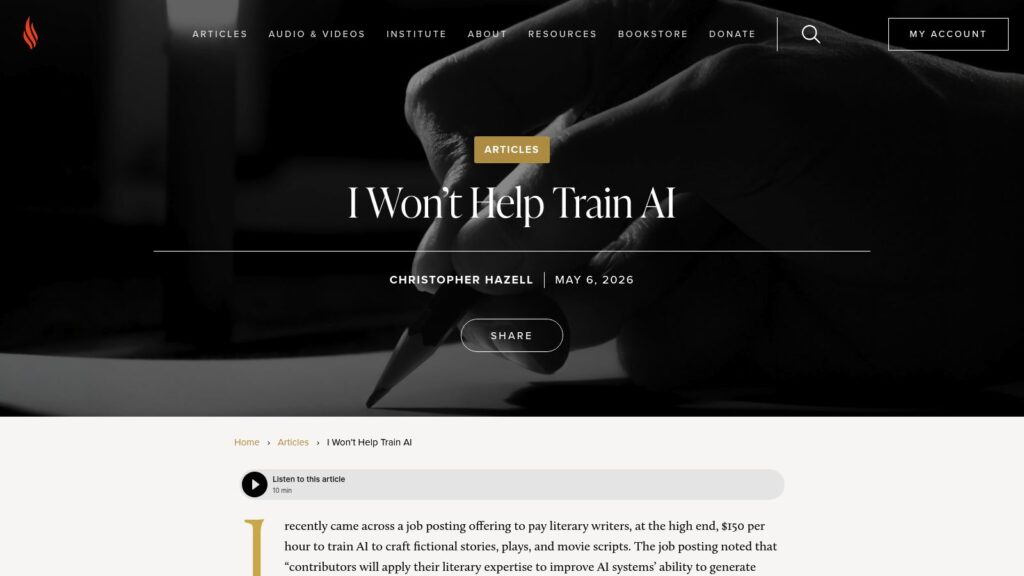
I Won’t Help Train AI – Word on Fire

In the article “I Won’t Help Train AI,” Christopher Hazell shares his personal decision to decline a lucrative opportunity to train AI in creating narrative art such as fiction and scripts. He argues that while AI can assist with mundane tasks, the creation of authentic art requires human experience, free will, and the capacity for sacrificial love, which AI cannot replicate; thus, embracing AI-generated art risks dehumanizing culture by replacing genuine human communion with simulations.

https://www.wordonfire.org/articles/i-wont-help-train-ai/

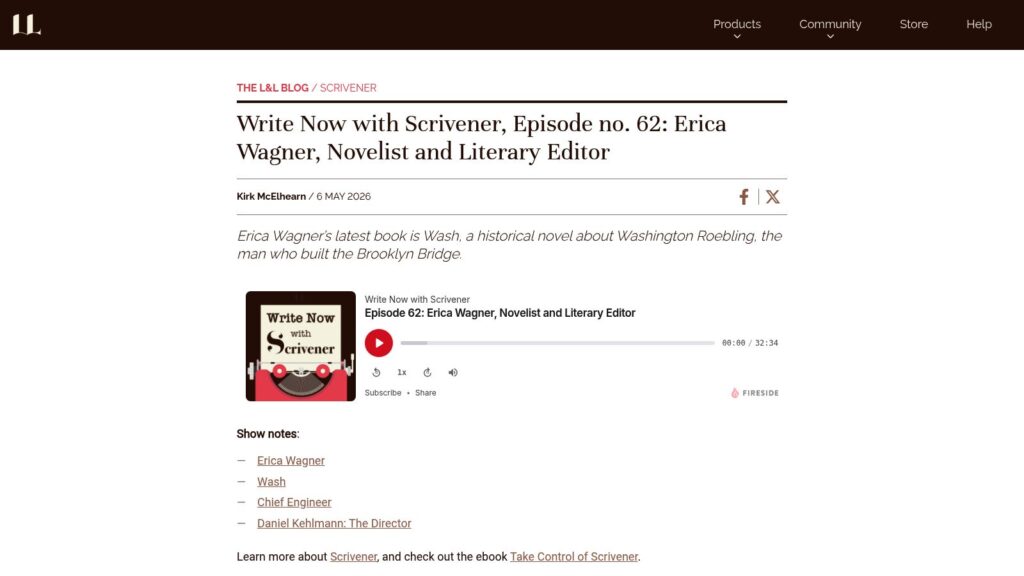
Write Now with Scrivener, Episode No. 62: Erica Wagner, Novelist and Literary Editor

Erica Wagner’s latest book, Wash, is a historical novel about Washington Roebling, the civil engineer who completed the Brooklyn Bridge after his father's death. Drawing from her earlier nonfiction biography Chief Engineer, she employs a modernist, non-chronological narrative to explore Roebling's life and relationships, using the Scrivener software extensively to organize her research and writing.

https://www.literatureandlatte.com/blog/write-now-with-scrivener-episode-no-62-erica-wagner-novelist-and-literary-editor

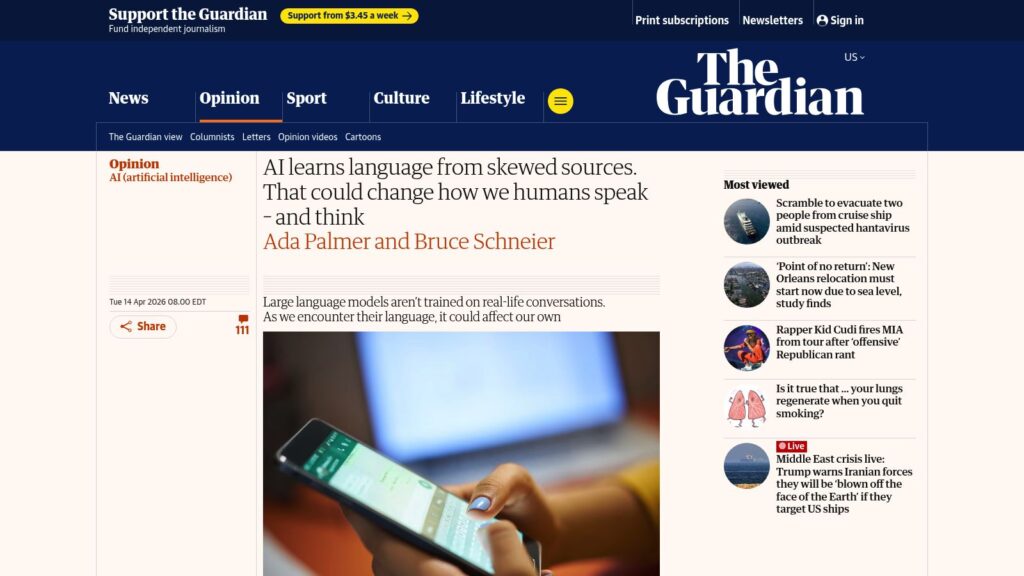
AI Learns Language From Skewed Sources. That Could Change How We Humans Speak – and Think

Large language models are trained primarily on written texts such as books, social media, and scripted dialogue from film and television, rather than the unscripted, everyday speech that makes up most human communication. This skewed training may lead AI-generated language to influence how humans speak and think, potentially narrowing vocabulary, encouraging curt or overly formal speech patterns, and reinforcing biases, thereby affecting our communication and perception of the world in significant but not yet fully understood ways.

https://www.theguardian.com/commentisfree/2026/apr/14/ai-language-human-speech

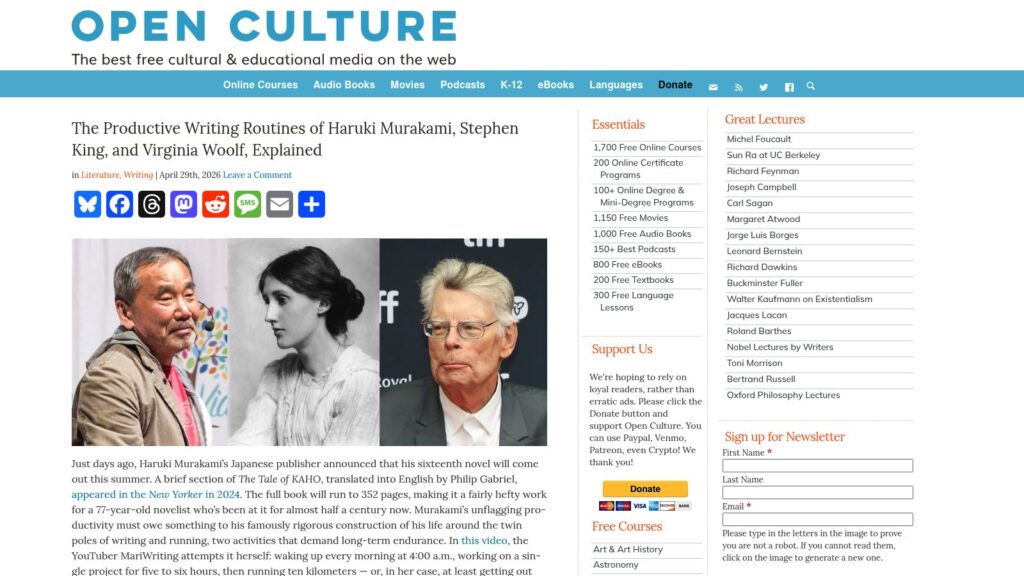
The Productive Writing Routines of Haruki Murakami, Stephen King, and Virginia Woolf, Explained

The article explores the disciplined and unique writing routines of Haruki Murakami, Stephen King, and Virginia Woolf, highlighting how their structured habits contribute to their prolific output. Murakami combines early morning writing sessions with long-distance running, King employs a routine described as “self-hypnosis,” and Woolf balanced her fiction with regular literary criticism while maintaining a daily diary, emphasizing the importance of a dedicated writing space.

https://www.openculture.com/2026/04/the-productive-writing-routines-of-haruki-murakami-stephen-king-and-virginia-woolf-explained.html

Gen Zers Are Making Thousands of Dollars a Month Running Snail-Mail Subscription Clubs: I Don’t Think About Expenses ‘Paycheck to Paycheck Anymore’

Gen Z entrepreneurs are launching successful snail-mail subscription clubs, sending personalized letters, artwork, and other creative content to thousands of subscribers monthly, earning thousands of dollars in profit. These analog businesses, often promoted via social media, provide financial stability and career confidence for founders like Kiki Klassen and Trinity Shiroma, reflecting a trend towards tactile, offline experiences despite growing digital engagement.

https://www.cnbc.com/2026/04/30/gen-z-snail-mail-subscription-clubs-making-thousands-per-month.html

Will AI End Anonymity?

Tyler Cowen explores how AI, particularly the model Claude, can identify authorship from relatively small text samples, raising concerns about the potential end of online anonymity. Megan McArdle’s article highlights that once AI can de-anonymize writing styles, protecting anonymity online may become nearly impossible, posing significant implications for privacy and free expression.

https://marginalrevolution.com/marginalrevolution/2026/04/will-ai-end-anonymity.html

Scroll to Top