Trapped in MS Office

Europe's dependence on US IT, notably Microsoft Office, poses a geopolitical risk. As governments explore reducing this reliance, there's a push to replace Office with open-source alternatives. However, simply substituting suppliers may not solve deeper systemic issues. Office's outdated model, inefficient workflows, and focus on formatting hinder productivity, leading to discussions on adopting new frameworks over legacy systems. To achieve true digital independence, Europe needs to move beyond traditional office paradigms and embrace more effective, modern solutions.

https://ia.net/topics/trapped-in-ms-office

How Far Back in Time Can You Understand English?

Experiment tracking language evolution shows a fictional travel blogger chronologically writing about a town, Wulfleet. As he writes, English transitions from modern to archaic forms, revealing its historical changes. The narrative illustrates how English's complexity and vocabulary have shifted over centuries. Readers struggle with earlier forms, demonstrating the challenge of understanding English from different eras. The conclusion emphasizes the inevitable evolution of language over time.

https://www.deadlanguagesociety.com/p/how-far-back-in-time-understand-english

The Science of Blunders: Confessions of a Textual Critic

Extreme TLDR:

James Willis, a notable Latinist (1925-2014), focused on textual criticism, emphasizing its importance for understanding Greek and Roman literature. He argued that copying errors are inevitable and that textual criticism helps correct these mistakes, contributing to scholarly editions of classical texts. Through examples, he illustrated that even seemingly correct texts can harbor inaccuracies, stressing the necessity of examining diverse manuscripts to accurately reconstruct ancient writings. Ultimately, he highlighted the challenges and intricacies of ensuring textual fidelity in classical literature.

https://antigonejournal.com/2026/02/science-of-blunders-confessions-textual-critic/

AI Taxonomy

The document proposes a taxonomy for describing AI systems based on what they do, rather than the technologies they use. It defines six functional categories: Analytical AI (decides), Semantic AI (understands), Generative AI (creates), Agentic AI (acts), Perceptive AI (senses), and Physical AI (moves). It argues that most real-world products combine multiple categories. The conclusion is that using function-based descriptions improves clarity, communication, and practical understanding of AI capabilities. 

https://dropleaf.app/d/AlXez8scbd

How to Create, Edit, and Import Scrivener Styles on Mac and Windows

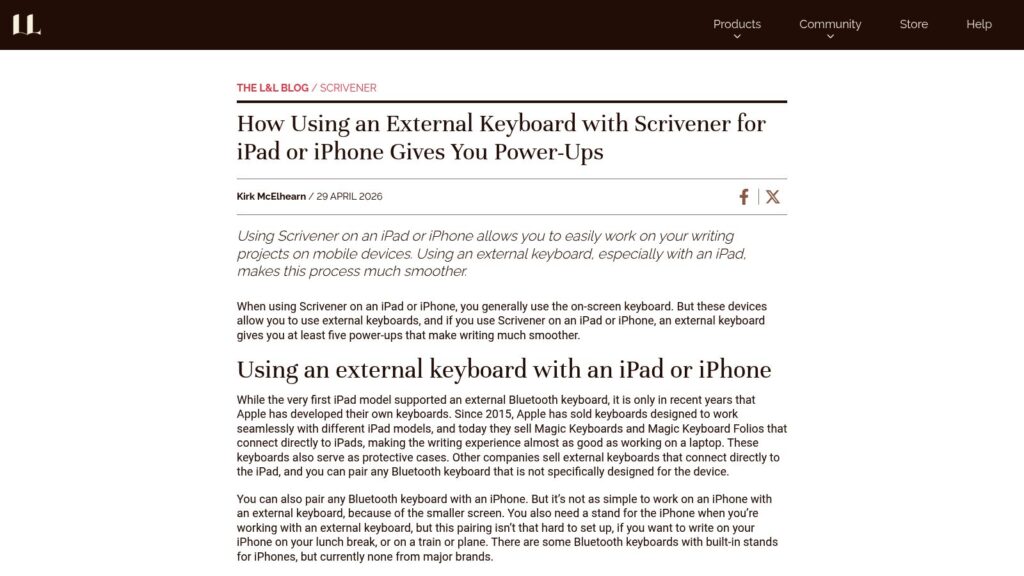
Learn to create, modify, and import styles in Scrivener for formatting text. Two types of styles exist: character and paragraph styles, allowing formatting of individual words or entire paragraphs. You can create new styles from selected text, modify existing styles, delete unwanted styles, and import styles from other projects. These features streamline the formatting process in Scrivener.

https://www.literatureandlatte.com/blog/how-to-create-edit-and-import-scrivener-styles-on-mac-and-windows

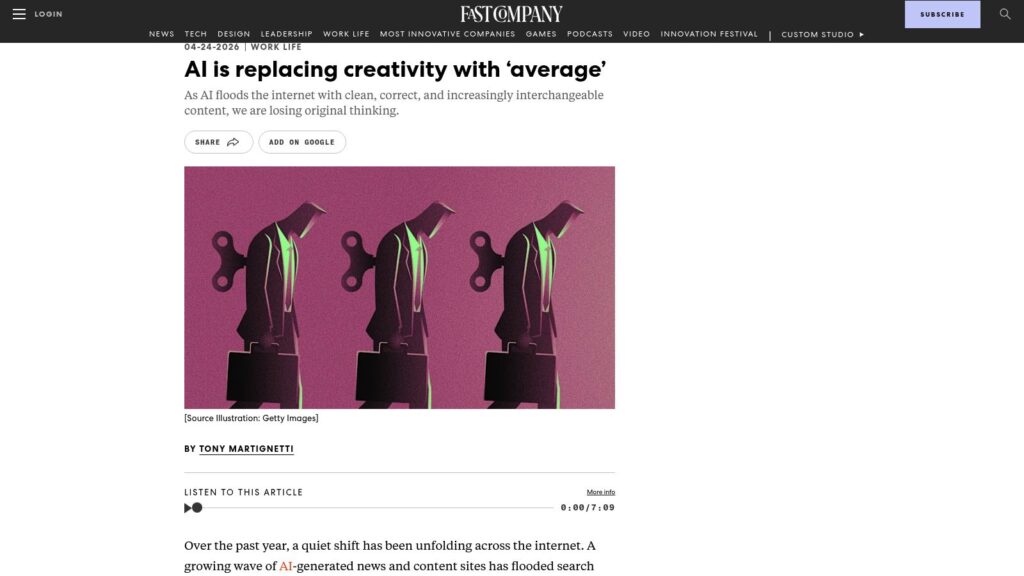
Why AI Writing Is so Generic, Boring, and Dangerous: Semantic Ablation

AI writing suffers from “semantic ablation,” where high-entropy, unique information is eroded during processing. This occurs as models prioritize statistical probability, discarding complex tokens for generic outputs. The article outlines three stages of this process: 1) replacing unconventional metaphors with clichés, 2) diluting specific jargon for accessibility, and 3) forcing logical structures into predictable templates. The result is content that appears polished but lacks depth, leading to a homogenization of thought and expression. Recognizing semantic ablation is essential to preserving meaningful communication.

https://www.theregister.com/2026/02/16/semantic_ablation_ai_writing/

Ai;dr

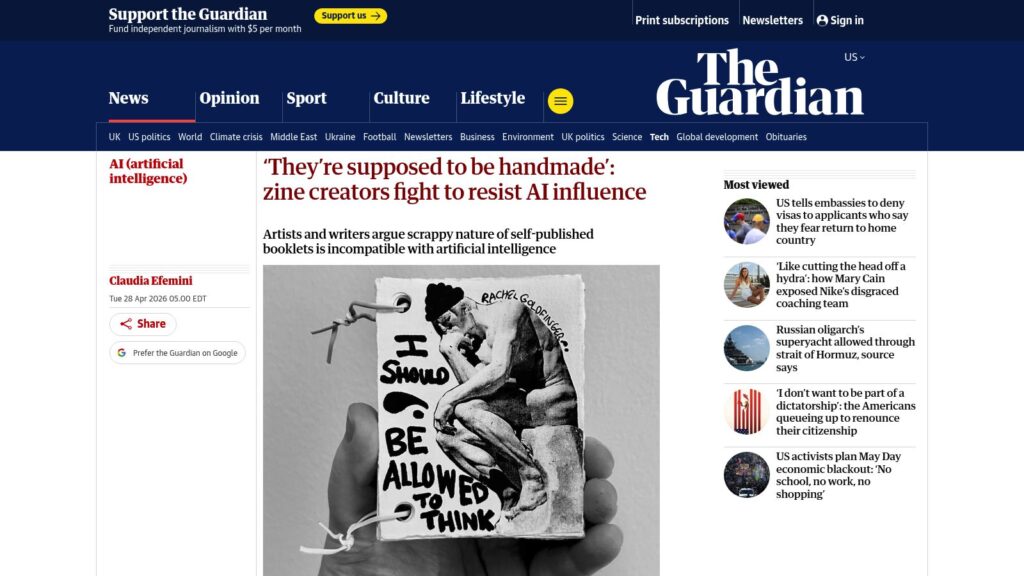
Writing reveals thought and perception; outsourcing to LLMs diminishes that value. I use LLMs for coding but need intentional, personal content, not AI-generated lists. AI code feels efficient, but AI writing seems low-effort, complicating authenticity. I now value imperfect writing more, questioning if polish matters anymore.

https://www.0xsid.com/blog/aidr

NYC Midnight and iA Partner Again

NYC Midnight's challenges for storytellers return in 2026, sponsored by iA. iA will reward top finishers in the Screenwriting and 100-word Microfiction challenges with iA Writer and iA Notebook. Registration for both challenges closes at 10 PM (NY time) on their respective start dates. iA Writer promotes distraction-free writing and offers features like Focus Mode and Live Preview, enhancing the writing process. Upcoming registration deadlines are highlighted on NYC Midnight's website.

https://ia.net/topics/nyc-midnight-and-ia-partner-again

How to Import Notes to Scrivener From Apple Notes, Obsidian, Notion, or Other Note-Taking Apps

Export notes from other apps to Scrivener by copying/pasting or exporting in formats like PDF, RTF, or Markdown. Popular note-taking apps like Obsidian and Notion offer various export options, but formatting may differ. To batch import Markdown files into Scrivener, organize them into a folder, compile them, and convert as needed. For advanced users, tools like Pandoc can facilitate file conversions.

https://www.literatureandlatte.com/blog/how-to-import-notes-to-scrivener-from-apple-notes-obsidian-notion-or-other-note-taking-apps

Scroll to Top