Michael Amherst’s Debut Novel Made It to New Yorker’s List of Best Books of the Year

Michael Amherst is a British author whose debut novel, The Boyhood of Cain, was recognized as one of the best of 2025 by The New Yorker. He began writing in childhood but faced challenges, including periods of disconnection from writing. His novel is inspired by themes of selfhood and relationships, influenced by authors like J.M. Coetzee and Steinbeck. Amherst's writing process is exploratory, often discovering the narrative while creating. He emphasizes the importance of experience in shaping creativity, values discipline alongside freedom in routine, and finds that his writing evolves within tools like Ulysses. Post-publication, he has gained opportunities and connections in the literary world and is currently working on a new novel.

https://stories.ulysses.app/michael-amhersts-debut-novel-made-it-to-new-yorkers-list-of-best-books-of-the-year/

Staff Journalists Sacked and Misleadingly Replaced With AI Writers

UK gaming sites replaced human writers with AI, creating fake authors and content. Clickout Media acquired The Escapist, Videogamer, and Esports Insider, leading to staff layoffs and AI-generated articles. Discontent among remaining staff is high regarding AI's implications for journalism, highlighted by a controversial AI review on Metacritic, which was removed due to authenticity concerns.

https://pressgazette.co.uk/news/staff-journalists-sacked-and-misleadingly-replaced-with-ai-writers/

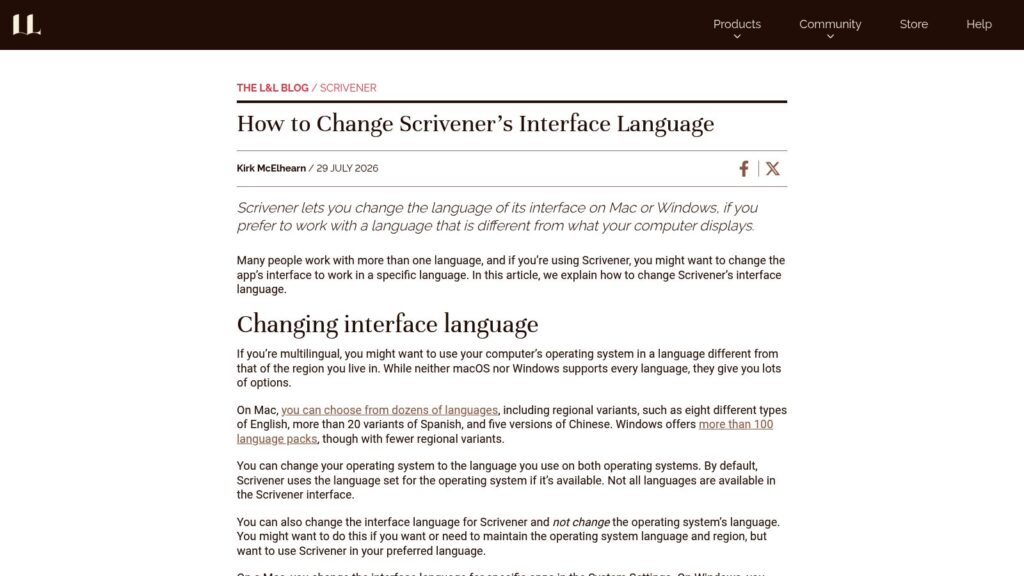
Write Now With Scrivener, Episode No. 60: John Garrison Marks, Historian

Historian John Garrison Marks discusses his book, Thy Will Be Done: George Washington’s Legacy of Slavery and the Fight for American Memory, examining Washington’s significant role as an enslaver and its historical perception. He explores the tension between Washington's accomplishments and his slavery legacy, revealing that debates on this issue have persisted for over 250 years. Marks highlights the challenges of reconciling Washington's image as an American icon with his human flaws and discusses the political implications of interpreting his history. He emphasizes the utility of Scrivener in his writing process.

https://www.literatureandlatte.com/blog/write-now-with-scrivener-episode-no-60-john-garrison-marks-historian

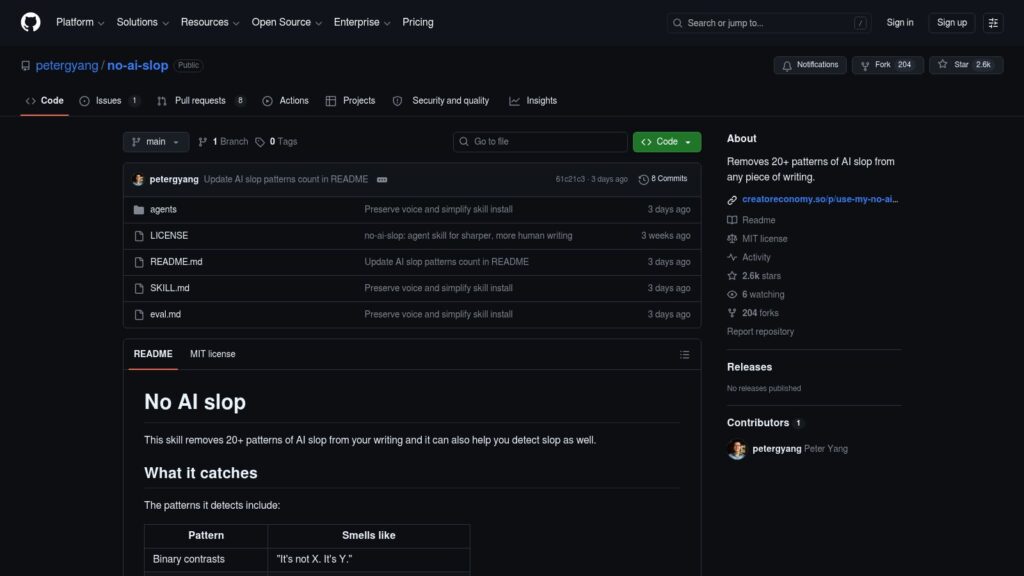
Pluralistic: No One Wants to Read Your AI Slop (02 Mar 2026)

AI chat logs are often uninteresting to others; sharing them is intrusive. Generating responses from AI without understanding the context is inadequate and burdens others for explanations. Effective dialogue requires genuine comprehension, not AI-generated outputs. Strangers aren't obligated to review unverified AI content. Seek knowledge before debating; AI can't replace human understanding and insight.

https://pluralistic.net/2026/03/02/nonconsensual-slopping/

Making a Literary Future With Artificial Intelligence

LARB discusses AI's impact on literature through a panel of writers and researchers. They address the mixed feelings toward large language models (LLMs), emphasizing the technology's effects on writing and ethics. Authors argue for creative access to AI and caution against corporate control, advocating for diverse and unique AI models. They explore how LLMs fit into literary history and propose ethical considerations for integrating AI in literary creation. Overall, the conversation aims to navigate AI's role in shaping future literature.

https://lareviewofbooks.org/article/artificial-intelligence-literary-future-chatgpt-large-language-model/

Trapped in MS Office

Europe seeks digital independence from Microsoft Office due to geopolitical risks and outdated work models. There's widespread dissatisfaction with Office's inefficiency, cloud dependency, and outdated document paradigms. Some governments are exploring open-source alternatives like LibreOffice. However, simply substituting Office may reinforce existing obsolete models rather than encouraging innovative workflows. Europe needs to rethink its approach to productivity, moving towards simpler, more dynamic tools that suit modern collaboration, rather than replace old systems with similar ones.

https://ia.net/topics/trapped-in-ms-office

Words With Spaces

Linguabase explores the significance of compound phrases often overlooked by traditional dictionaries, which cover only a small fraction of multi-word expressions (MWEs). It highlights that English is rich with phrases that have conceptual weight, like “boiling water,” which dictionaries largely ignore. With advancements in AI, such as Claude, a database was generated identifying 774K MWEs, categorizing them by opacity and their usefulness in language and word games. This analysis challenges the perception of vocabulary, revealing a vast array of phrases deserving recognition as words, reshaping insights into how we understand language.

https://www.linguabase.org/words-with-spaces.html

Are AI-generated Summaries Suitable for Studying and Research?

AI-generated summaries lack academic reliability, often leading to misinformation and overgeneralization, harming learning and research. Human summarization involves critical cognitive skills necessary for retention and understanding, which AI cannot replicate. Ultimately, generating summaries with AI erodes these essential skills and may propagate inaccuracies in academic work. It's advised to rely on human-crafted abstracts or reviews instead.

https://www.tue.nl/en/our-university/library/library-news/24-02-2026-are-ai-generated-summaries-suitable-for-studying-and-research

Scroll to Top