Making a Literary Future With Artificial Intelligence

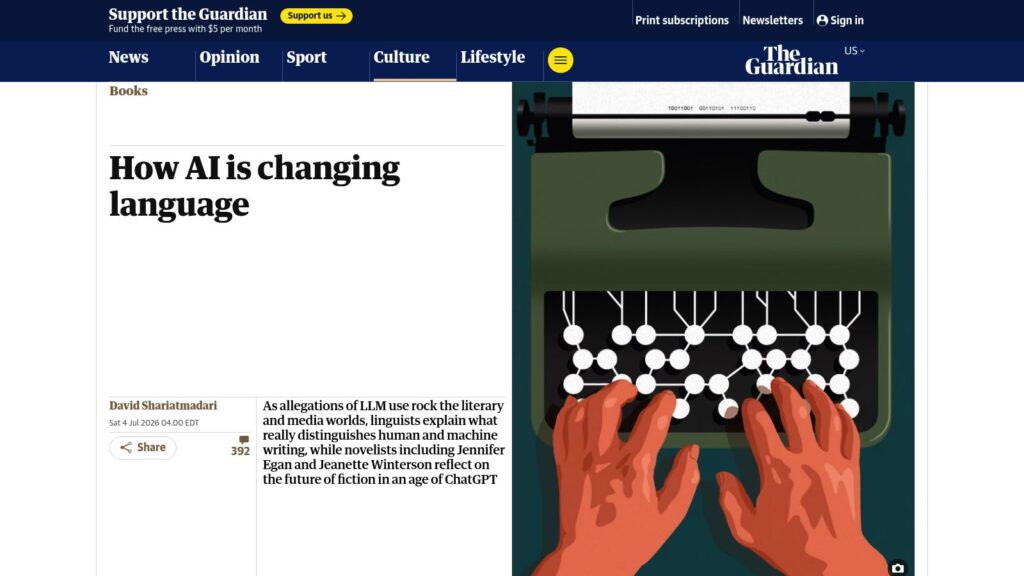
LARB discusses AI's impact on literature through a panel of writers and researchers. They address the mixed feelings toward large language models (LLMs), emphasizing the technology's effects on writing and ethics. Authors argue for creative access to AI and caution against corporate control, advocating for diverse and unique AI models. They explore how LLMs fit into literary history and propose ethical considerations for integrating AI in literary creation. Overall, the conversation aims to navigate AI's role in shaping future literature.

https://lareviewofbooks.org/article/artificial-intelligence-literary-future-chatgpt-large-language-model/

Trapped in MS Office

Europe seeks digital independence from Microsoft Office due to geopolitical risks and outdated work models. There's widespread dissatisfaction with Office's inefficiency, cloud dependency, and outdated document paradigms. Some governments are exploring open-source alternatives like LibreOffice. However, simply substituting Office may reinforce existing obsolete models rather than encouraging innovative workflows. Europe needs to rethink its approach to productivity, moving towards simpler, more dynamic tools that suit modern collaboration, rather than replace old systems with similar ones.

https://ia.net/topics/trapped-in-ms-office

Words With Spaces

Linguabase explores the significance of compound phrases often overlooked by traditional dictionaries, which cover only a small fraction of multi-word expressions (MWEs). It highlights that English is rich with phrases that have conceptual weight, like “boiling water,” which dictionaries largely ignore. With advancements in AI, such as Claude, a database was generated identifying 774K MWEs, categorizing them by opacity and their usefulness in language and word games. This analysis challenges the perception of vocabulary, revealing a vast array of phrases deserving recognition as words, reshaping insights into how we understand language.

https://www.linguabase.org/words-with-spaces.html

Are AI-generated Summaries Suitable for Studying and Research?

AI-generated summaries lack academic reliability, often leading to misinformation and overgeneralization, harming learning and research. Human summarization involves critical cognitive skills necessary for retention and understanding, which AI cannot replicate. Ultimately, generating summaries with AI erodes these essential skills and may propagate inaccuracies in academic work. It's advised to rely on human-crafted abstracts or reviews instead.

https://www.tue.nl/en/our-university/library/library-news/24-02-2026-are-ai-generated-summaries-suitable-for-studying-and-research

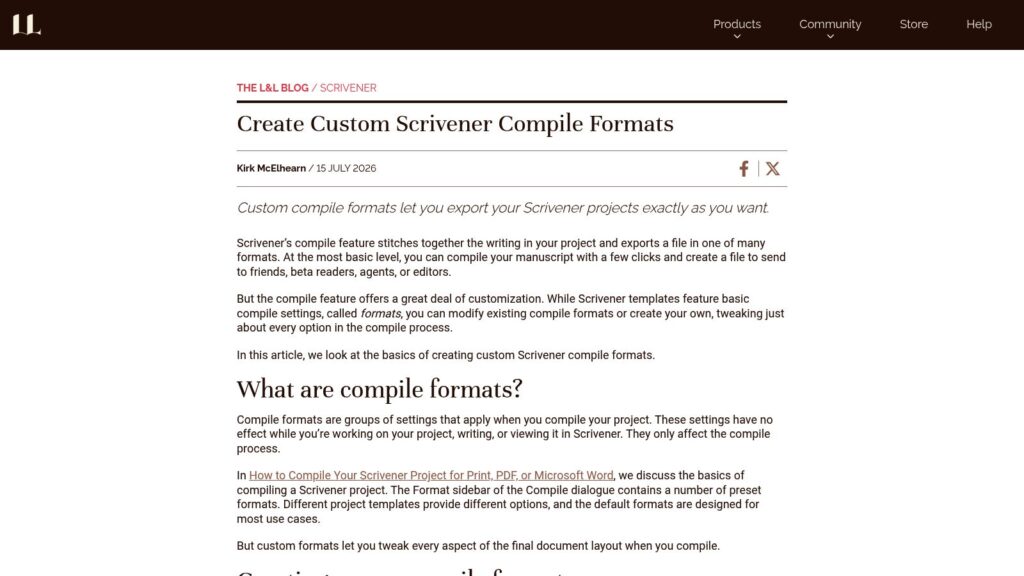
How to Copy Items Between Scrivener Projects

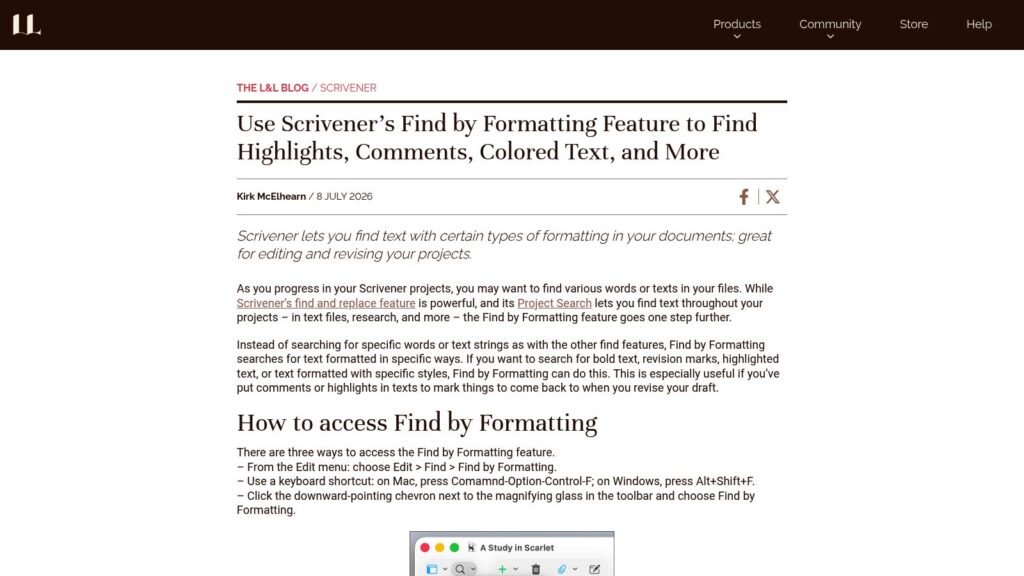
Copy items between Scrivener projects easily with two methods: drag and drop or using the Documents menu. Retain titles, synopses, text, styles, notes, bookmarks, metadata, custom icons, snapshots, and document status. You can also duplicate projects for series and delete unnecessary content while keeping characters and research intact.

https://www.literatureandlatte.com/blog/how-to-copy-items-between-scrivener-projects

10 Writing Strategies to Become a Better Writer

TLDR: Writing strategies are intentional methods for planning, drafting, and revising to enhance clarity and consistency. They include outlining, drafting freely, and focusing on one idea per paragraph. Strategies improve productivity, clarity, and help overcome writer's block. Using the right strategy for each writing stage creates more effective, manageable work across various writing contexts.

https://www.grammarly.com/blog/writing-process/writing-strategies/

Approaches to Writing Two-sentence Journal Entries

User describes their two-sentence journal method's popularity and shares tips on writing entries. They cover three techniques: using scrap paper for quick thoughts, revising notes in Google Keep for convenience, and writing directly in the journal on busy days. The user details the formats for their analog and digital journals for organization and legibility. They encourage readers to adapt their methods to suit personal preferences.

https://alexanderbjoy.com/two-sentence-journal-approaches/

Allow Me to Introduce the Two-sentence Journal

User struggled with journaling due to perfectionism, resulting in burnout. After experimenting with various methods, they found success with a two-sentence journal inspired by the game Thousand Year Old Vampire. This approach is enjoyable, requires minimal effort, promotes reflection, ensures no day feels wasted, and often creates narrative structures. The constraints of two sentences enhance writing quality and reveal deeper connections. The user encourages others to try this format and share their entries.

https://alexanderbjoy.com/two-sentence-journal/

Scroll to Top