AI

AI Learns Language From Skewed Sources. That Could Change How We Humans Speak – and Think

Large language models are trained primarily on written texts such as books, social media, and scripted dialogue from film and television, rather than the unscripted, everyday speech that makes up most human communication. This skewed training may lead AI-generated language to influence how humans speak and think, potentially narrowing vocabulary, encouraging curt or overly formal speech patterns, and reinforcing biases, thereby affecting our communication and perception of the world in significant but not yet fully understood ways.

https://www.theguardian.com/commentisfree/2026/apr/14/ai-language-human-speech

Will AI End Anonymity?

Tyler Cowen explores how AI, particularly the model Claude, can identify authorship from relatively small text samples, raising concerns about the potential end of online anonymity. Megan McArdle’s article highlights that once AI can de-anonymize writing styles, protecting anonymity online may become nearly impossible, posing significant implications for privacy and free expression.

https://marginalrevolution.com/marginalrevolution/2026/04/will-ai-end-anonymity.html

‘They’re Supposed to Be Handmade’: Zine Creators Fight to Resist AI Influence

Zine creators, rooted in a tradition of handmade, self-published booklets tied to cultural movements, are increasingly resisting the influence of artificial intelligence (AI) in their art form, viewing AI as incompatible with the scrappy, personal nature of zines. While some artists experiment with AI for efficiency or artistic experimentation, many, including creators of anti-AI zines, argue that AI diminishes critical thinking and the authenticity of creative work, emphasizing the grassroots, tactile process that defines zine culture.

https://www.theguardian.com/technology/2026/apr/28/zine-creators-fight-to-resist-ai-influence

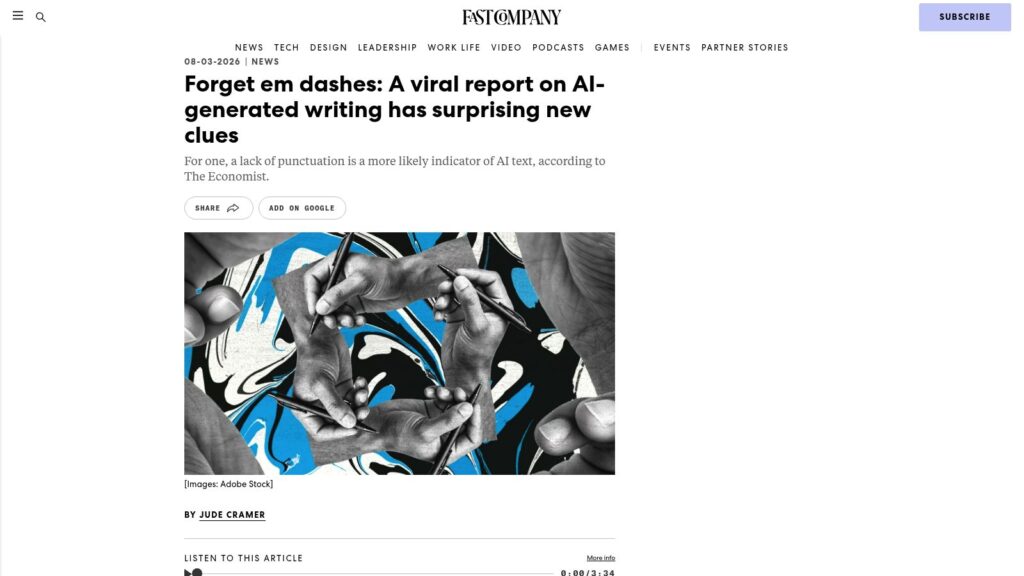
AI Is Replacing Creativity with ‘Average’

AI-generated content has rapidly increased across the internet, producing technically accurate and well-structured articles that often lack original perspective or distinct voice. While AI excels at recognizing patterns and generating statistically probable content, this leads to a convergence toward average ideas, reducing novelty and cultural friction essential for innovation and creativity.

https://www.fastcompany.com/91530169/ai-is-replacing-creativity-with-average

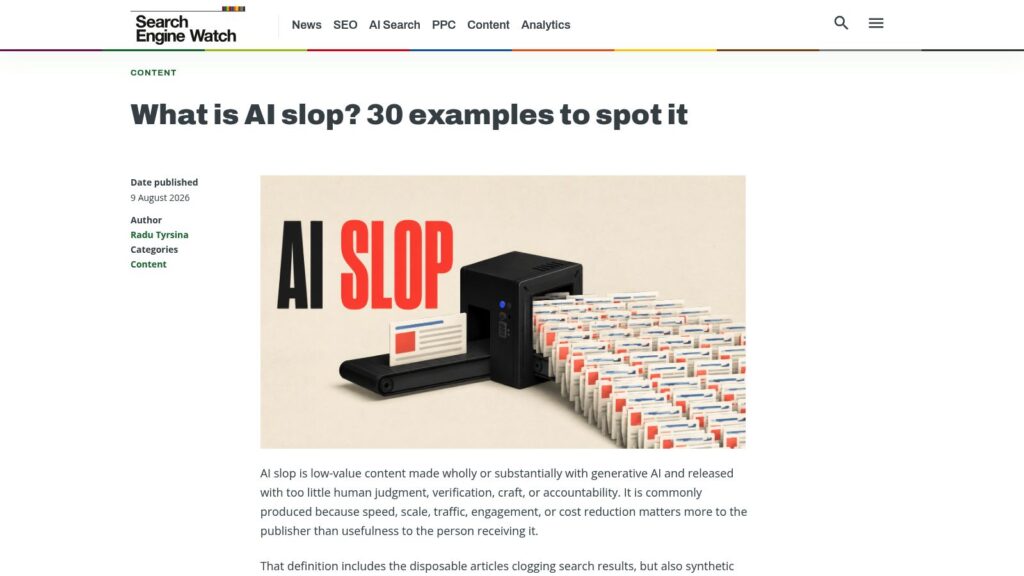
Slop Cop

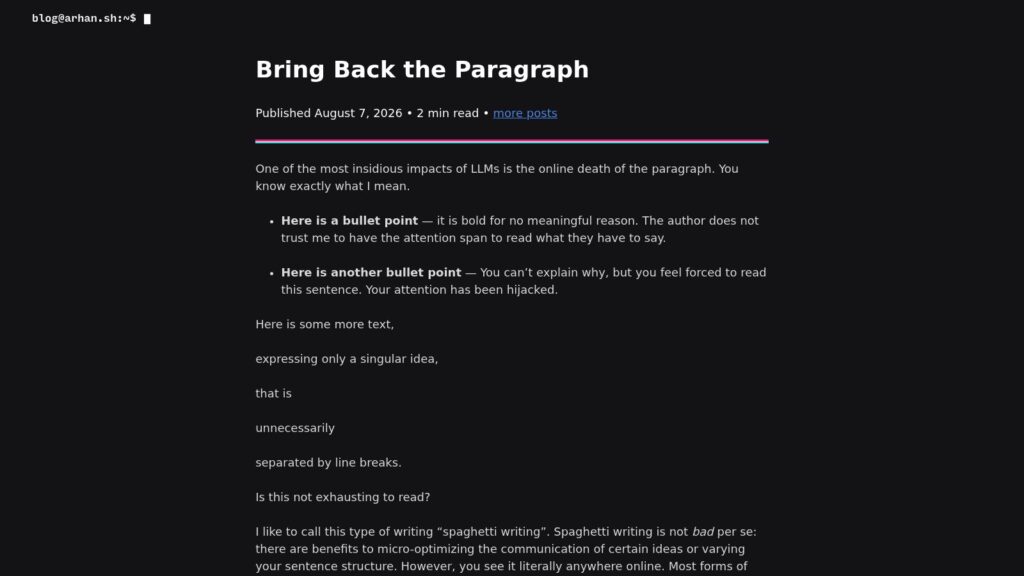
Slop Cop is a browser-based writing editor designed to identify and flag common rhetorical and structural patterns typical of generic large language model (LLM) prose. By adding an Anthropic API key, users can access deeper analysis and automatic editing features to improve their text. The tool highlights overused phrases, sentence structures, and stylistic tics, helping writers create clearer and more original content.

https://awnist.com/slop-cop

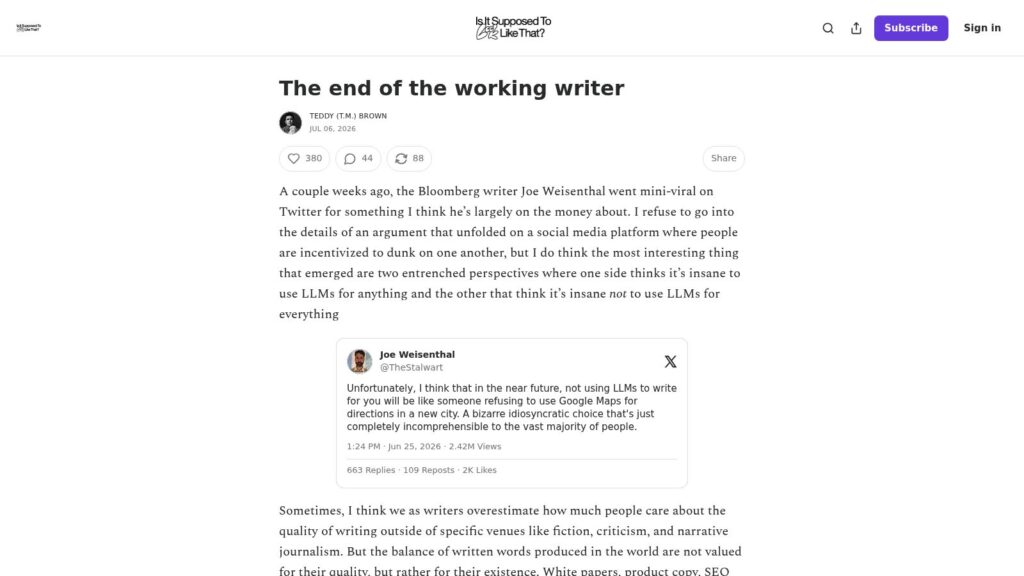
It’s Getting Harder to Spot AI in Contemporary Publishing. And That’s Very, Very Bad.

Maris Kreizman discusses the challenges the publishing industry faces in detecting AI-generated text amid the growing sophistication of large language models and the flawed nature of AI detection tools. She argues that the core issue lies in overworked editors and a corporate culture prioritizing quantity over quality, emphasizing that giving editors more time and resources to carefully edit is essential to maintaining the integrity and care of published works.

https://lithub.com/its-getting-harder-to-spot-ai-in-contemporary-publishing-and-thats-very-very-bad/

Cotypist – AI Autocomplete for Mac – Type Faster, Write Better

Cotypist is an AI-powered typing assistant for Apple Silicon Macs that predicts and suggests your next words in real-time, helping you type up to 50% faster across almost all Mac apps without interrupting your flow. It runs locally to protect your privacy, adapts to your unique writing style, and aims to augment your productivity rather than replace your creativity by providing intuitive, context-aware completions.

https://cotypist.app/

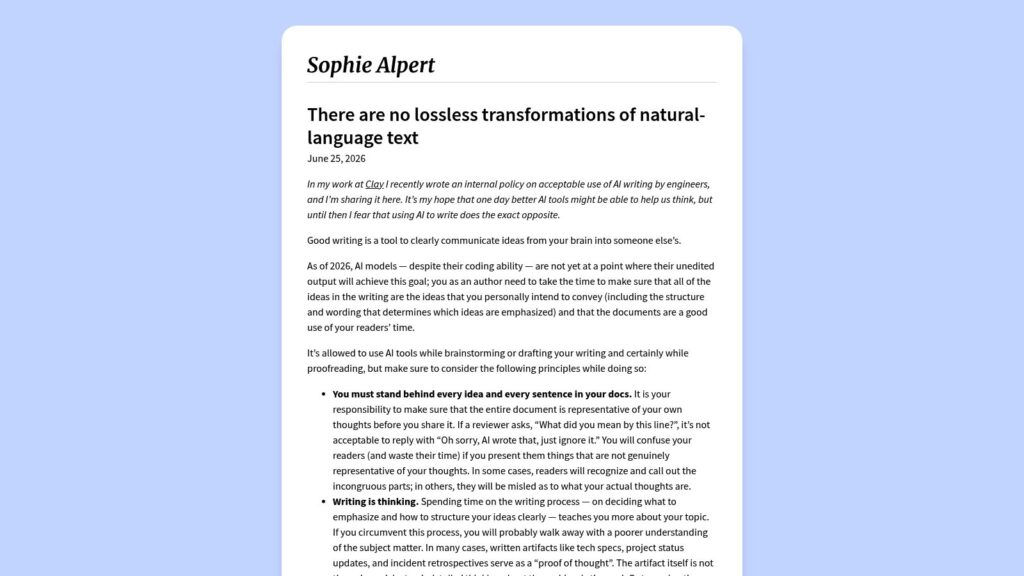
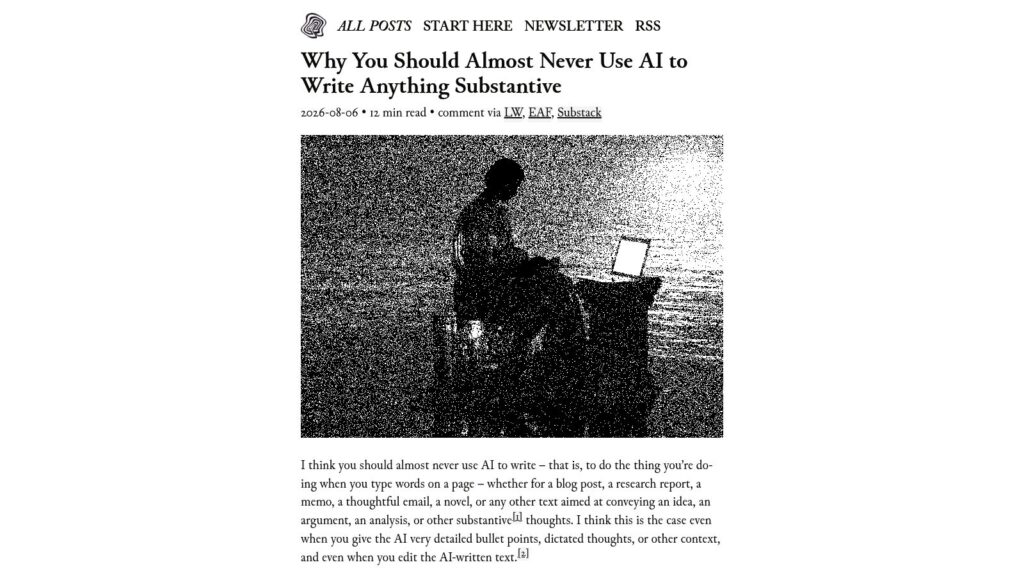
Writing with AI Is the Same as Writing by AI

The article argues that the distinction between “writing with AI” and “writing by AI” is misleading, because using AI to draft, revise, or improve text still transfers core parts of the writing process to the model. It explains that human learning from other writers is fundamentally different from how language models generate text from training data, making common comparisons between the two weak. The main point is that relying on AI for composition changes authorship and creative labor, even when a human edits or curates the final result. 

https://jamescosullivan.substack.com/p/writing-with-ai

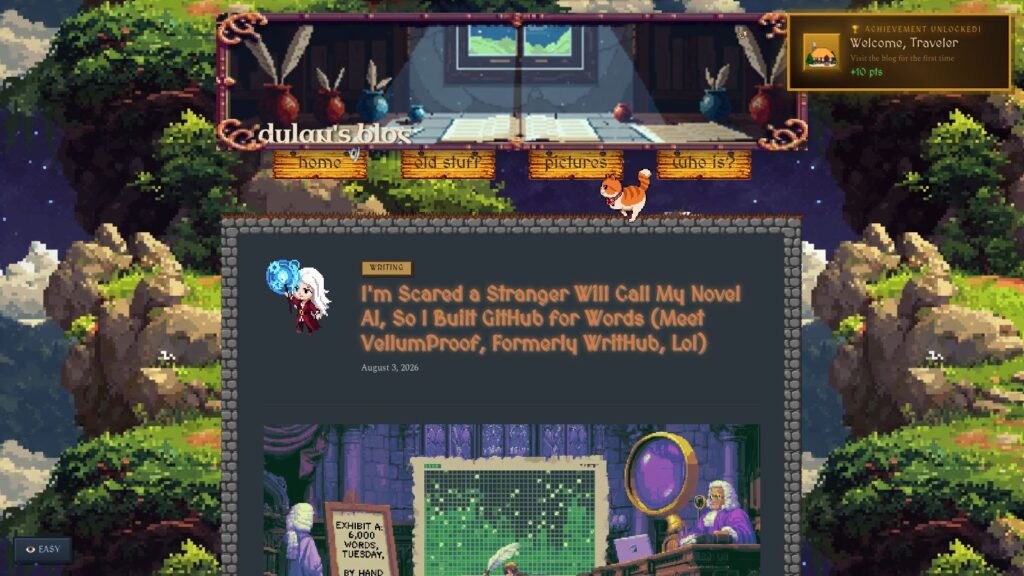
The AI Writing Witchhunt Is Pointless.

Joan Westenberg argues that the current witchhunt against AI-assisted writing is misguided and harmful, highlighting the unreliable nature of AI detection tools and the unfair career damage suffered by authors like Mia Ballard, whose novel was pulled amid unproven AI-use accusations. She compares this to historical collaborative writing practices, emphasizing that attempts to police AI usage through crowdsourced suspicion and flawed detectors threaten all writers without offering meaningful solutions, calling for more reasoned and evidence-based approaches instead.

https://www.joanwestenberg.com/the-ai-writing-witchhunt-is-pointless/

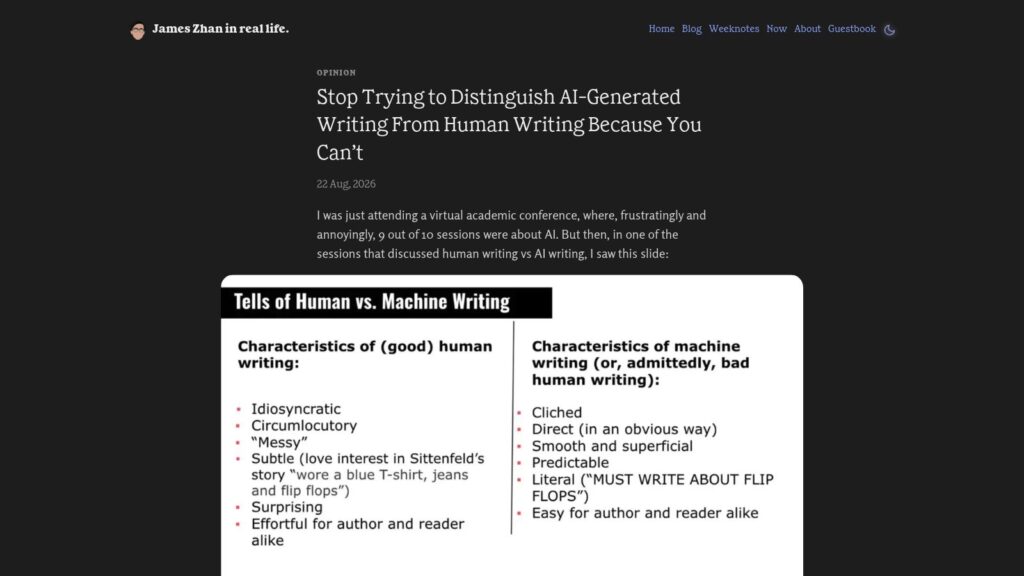
Gilest.org: AI and the Human Voice

In this article, the author expresses skepticism about AI-generated writing, arguing that AI tends to produce clichéd and derivative text lacking subtlety and the human touch found in effective communication. While AI can draft simple content or even poems, it cannot replicate the nuanced, playful flourishes—“tiny sprinklings of poetry”—that human writers use to engage readers and make text memorable; therefore, human input remains essential to refine AI drafts into truly impactful writing.

https://gilest.org/notes/2026/human-ai/

Scroll to Top