blogging

Why I Stopped “Creating Content”

Michael Lynch reflects on his decision to stop describing his creative work as “content,” critiquing how the term, popularized by business jargon, reduces diverse creative expressions to commodified assets like “traffic” and “engagement.” Instead, he advocates for using more precise, human-centered language—calling his audience “readers” and his work a “blog” or “book”—to foster a more authentic connection and mindset about creative practice. This conscious shift in terminology encourages creators to choose words that better reflect their unique roles and the value of their work.

https://refactoringenglish.com/blog/why-i-stopped-creating-content/

The Great Blogging Collapse: What Happened to 100 Successful Blogs? [Study]

A study tracking 100 formerly successful blogs from 2022 to 2026 reveals a median loss of 85% in organic Google search traffic after major Google updates and the rise of AI-generated overviews. Blogs that survived or grew typically offered unique, firsthand experiential content—such as recipes, DIY projects, or parenting diaries—that AI cannot replicate or summarize, supported by owned audiences and real brand search presence. The traditional blog business model reliant solely on search traffic monetized by ads and affiliates has collapsed, urging creators to focus on irreplaceable, demonstrable value and diversified audience ownership.

https://danielstanica.com/posts/Great-Blogging-Collapse

Blogging Can Just Be Stating The Obvious

Jim Nielsen reflects on how blogging often involves simply stating the obvious, highlighting John Gruber’s critique of intrusive website popups that hinder content access. He suggests that sharing these seemingly obvious observations can be valuable because such everyday annoyances often go unspoken, making posts that address them some of the most insightful and resonant. Ultimately, Nielsen sees a key aspect of blogging as the willingness to voice what others might overlook or accept silently.

https://blog.jim-nielsen.com/2026/blogging-stating-the-obvious/

Blogging Saved My Life

After graduating university, Brennan Kenneth Brown chose to pursue public writing daily instead of a traditional tech job, finding that blogging consistently transformed his life by fostering curiosity, human connection, and accountability while developing his skills and projects. He highlights that writing publicly has not only opened doors and friendships for him but also serves as a therapeutic practice with documented benefits for mental and physical health. Through personal experience and examples of others, Brennan advocates for writing as a powerful act of self-expression and healing and encourages others to start or deepen their own writing journeys.

https://brennan.day/blogging-saved-my-life/

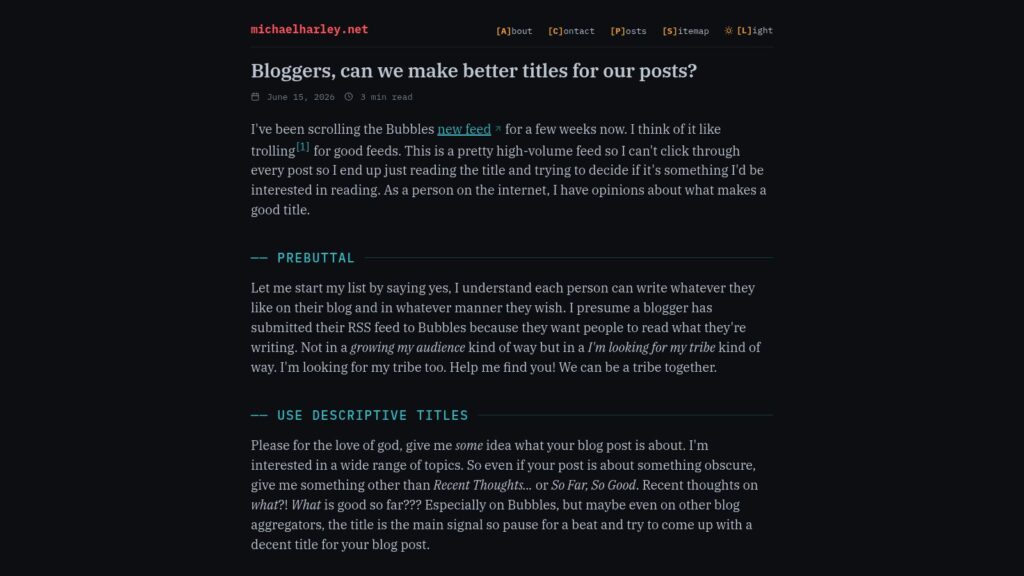
Bloggers, Can We Make Better Titles for Our Posts?

Michael Harley argues that bloggers should craft more descriptive and specific titles to help readers quickly understand a post's content, especially on high-volume feed platforms like Bubbles. He suggests avoiding vague titles, bucket posts like weekly round-ups, and clickbait, while encouraging posts that reply to others as a way to foster writing habits and build community. Ultimately, clear titles improve discoverability and help readers find content aligned with their interests.

https://michaelharley.net/posts/2026/06/15/bloggers-can-we-make-better-titles-for-our-posts/

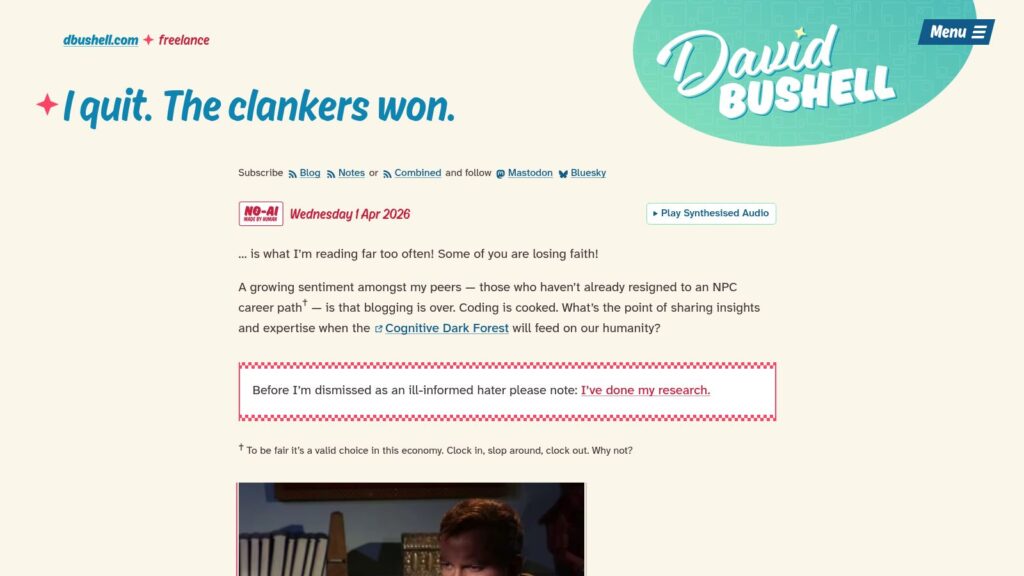
I Quit. The Clankers Won.

In this blog post, the author argues against the growing pessimism that blogging and creative coding are obsolete due to the rise of AI and big tech dominance. They emphasize that now is more important than ever to blog and share authentic, human voices, resisting the dehumanizing effects of AI-driven content and corporate control, and to support the open, indie web as a space for genuine creativity and conversation.

https://dbushell.com/2026/04/01/i-quit-the-clankers-won/

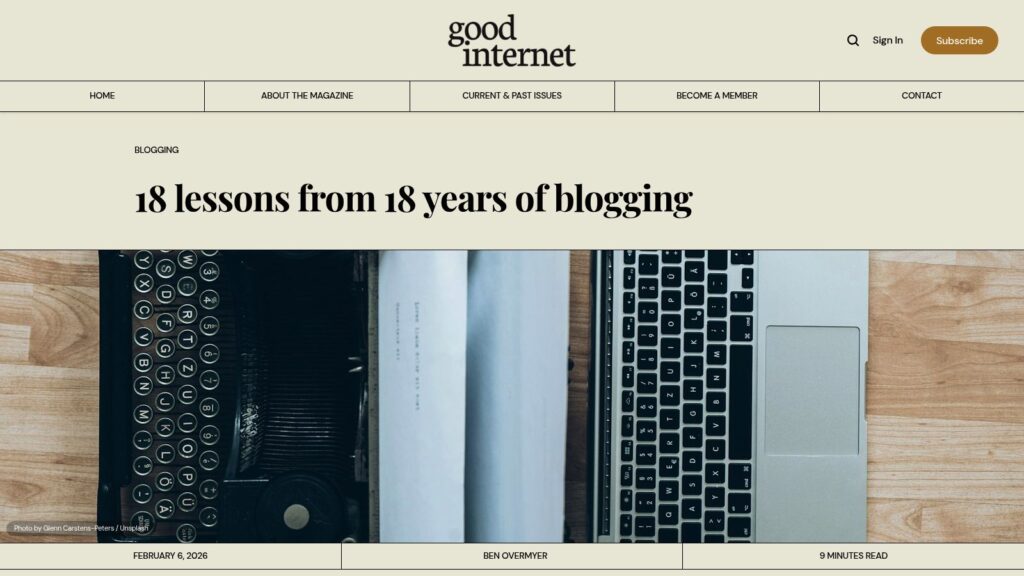
18 Lessons From 18 Years of Blogging

18 blogging lessons from 18 years: 1) Develop a writing habit, 2) Write about passions, 3) It's okay to cover common topics, 4) Teaching helps understanding, 5) Find your voice, 6) Use handwritten notes, 7) First drafts are beginnings, 8) Challenge your views, 9) Learn rhetoric, 10) Prioritize completion, 11) Don’t edit old posts, 12) Revisit topics, 13) Create a writing space, 14) Keep a writing muse, 15) Walk to inspire ideas, 16) Enhance visual appeal, 17) Seek an editor, 18) Blogging is a long-term journey.

https://goodinternetmagazine.com/18-lessons-from-18-years-of-blogging/

The Case for Blogging in the Ruins

Blogs foster intellectual exploration, unlike social media's fast-paced content. Diderot’s Encyclopédie exemplified building knowledge infrastructure, whereas today's media prioritizes engagement over substance. Blogs create permanent, standalone documents inviting deep thinking and nuanced discussion. Despite claims that blogs are obsolete, they outlast social media in indexing and engagement. Establishing a blog offers autonomy and a space for meaningful content creation, essential for reclaiming thoughtful discourse. Start a blog to cultivate your ideas and contribute to a more connected intellectual community.

https://www.joanwestenberg.com/the-case-for-blogging-in-the-ruins/

Scroll to Top