Scrivener

How To Write Dialogue in a Story

Effective dialogue in fiction:
1. Ensure natural flow, avoiding formality;
2. Reveal character traits and emotions;
3. Use clear dialogue tags sparingly;
4. Incorporate action beats for context;
5. Avoid excessive exposition;
6. Move the plot forward;
7. Vary sentence lengths;
8. Use contractions appropriately;
9. Ensure every line serves a purpose;
10. Edit by reading aloud for clarity.
Consider using Scrivener's features for streamlined dialogue editing.

https://www.literatureandlatte.com/blog/how-to-write-dialogue-in-a-story

How to Create and Work With Poetry Projects in Scrivener

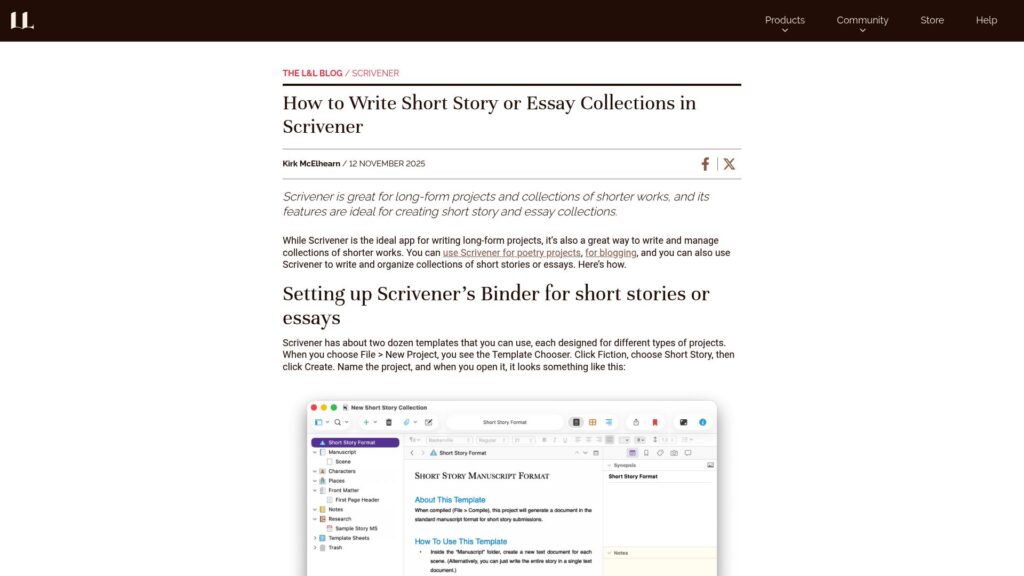
Scrivener is an effective tool for writing, organizing, revising, and compiling poetry collections, featuring a specialized poetry template and various management tools. Users can create a poetry project with a simple template selection, utilize line numbers, and organize their work in the Binder. Revision and editing are streamlined with the snapshot feature for tracking changes. Compiling projects into formats like PDF or .docx is easy, making Scrivener ideal for poets preparing submissions.

https://www.literatureandlatte.com/blog/how-to-create-and-work-with-poetry-projects-in-scrivener

Write Now With Scrivener, Episode No. 54: Tim Queeny, Author of a History of Rope

Tim Queeny released a non-fiction book, Rope: How a Bundle of Twisted Fibers Became the Backbone of Civilization. It explores the origins and significance of rope across various industries and its historical impact, tracing back to 50,000-year-old Neanderthal creations. Tim, a sailor and former editor of Ocean Navigator, utilized Scrivener for his research organization while writing. He condensed his manuscript from 93,000 to 75,000 words, omitting a long section on Hitchcock's Rope.

https://www.literatureandlatte.com/blog/write-now-with-scrivener-episode-no-54-tim-queeny-author-of-a-history-of-rope

Go Beyond Your Genre: Why Writers Should Read Widely

Authors should read widely across genres to enhance their writing. Stephen King emphasizes reading and writing as essential practices. Writers gain valuable insights by exploring different styles and plots, not just their own genre conventions. Keeping up with market trends and classic literature deepens understanding and inspires creativity. Broad reading habits improve vocabulary and narrative techniques, while engaging with various genres and forms—like poetry and non-fiction—broadens perspective and enriches storytelling.

https://www.literatureandlatte.com/blog/go-beyond-your-genre-why-writers-should-read-widely

Use Scrivener’s Outliner as a To-Do List for Your Writing Projects

Use Scrivener's Outliner to create a project-specific to-do list, enhancing task management beyond a simple text file. Organize tasks using folders and custom metadata, view additional details in the Outliner, and attach relevant files to tasks for better project tracking. While not a dedicated task manager, Scrivener offers flexible ways to manage writing-related tasks.

https://www.literatureandlatte.com/blog/use-scriveners-outliner-as-a-to-do-list-for-your-writing-projects

Write Now With Scrivener, Episode No. 53: Isabella Valeri, Author of Letters From the Dead

Isabella Valeri’s debut novel, Letters from the Dead, explores a wealthy family's secrets within a Gothic, isolated estate, blending genres like thriller and historical fiction. Valeri, who writes under an alias, combines personal influences, including classic films and a rich literary background. She values organization in writing, utilizing Scrivener for managing her extensive material and preserving deleted content. The narrative features deep character development and references to arcane subjects, reflecting her diverse interests.

https://www.literatureandlatte.com/blog/write-now-with-scrivener-episode-no-53-isabella-valeri-author-of-letters-from-the-dead

Marketing Your Book: a Guide for New Authors

Publishers focus on major titles; authors must promote their own books. In 1950, 11,000 books were published, growing to 100,000 annually now, with about 1 million self-published. Define your unique selling proposition (USP) and target audience for effective marketing. Build an author platform through a website and social media. Generate leads pre-publication and consider pre-orders for visibility and sales ranking. Self-marketing is essential for new authors due to limited publisher promotion.

https://www.literatureandlatte.com/blog/how-to-market-your-book

How to Create Multiple Revenue Streams as an Author

Authors can earn a living through diverse writing avenues beyond just books, including advances, royalties, subsidiary rights, ghostwriting, speaking gigs, teaching, editing, affiliate marketing, reader support, and selling merchandise. Quitting a day job for writing requires careful planning and multiple income streams to ensure financial stability.

https://www.literatureandlatte.com/blog/how-to-create-multiple-revenue-streams-as-an-author

How Book Advances Are Paid to Authors

Congrats on selling a book! You’ll receive an advance, but it's paid in installments over time. Advances are based on estimated sales and can influence marketing efforts. Typically, they’re split into payments at signing, manuscript delivery, and publication. For example, a $100,000 advance could be split into three $33,333 payments. Authors typically don’t repay advances unless they breach contracts. Many factors affect payment timing, taxes reduce net income, and not all books earn out their advances. Ultimately, while advances seem substantial, they likely won't replace your day job income yet.

https://www.literatureandlatte.com/blog/how-book-advances-are-paid-to-authors

Scroll to Top