Scrivener

Keep Track of Point-of-View Characters and Timelines in Scrivener’s Corkboard

Scrivener’s Corkboard helps visualize complex novels with multiple point-of-view characters and timelines, ensuring narrative coherence. Authors can label scenes or chapters for clarity, as seen in works like A Game of Thrones. Managing multiple timelines involves using labels and statuses to track character perspectives and chronological events. Scrivener aids in organizing these elements, enriching storytelling.

https://www.literatureandlatte.com/blog/keep-track-of-point-of-view-characters-and-timelines-in-scriveners-corkboard

Use Custom Metadata in Scrivener to Manage Characters

Scrivener’s custom metadata enables file organization by adding key details like character names, dates, and locations for easier searching and sorting. The article elaborates on using custom metadata to manage character-heavy narratives, especially in complex genres like fantasy and mystery. Four metadata types (Text, Checkbox, List, Date) help track character details, roles, and timelines. It discusses how to search with collections based on custom metadata and view it in the Outliner, aiding in managing extensive character information. This feature is particularly valuable for projects with numerous characters.

https://www.literatureandlatte.com/blog/use-custom-metadata-in-scrivener-to-manage-characters

Writing a Novel in November? These Tips Will Help You Hit 50,000 Words

Tips for writing 50,000 words in November:

  1. Plan Ahead: Prep before November; outline story direction.
  2. Set Routine: Block time daily; consistency is key.
  3. Use Scrivener: Track word count, set targets for motivation.
  4. Aim for Progress: Focus on writing, not perfection; draft 50,000 words, refine later.
  5. Write Out of Order: Use Scrivener to write scenes as inspired.
  6. Take Breaks: Use short writing bursts with breaks for better focus.
  7. Use Prompts: Overcome writer's block with unrelated prompts.
  8. Anticipate Obstacles: Prepare for interruptions; exceed daily goals.
  9. Don’t Stress: If you don't reach 50,000, value the progress made; keep writing.

Author: Kirk McElhearn, offers Scrivener resources for writing.

https://www.literatureandlatte.com/blog/writing-a-novel-in-november-these-tips-will-help-you-hit-50000-words

Using Advanced Character Sketch Templates in Scrivener

Scrivener allows the creation and customization of character sketches to organize character information, supporting multiple templates and folders for complex projects. Users can develop detailed character profiles with various attributes and relationships, using cascading character sketches for deeper insights. This flexibility is beneficial for managing numerous characters, especially in extensive narratives.

https://www.literatureandlatte.com/blog/using-advanced-character-sketch-templates-in-scrivener

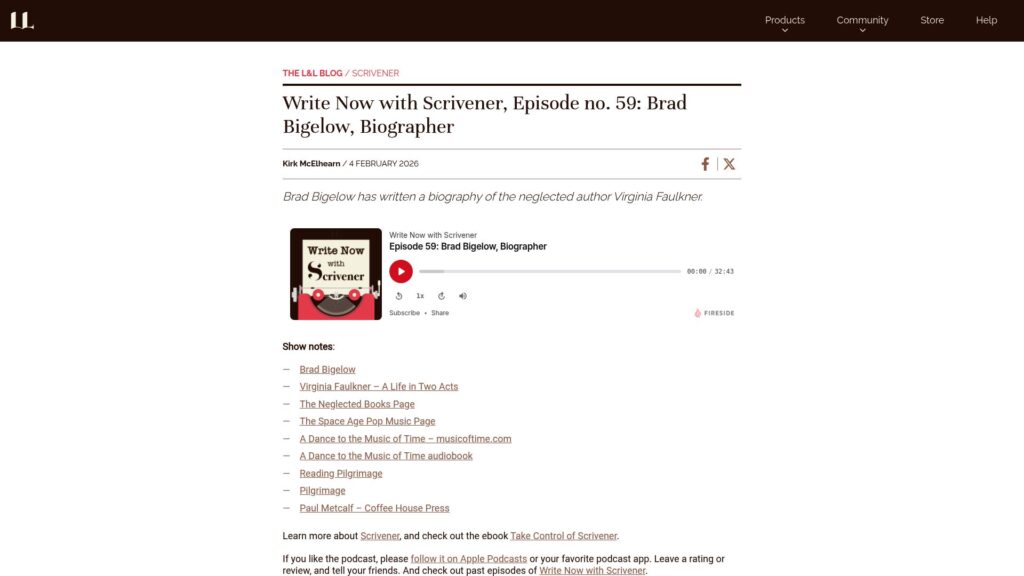
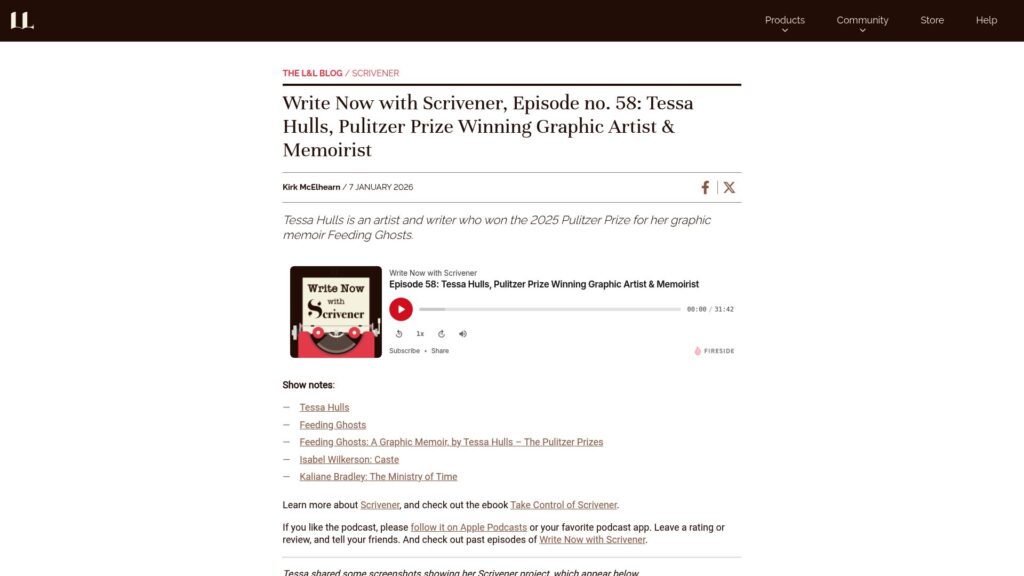
Write Now With Scrivener, Episode No. 55: Maria Reva, Booker Longlisted Author of Endling

Maria Reva's novel Endling, longlisted for the Booker Prize, combines themes of snails, romance tours, and the war in Ukraine, reflecting on her experience as a Ukrainian immigrant. The book explores the impact of the Russian invasion on her writing process and features an unconventional structure, including direct reader engagement. It highlights the fragility of species and critiques the romance tour industry’s exploitation, using innovative narrative techniques developed during her writing process with Scrivener.

https://www.literatureandlatte.com/blog/write-now-with-scrivener-episode-no-55-maria-reva-booker-longlisted-author-of-endling

How to Create and Use Custom Document Templates in Scrivener

Scrivener offers customizable document templates for quick project creation, adapting to various writing needs. Users can create, store, and manage these pre-formatted files to organize elements like character sketches, email formats, and more, enhancing project efficiency and consistency. For creation, duplicate existing files, retain formatting, and store templates in designated folders.

https://www.literatureandlatte.com/blog/how-to-create-and-use-custom-document-templates-in-scrivener

BookTok and Beyond: How Young Readers Are Reviving Physical Bookstores

Reading is rising due to young readers and BookTok, despite overall decline in book reading statistics. The number of bookstores is increasing in the US and UK, with young adults buying more books, influenced by social media trends. Bookstores offer a unique browsing experience and foster community events. Physical presence emphasizes book covers, important for sales. Despite online dominance, young readers' engagement and bookstore growth indicate a positive future for reading.

https://www.literatureandlatte.com/blog/booktok-and-beyond-how-young-readers-are-reviving-physical-bookstores

How To Write Dialogue in a Story

Effective dialogue in fiction:
1. Ensure natural flow, avoiding formality;
2. Reveal character traits and emotions;
3. Use clear dialogue tags sparingly;
4. Incorporate action beats for context;
5. Avoid excessive exposition;
6. Move the plot forward;
7. Vary sentence lengths;
8. Use contractions appropriately;
9. Ensure every line serves a purpose;
10. Edit by reading aloud for clarity.
Consider using Scrivener's features for streamlined dialogue editing.

https://www.literatureandlatte.com/blog/how-to-write-dialogue-in-a-story

How to Create and Work With Poetry Projects in Scrivener

Scrivener is an effective tool for writing, organizing, revising, and compiling poetry collections, featuring a specialized poetry template and various management tools. Users can create a poetry project with a simple template selection, utilize line numbers, and organize their work in the Binder. Revision and editing are streamlined with the snapshot feature for tracking changes. Compiling projects into formats like PDF or .docx is easy, making Scrivener ideal for poets preparing submissions.

https://www.literatureandlatte.com/blog/how-to-create-and-work-with-poetry-projects-in-scrivener

Write Now With Scrivener, Episode No. 54: Tim Queeny, Author of a History of Rope

Tim Queeny released a non-fiction book, Rope: How a Bundle of Twisted Fibers Became the Backbone of Civilization. It explores the origins and significance of rope across various industries and its historical impact, tracing back to 50,000-year-old Neanderthal creations. Tim, a sailor and former editor of Ocean Navigator, utilized Scrivener for his research organization while writing. He condensed his manuscript from 93,000 to 75,000 words, omitting a long section on Hitchcock's Rope.

https://www.literatureandlatte.com/blog/write-now-with-scrivener-episode-no-54-tim-queeny-author-of-a-history-of-rope

Scroll to Top