app

How to Use Mind Mapping: Benefits, Techniques, and Examples

Extreme TLDR:
Mind mapping visually organizes ideas around a central topic, enhancing creativity, memory, and productivity. It's effective for brainstorming in writing and planning. Key steps include starting with a central idea, using single keywords, and linking concepts. Benefits span academic, professional, and personal uses. Avoid long sentences and rigid layouts, and leverage tools like Grammarly for transitions to structured writing.

https://www.grammarly.com/blog/writing-process/mind-mapping/

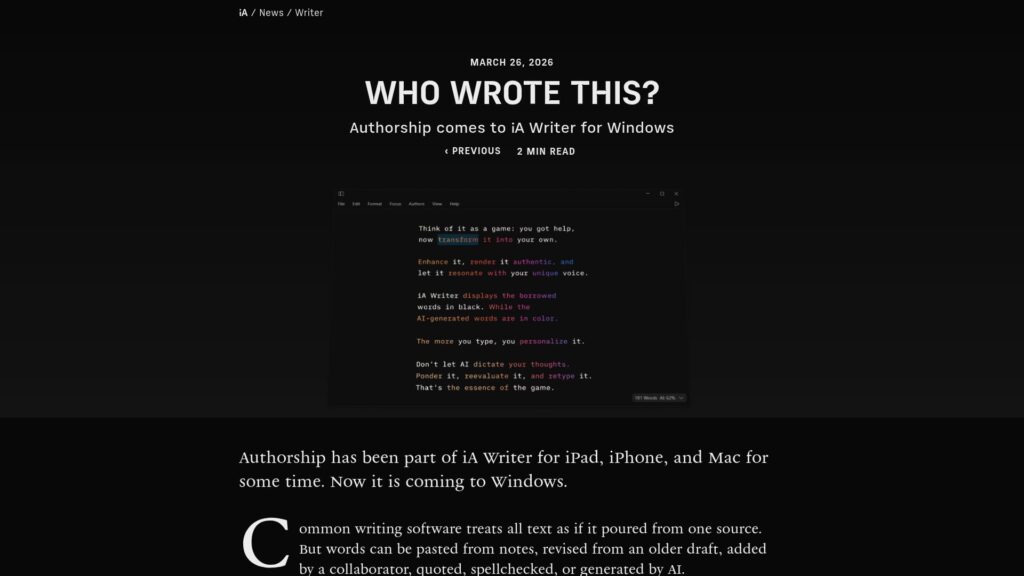
See What AI Wrote

iA Writer distinguishes between human and AI-generated text, enabling users to recognize and improve their writing. It now uses color coding, with AI text shown in rainbow hues for clear identification. Collaborative authorship is also enhanced, displaying each contributor's work in different colors. A new “Reference” category helps manage sources and dimmed text. With tools like Syntax Highlight and Authorship available, users can edit effectively and track authorship easily. iA Writer's Authorship feature is accessible on iPhone, iPad, and Mac.

https://ia.net/topics/see-what-ai-wrote

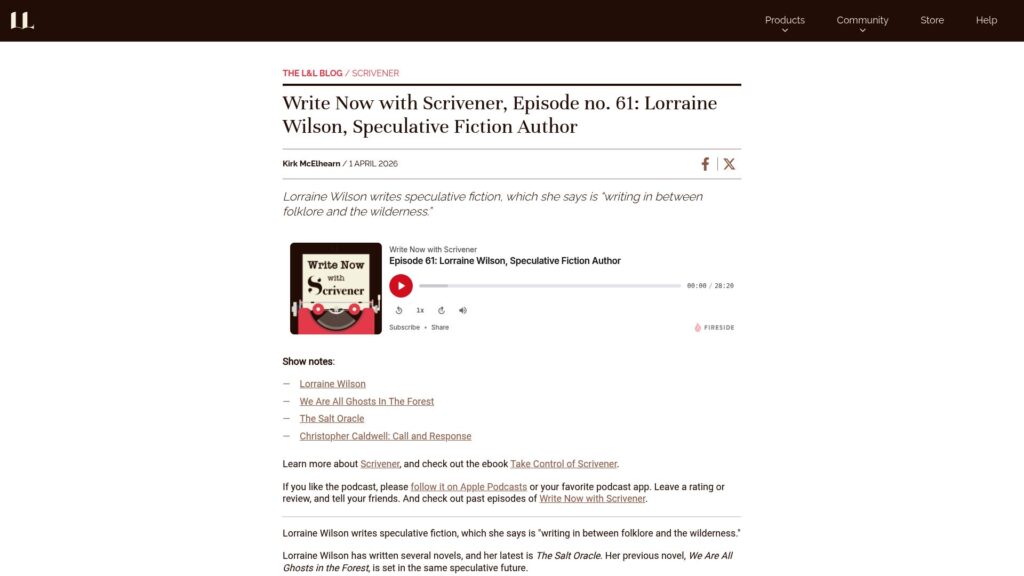
Write Now With Scrivener, Episode No. 56: Alexander Rose, Historian

Historian Alexander Rose's book Phantom Fleet recounts the US Navy's capture of a German U-Boat before D-Day. Rose, influenced by British writing style, emphasizes narrative art in history, blending storytelling techniques used in screenplays. He organizes his writing in a semi-planned manner and utilizes Scrivener for composition and research management.

https://www.literatureandlatte.com/blog/write-now-with-scrivener-episode-no-56-alexander-rose-historian

Arizona State University and Grammarly Launch First Higher Education Use of Superhuman Go

Grammarly partners with Arizona State University (ASU) to integrate agentic AI in higher education, enhancing student learning and teaching. ASU will be the first to use Grammarly's Superhuman Go AI assistant, addressing challenges like data silos and tool fragmentation. This collaboration aims to foster genuine writing skills and critical thinking, while preparing students for AI-driven workplaces. ASU will help refine the AI platform and develop customized agents for instructional design, promoting effective AI use in education.

https://www.grammarly.com/blog/company/superhumango-asu-partnership/

Keep Track of Point-of-View Characters and Timelines in Scrivener’s Corkboard

Scrivener’s Corkboard helps visualize complex novels with multiple point-of-view characters and timelines, ensuring narrative coherence. Authors can label scenes or chapters for clarity, as seen in works like A Game of Thrones. Managing multiple timelines involves using labels and statuses to track character perspectives and chronological events. Scrivener aids in organizing these elements, enriching storytelling.

https://www.literatureandlatte.com/blog/keep-track-of-point-of-view-characters-and-timelines-in-scriveners-corkboard

Use Custom Metadata in Scrivener to Manage Characters

Scrivener’s custom metadata enables file organization by adding key details like character names, dates, and locations for easier searching and sorting. The article elaborates on using custom metadata to manage character-heavy narratives, especially in complex genres like fantasy and mystery. Four metadata types (Text, Checkbox, List, Date) help track character details, roles, and timelines. It discusses how to search with collections based on custom metadata and view it in the Outliner, aiding in managing extensive character information. This feature is particularly valuable for projects with numerous characters.

https://www.literatureandlatte.com/blog/use-custom-metadata-in-scrivener-to-manage-characters

Micro-stories: Italian Writer Riccardo Boccardi Turns 600 Characters Into Countless Stories

Riccardo Boccardi, an Italian writer, created Racconti Crestati, a collection of micro-stories under 600 characters, launched in 2017 via Facebook. These brief narratives have sparked numerous illustrations, musical jingles, and culminated in two published books. Boccardi emphasizes conciseness and creativity within strict character limits, crafting stories that evoke broader themes and emotions, while his writing is influenced by collaborations across art forms. His micro-stories have even found a place in university curricula. He continues to explore various artistic directions while remaining committed to this unique storytelling format.

https://stories.ulysses.app/micro-stories-italian-writer-riccardo-boccardi-turns-600-characters-into-countless-stories/

Scroll to Top